Pune Ends Water Cuts As Khadakwasla Dams Reach Full Capacity
Pune residents get relief as water cuts end. Khadakwasla dams full.
'%3E%3Crect%20width%3D'96'%20height%3D'96'%20fill%3D'%23B3261E'%2F%3E%3Ccircle%20cx%3D'30'%20cy%3D'24'%20r%3D'44'%20fill%3D'%23fff'%20opacity%3D'.12'%2F%3E%3Ccircle%20cx%3D'60'%20cy%3D'74'%20r%3D'40'%20fill%3D'%23000'%20opacity%3D'.10'%2F%3E%3C%2Fg%3E%3Cg%20fill%3D'%23fff'%3E%3Crect%20x%3D'29'%20y%3D'49'%20width%3D'8'%20height%3D'19'%20rx%3D'1'%2F%3E%3Crect%20x%3D'39'%20y%3D'40'%20width%3D'9'%20height%3D'28'%20rx%3D'1'%2F%3E%3Crect%20x%3D'50'%20y%3D'45'%20width%3D'8'%20height%3D'23'%20rx%3D'1'%2F%3E%3Crect%20x%3D'60'%20y%3D'53'%20width%3D'7'%20height%3D'15'%20rx%3D'1'%2F%3E%3Crect%20x%3D'41'%20y%3D'34'%20width%3D'5'%20height%3D'6'%2F%3E%3C%2Fg%3E%3C%2Fsvg%3E)
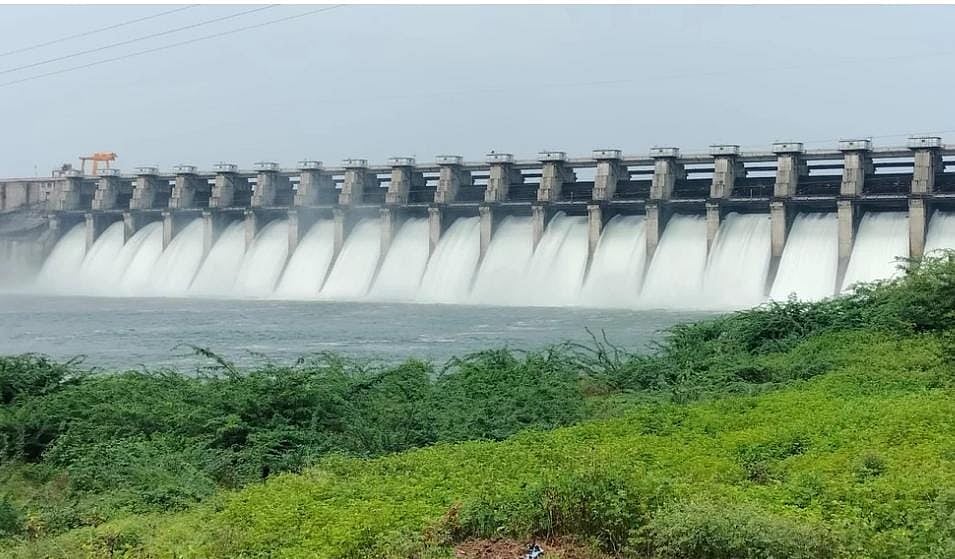
Pune residents have received major relief as the Pune Municipal Corporation (PMC) has permanently withdrawn water supply cuts. This decision comes after all four reservoirs of the Khadakwasla dam project reached 100 per cent live storage capacity.
The Khadakwasla dam complex, Pune's main source of drinking water, has reached its full live storage capacity of 29.15 TMC. This is a significant increase from the same time last year, when the reservoirs held 25.92 TMC, or 88.93 per cent of their capacity.
Municipal Commissioner Naval Kishore Ram confirmed that regular water supply has resumed and no further restrictions will be imposed. The city now has sufficient drinking water reserves for the coming months, thanks to heavy rainfall across the catchment areas during July.
The Khadakwasla project, which includes Khadakwasla, Panshet, Varasgaon and Temghar dams, continues to receive steady inflows despite a slight reduction in rainfall over the past few days. According to the Irrigation Department, the four reservoirs received a combined inflow of 503 million cubic feet (mcft) on Wednesday.
Other major reservoirs supplying the Pune region are also nearly full. Bhama Askhed dam has reached 98.66 per cent of its live storage, while Pavana dam, the main drinking water source for Pimpri-Chinchwad, is at 97.14 per cent capacity.
Heavy rainfall in the Western Ghats has played a key role in filling the reservoirs. The India Meteorological Department (IMD) said Bhira has recorded the highest seasonal rainfall in Pune district at 7,773 mm, followed by Tamhini with 7,039 mm.
Within the Khadakwasla catchment, Temghar has received 2,730 mm of rainfall this monsoon, followed by Panshet with 1,995 mm, Varasgaon with 1,884 mm and Khadakwasla with 680 mm. Kiran Deshmukh, Executive Engineer of the Khadakwasla Dam Division, said the spillway discharge from Khadakwasla Dam was increased to 13,981 cusecs on Wednesday morning due to sustained inflows.
The water restrictions were first introduced on June 15 after weak monsoon conditions and concerns over the possible impact of El Niño. To conserve water, the PMC had started supplying water on alternate days based on the availability of water in the reservoirs.
The end of water cuts is a major relief for Pune residents, who can now expect a regular supply of drinking water. The PMC's decision to withdraw water supply cuts is a result of the sufficient drinking water reserves in the city, thanks to the heavy rainfall in the catchment areas.
The IMD has forecast moderate to heavy rainfall in the ghat sections over the next 24 hours and has issued an Orange Alert for Thursday. Senior Meteorologist S. D. Sanap said rainfall activity is expected to reduce after that, with the alert downgraded to Yellow for August 7.
In conclusion, the end of water cuts in Pune is a significant development, and the city's residents can now expect a regular supply of drinking water. The sufficient drinking water reserves in the city are a result of the heavy rainfall in the catchment areas, and the PMC's decision to withdraw water supply cuts is a welcome relief for the residents.
Frequently asked questions
Why were water cuts introduced in Pune?
Water cuts were introduced due to weak monsoon conditions and concerns over the possible impact of El Niño.
What is the current water storage capacity of the Khadakwasla dam complex?
The Khadakwasla dam complex has reached its full live storage capacity of 29.15 TMC.