Omar Abdullah: PoK Residents Might Protest to Join J&K
Omar Abdullah reflects on Article 370, PoK and J&K statehood. He emphasizes democracy and federalism.
'%3E%3Crect%20width%3D'96'%20height%3D'96'%20fill%3D'%231A5276'%2F%3E%3Ccircle%20cx%3D'30'%20cy%3D'24'%20r%3D'44'%20fill%3D'%23fff'%20opacity%3D'.12'%2F%3E%3Ccircle%20cx%3D'60'%20cy%3D'74'%20r%3D'40'%20fill%3D'%23000'%20opacity%3D'.10'%2F%3E%3C%2Fg%3E%3Cg%20fill%3D'%23fff'%3E%3Cpath%20d%3D'M31%2041%20L48%2031%20L65%2041%20Z'%2F%3E%3Crect%20x%3D'33'%20y%3D'43'%20width%3D'4'%20height%3D'17'%2F%3E%3Crect%20x%3D'41'%20y%3D'43'%20width%3D'4'%20height%3D'17'%2F%3E%3Crect%20x%3D'51'%20y%3D'43'%20width%3D'4'%20height%3D'17'%2F%3E%3Crect%20x%3D'59'%20y%3D'43'%20width%3D'4'%20height%3D'17'%2F%3E%3Crect%20x%3D'30'%20y%3D'62'%20width%3D'36'%20height%3D'4'%20rx%3D'1'%2F%3E%3C%2Fg%3E%3C%2Fsvg%3E)
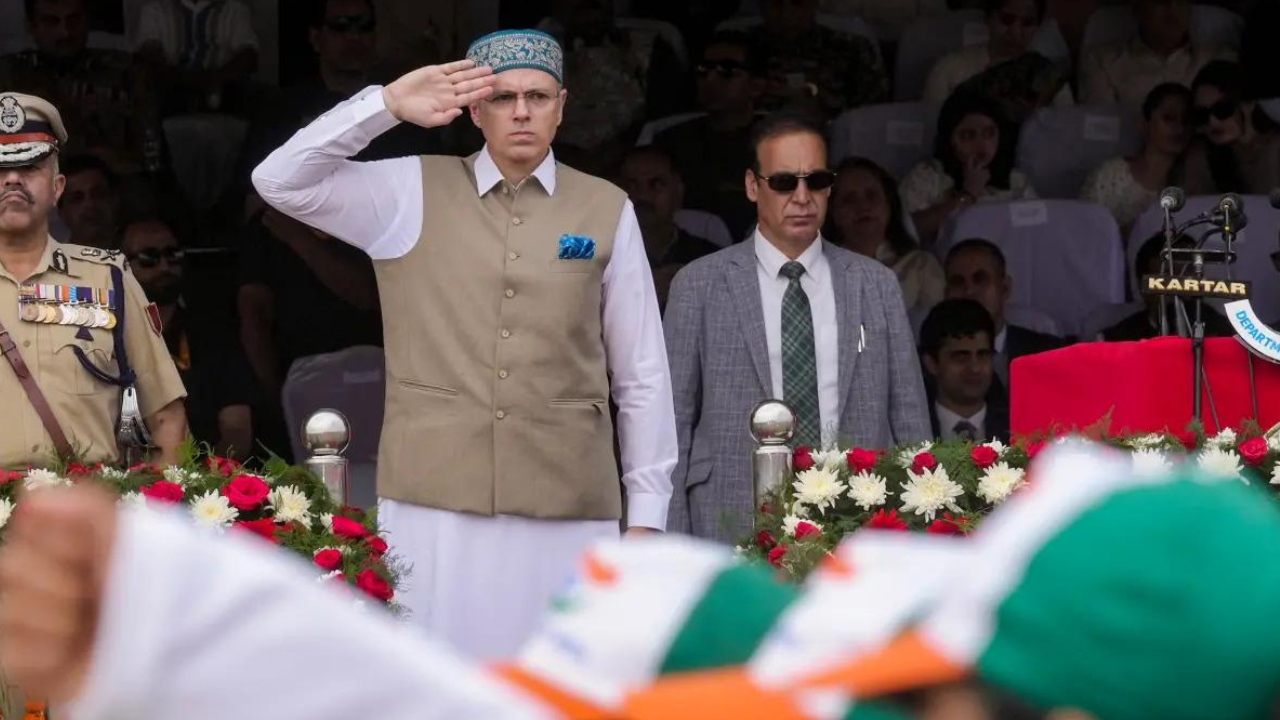
Omar Abdullah, the Chief Minister of Jammu and Kashmir, recently shared his thoughts on the region's history and its current state. He began by paying tribute to his grandfather, Sheikh Mohammad Abdullah, and reflecting on the 1947 tribal invasion. Abdullah emphasized the importance of bolstering federalism in the country, while also questioning the current national examination frameworks.
Abdullah's comments came as he advocated for restoring Jammu and Kashmir's statehood, which was revoked in 2019. He expressed his belief that the people of Pakistan-occupied Jammu and Kashmir (PoK) might have a desire to reunite with the rest of Jammu and Kashmir today. According to Abdullah, if Article 370 hadn't been revoked, the people of PoK might be protesting to join Jammu and Kashmir.
The Chief Minister's comments highlight the complex history and politics of the region. The revocation of Article 370 in 2019 was a significant move by the Indian government, which aimed to integrate Jammu and Kashmir more closely with the rest of the country. However, the move was met with widespread protests and criticism from many in the region.
Abdullah's emphasis on democracy and federalism is significant, as it underscores the need for greater autonomy and representation for the people of Jammu and Kashmir. The region has a unique cultural and linguistic identity, and its history has been marked by periods of conflict and instability.
In recent years, there have been efforts to promote economic development and tourism in Jammu and Kashmir, with the aim of improving the lives of its residents. However, the region's political status remains a contentious issue, with many calling for greater autonomy or even independence.
Abdullah's comments on PoK are also noteworthy, as they highlight the complex relationships between India, Pakistan, and the people of Jammu and Kashmir. The region has been divided between India and Pakistan since 1947, and there have been numerous conflicts and skirmishes over the years.
In conclusion, Omar Abdullah's comments on Article 370, PoK, and Jammu and Kashmir's statehood highlight the complex politics and history of the region. His emphasis on democracy and federalism underscores the need for greater autonomy and representation for the people of Jammu and Kashmir, and his comments on PoK highlight the complex relationships between India, Pakistan, and the people of the region.
The significance of Abdullah's comments extends beyond the region, as they highlight the importance of federalism and democracy in India. The country's diverse cultural and linguistic identities require a system of government that is responsive to the needs of its citizens, and Abdullah's comments underscore the need for greater autonomy and representation at the state and local levels.
Overall, Omar Abdullah's comments provide valuable insights into the complex politics and history of Jammu and Kashmir, and highlight the need for greater autonomy, democracy, and federalism in the region.
Frequently asked questions
What is Omar Abdullah's stance on Article 370?
Omar Abdullah believes that if Article 370 hadn't been revoked, the people of PoK might be protesting to join Jammu and Kashmir.
Why does Abdullah emphasize democracy and federalism?
Abdullah emphasizes democracy and federalism because he believes they are essential for the people of Jammu and Kashmir to have greater autonomy and representation.