Iran Seeks End to US Conflict
Iranian President calls for end to war, Oman discusses dialogue
'%3E%3Crect%20width%3D'96'%20height%3D'96'%20fill%3D'%234A235A'%2F%3E%3Ccircle%20cx%3D'30'%20cy%3D'24'%20r%3D'44'%20fill%3D'%23fff'%20opacity%3D'.12'%2F%3E%3Ccircle%20cx%3D'60'%20cy%3D'74'%20r%3D'40'%20fill%3D'%23000'%20opacity%3D'.10'%2F%3E%3C%2Fg%3E%3Cg%20fill%3D'none'%20stroke%3D'%23fff'%20stroke-width%3D'3'%3E%3Ccircle%20cx%3D'48'%20cy%3D'48'%20r%3D'16'%2F%3E%3Cellipse%20cx%3D'48'%20cy%3D'48'%20rx%3D'6.5'%20ry%3D'16'%2F%3E%3Cline%20x1%3D'32'%20y1%3D'42'%20x2%3D'64'%20y2%3D'42'%2F%3E%3Cline%20x1%3D'32'%20y1%3D'54'%20x2%3D'64'%20y2%3D'54'%2F%3E%3C%2Fg%3E%3C%2Fsvg%3E)
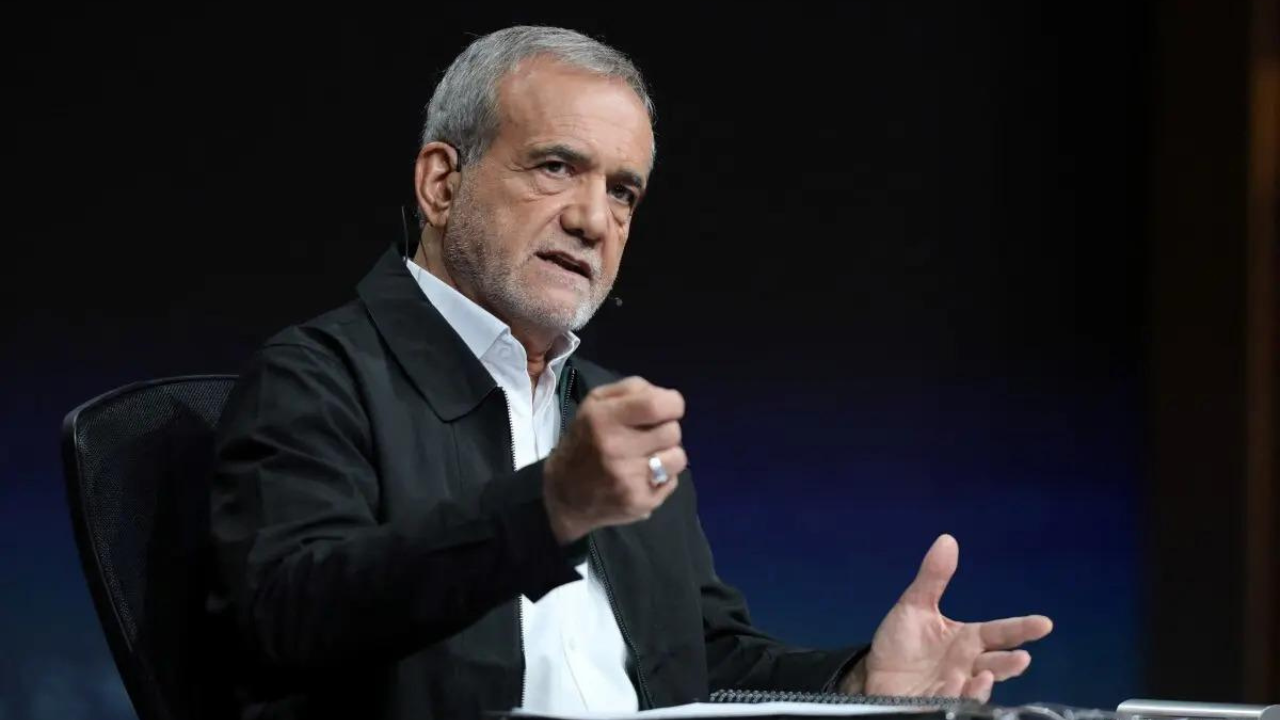
Iranian President Pezeshkian has called for an end to the ongoing conflict with the US, citing the country's national strength and dignity. This statement comes as Iran continues to face pressure from the US, with President Trump indicating that Iran is not ready for a suitable agreement.
The Iranian President has defended a past agreement against domestic criticism, which has been a point of contention within the country. Meanwhile, military leaders have warned of retaliation, highlighting the tense situation.
In a related development, Oman and Iran have discussed resuming dialogue, which could potentially lead to a reduction in tensions. The Strait of Hormuz remains a critical flashpoint, with the US and Iran having conflicting interests in the region.
The US plans to impose new sanctions on Iran, which has been criticized by both Iran and China as ineffective. The sanctions are likely to exacerbate the already tense situation, making it more challenging to find a resolution.
The conflict between the US and Iran has been ongoing for some time, with both countries having fundamentally different views on key issues. The US has been pushing for Iran to make concessions, while Iran has been resisting these demands.
The situation is complex, with multiple countries having a stake in the outcome. The US, Iran, China, and Oman are all involved, each with their own interests and agendas. As the situation continues to unfold, it remains to be seen how the conflict will be resolved.
The Iranian President's call for an end to the conflict is a significant development, as it indicates a willingness to negotiate. However, the US has been skeptical of Iran's intentions, and it remains to be seen whether a resolution can be found.
In the broader context, the conflict between the US and Iran is part of a larger geopolitical struggle. The US has been seeking to exert its influence in the region, while Iran has been resisting these efforts. The situation is further complicated by the involvement of other countries, including China and Oman.
As the situation continues to evolve, it is likely that there will be further developments in the coming days and weeks. The US and Iran will need to find a way to resolve their differences if a peaceful resolution is to be achieved.
The implications of the conflict are far-reaching, with the potential to impact the entire region. The US and Iran will need to navigate their differences carefully, taking into account the interests of other countries involved. A resolution to the conflict will require careful diplomacy and a willingness to compromise.
In conclusion, the Iranian President's call for an end to the conflict is a significant development, but it remains to be seen whether a resolution can be found. The situation is complex, with multiple countries having a stake in the outcome. As the situation continues to unfold, it is likely that there will be further developments in the coming days and weeks.
What it means for the region is that the conflict has the potential to impact the entire Middle East, with far-reaching consequences. The US and Iran will need to navigate their differences carefully, taking into account the interests of other countries involved. A resolution to the conflict will require careful diplomacy and a willingness to compromise.
Frequently asked questions
What is the current status of the US-Iran conflict?
The conflict is ongoing, with the US planning to impose new sanctions on Iran.
What is the significance of the Strait of Hormuz?
The Strait of Hormuz is a critical flashpoint, with the US and Iran having conflicting interests in the region.