
Supreme Court Upholds Jaipur Metro Land Acquisition
Landowners skipped hearings, can't claim denial later. Supreme Court rules against them.
'%3E%3Crect%20width%3D'96'%20height%3D'96'%20fill%3D'%23B3261E'%2F%3E%3Ccircle%20cx%3D'30'%20cy%3D'24'%20r%3D'44'%20fill%3D'%23fff'%20opacity%3D'.12'%2F%3E%3Ccircle%20cx%3D'60'%20cy%3D'74'%20r%3D'40'%20fill%3D'%23000'%20opacity%3D'.10'%2F%3E%3C%2Fg%3E%3Cg%20fill%3D'%23fff'%3E%3Crect%20x%3D'29'%20y%3D'49'%20width%3D'8'%20height%3D'19'%20rx%3D'1'%2F%3E%3Crect%20x%3D'39'%20y%3D'40'%20width%3D'9'%20height%3D'28'%20rx%3D'1'%2F%3E%3Crect%20x%3D'50'%20y%3D'45'%20width%3D'8'%20height%3D'23'%20rx%3D'1'%2F%3E%3Crect%20x%3D'60'%20y%3D'53'%20width%3D'7'%20height%3D'15'%20rx%3D'1'%2F%3E%3Crect%20x%3D'41'%20y%3D'34'%20width%3D'5'%20height%3D'6'%2F%3E%3C%2Fg%3E%3C%2Fsvg%3E)
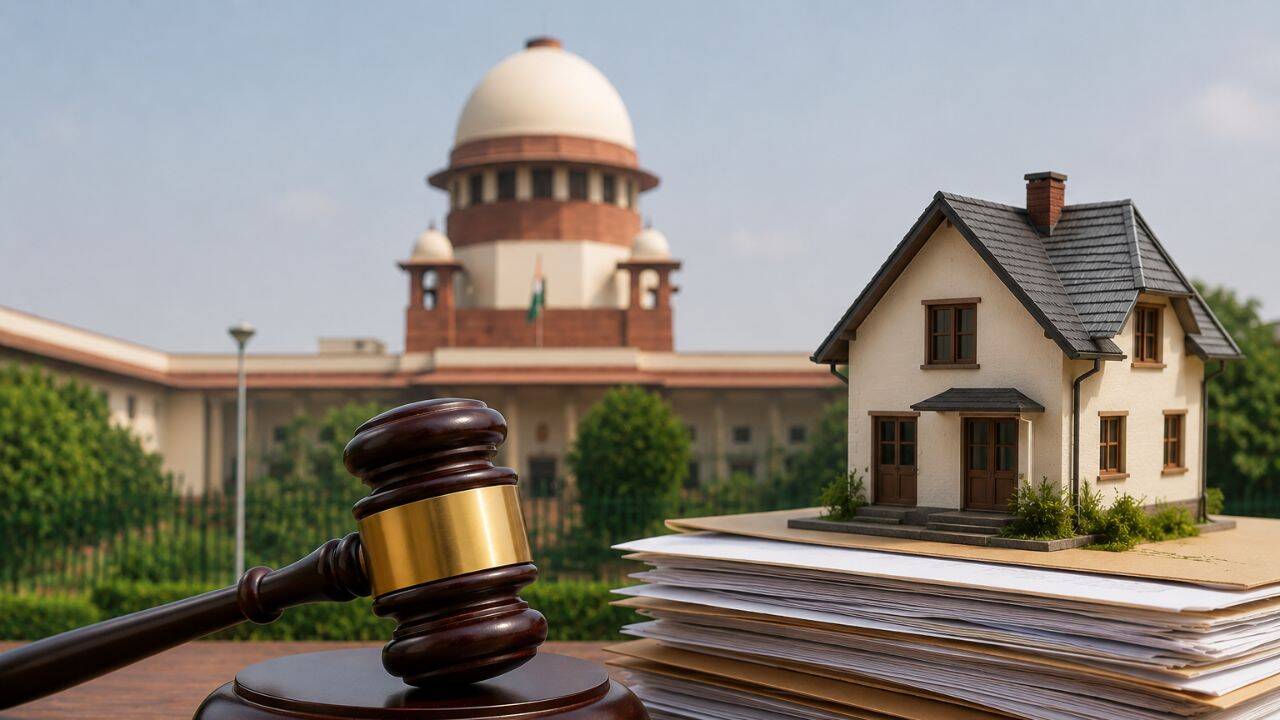
The Supreme Court has upheld the land acquisition for a Jaipur Metro rail depot, ruling that landowners who failed to appear for hearings and pursue their objections cannot claim they were denied a hearing later.
The court's decision was based on the fact that the authorities had largely followed the required processes for land acquisition under the 1894 Act. The landowners had been given the opportunity to raise their objections, but they had chosen not to appear for the hearings.
The Supreme Court's ruling makes it clear that landowners who fail to participate in the land acquisition process cannot later claim that they were denied a hearing. However, the court also noted that the landowners can still seek higher compensation for their acquired property.
The Jaipur Metro rail depot project had been stalled due to the land acquisition issues, but the Supreme Court's ruling has now paved the way for the project to move forward. The project is expected to improve the transportation infrastructure in Jaipur and benefit the local community.
The Supreme Court's decision is significant, as it sets a precedent for land acquisition cases in India. It emphasizes the importance of landowners participating in the land acquisition process and raises their objections in a timely manner.
The 1894 Act, under which the land acquisition was made, is an old law that has been criticized for being unfair to landowners. However, the Supreme Court's ruling suggests that the law is still applicable and that landowners must follow the prescribed procedures to raise their objections.
The Jaipur Metro rail depot project is part of a larger effort to improve the transportation infrastructure in India. The project is expected to reduce traffic congestion and improve air quality in the city.
In conclusion, the Supreme Court's ruling on the Jaipur Metro land acquisition case is a significant development that has implications for land acquisition cases in India. It highlights the importance of landowners participating in the land acquisition process and raises their objections in a timely manner.
The ruling also suggests that the authorities must follow the required processes for land acquisition, and that landowners who fail to participate in the process cannot later claim that they were denied a hearing. However, landowners can still seek higher compensation for their acquired property, which provides some protection for their rights.
Overall, the Supreme Court's decision is a balanced one that takes into account the interests of both the authorities and the landowners. It is expected to have a positive impact on the development of infrastructure projects in India, while also protecting the rights of landowners.