Mumbai Metro One Gets ₹1,100-Crore Debt Relief
Mumbai Metro One receives major financial lifeline, debt reduced by ₹1,100 crore. Insolvency proceedings withdrawn.

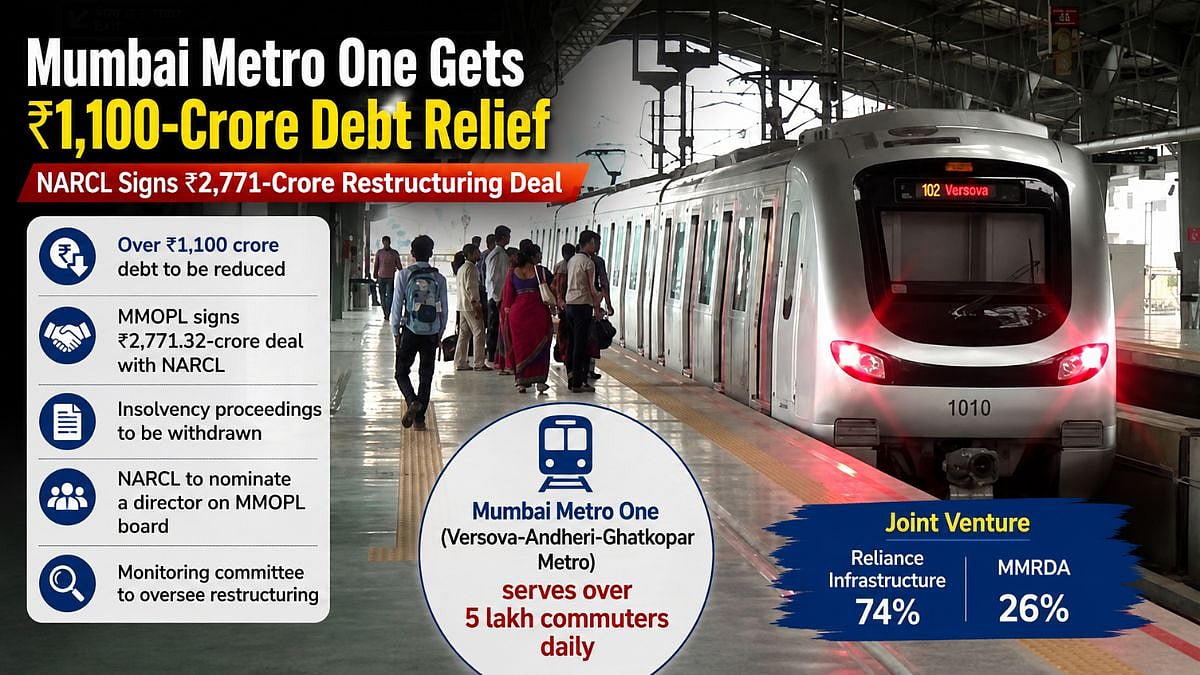
Mumbai Metro One, the operator of the Versova-Andheri-Ghatkopar Metro line, has secured a significant debt relief of ₹1,100 crore. This comes after the company signed a debt restructuring agreement with the National Asset Reconstruction Company Limited (NARCL), valued at ₹2,771.32 crore.
The agreement will not only reduce Mumbai Metro One's debt burden but also lead to the withdrawal of insolvency proceedings against the company. This development is expected to provide a major financial lifeline to the company, allowing it to continue operating the metro line without the immediate threat of financial proceedings.
Mumbai Metro One Private Limited (MMOPL) is a joint venture between Reliance Infrastructure, which holds a 74% stake, and the Mumbai Metropolitan Region Development Authority (MMRDA), which holds a 26% stake. The Versova-Andheri-Ghatkopar corridor is a critical part of Mumbai's public transportation system, carrying over 500,000 commuters daily.
As part of the restructuring agreement, NARCL will have the right to nominate a director to the MMOPL board. A monitoring committee comprising representatives from lenders and Metro One will oversee the restructuring process to ensure its successful implementation.
The Versova-Andheri-Ghatkopar metro line has been in operation for over 12 years, with an impressive record of 99.99% punctuality and zero fatalities. The line has carried over 125 crore commuters since its inception.
The debt restructuring agreement is a significant development for Mumbai Metro One, providing the company with a much-needed financial boost. The agreement will help the company to focus on its operations and continue providing efficient services to commuters.
The Mumbai Metropolitan Region Development Authority (MMRDA) has been working to improve the city's public transportation system, and this development is a step in the right direction. The authority has been implementing various projects to enhance the city's infrastructure, including the expansion of the metro network.
The debt relief provided to Mumbai Metro One is expected to have a positive impact on the company's operations and the city's public transportation system as a whole. With the withdrawal of insolvency proceedings, the company can now focus on its core business and continue to provide services to commuters without any disruptions.
In the context of Mumbai's public transportation system, this development is significant. The city's metro network is a critical part of its infrastructure, and any disruptions to the service can have a significant impact on commuters. The debt restructuring agreement provides a sense of stability and security for commuters, ensuring that the metro line will continue to operate efficiently.
In conclusion, the debt relief provided to Mumbai Metro One is a major development for the company and the city's public transportation system. The agreement provides a financial lifeline to the company, allowing it to continue operating the metro line without any disruptions. This development is expected to have a positive impact on the city's infrastructure and commuters, providing a sense of stability and security for those who rely on the metro service.
The significance of this development cannot be overstated. The debt restructuring agreement is a testament to the government's efforts to support critical infrastructure projects and provide relief to companies facing financial difficulties. The agreement is expected to have a positive impact on the city's economy and infrastructure, providing a boost to the public transportation system and enhancing the overall quality of life for commuters.
Overall, the debt relief provided to Mumbai Metro One is a major development for the company and the city. The agreement provides a financial lifeline to the company, allowing it to continue operating the metro line without any disruptions. This development is expected to have a positive impact on the city's infrastructure and commuters, providing a sense of stability and security for those who rely on the metro service.