10-foot Rocket Reaches 41 Feet in 1926 Massachusetts Launch
A historic rocket launch occurred in 1926, a 10-foot rocket rose just 41 feet from a Massachusetts farm. This early experiment marked a significant milestone. The launch was a modest beginning to modern space exploration.
'%3E%3Crect%20width%3D'96'%20height%3D'96'%20fill%3D'%23B3261E'%2F%3E%3Ccircle%20cx%3D'30'%20cy%3D'24'%20r%3D'44'%20fill%3D'%23fff'%20opacity%3D'.12'%2F%3E%3Ccircle%20cx%3D'60'%20cy%3D'74'%20r%3D'40'%20fill%3D'%23000'%20opacity%3D'.10'%2F%3E%3C%2Fg%3E%3Cg%20fill%3D'%23fff'%3E%3Crect%20x%3D'29'%20y%3D'49'%20width%3D'8'%20height%3D'19'%20rx%3D'1'%2F%3E%3Crect%20x%3D'39'%20y%3D'40'%20width%3D'9'%20height%3D'28'%20rx%3D'1'%2F%3E%3Crect%20x%3D'50'%20y%3D'45'%20width%3D'8'%20height%3D'23'%20rx%3D'1'%2F%3E%3Crect%20x%3D'60'%20y%3D'53'%20width%3D'7'%20height%3D'15'%20rx%3D'1'%2F%3E%3Crect%20x%3D'41'%20y%3D'34'%20width%3D'5'%20height%3D'6'%2F%3E%3C%2Fg%3E%3C%2Fsvg%3E)
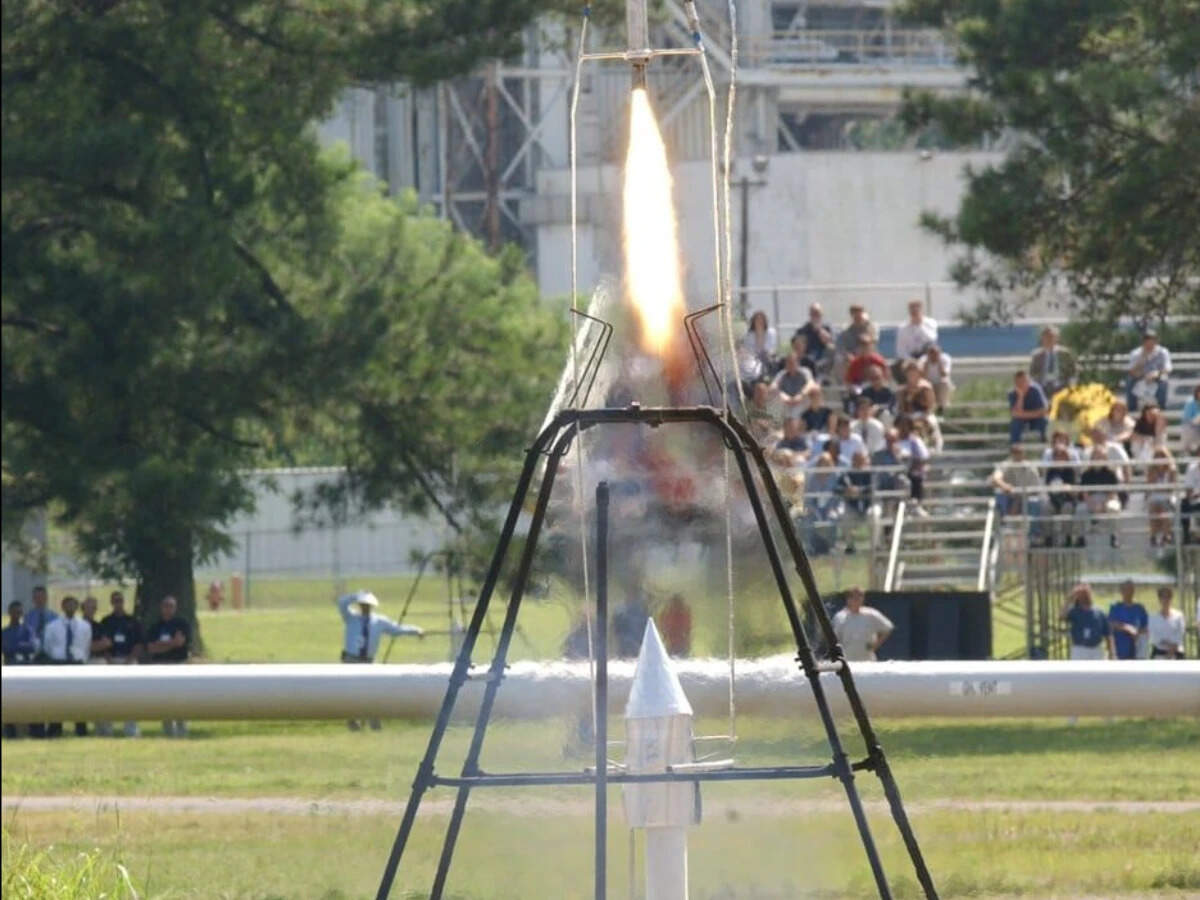
On a Massachusetts farm in 1926, a remarkable event took place that would pave the way for future space exploration. A 10-foot rocket was launched, reaching an altitude of 41 feet. Although the distance may seem insignificant by today's standards, this early experiment marked a crucial milestone in the development of rocket technology.
The launch was a testament to human ingenuity and the desire to push beyond the boundaries of what was thought possible. The fact that a 10-foot rocket could be designed, built, and launched to reach even a modest altitude of 41 feet was a significant achievement.
In the context of the time, this launch was a groundbreaking moment. The early 20th century saw a surge in interest in space exploration, with pioneers like Robert Goddard and Konstantin Tsiolkovsky laying the foundation for modern rocketry. Goddard, an American physicist, is often credited with developing the first liquid-fueled rocket, which was launched in 1926, the same year as the Massachusetts farm launch.
The Massachusetts farm launch, although not widely recognized, played a role in the broader narrative of space exploration. It demonstrated the potential for rockets to reach new heights and sparked further innovation in the field. As the years went by, rockets would go on to achieve greater altitudes, eventually leading to the exploration of space.
The significance of this event extends beyond the launch itself. It represents the beginning of a new era in space exploration, one that would be marked by rapid advancements and unprecedented achievements. The launch of the 10-foot rocket from a Massachusetts farm in 1926 was a humble start to a journey that would take humans to the moon and beyond.
In conclusion, the 1926 launch of a 10-foot rocket from a Massachusetts farm was a pivotal moment in the history of space exploration. Although the rocket only reached an altitude of 41 feet, it marked the beginning of a new era in innovation and discovery. As we continue to push the boundaries of what is possible, we must remember the early pioneers who paved the way for our current achievements.
The impact of this launch can still be felt today, as we continue to explore and push the boundaries of space. The modest beginning of a 10-foot rocket reaching 41 feet has led to countless breakthroughs and discoveries, inspiring new generations to pursue careers in science, technology, engineering, and mathematics (STEM).
As we look to the future, we must recognize the importance of continued innovation and investment in space exploration. By building on the foundations laid by early pioneers, we can continue to achieve greatness and push the boundaries of what is thought possible.
In the end, the launch of the 10-foot rocket from a Massachusetts farm in 1926 serves as a reminder that even the smallest achievements can have a profound impact on the course of history. It is a testament to human ingenuity and the desire to explore and discover, and it will continue to inspire future generations to reach for the stars.
The legacy of this launch can be seen in the modern space programs that have followed. From the Apollo missions to the International Space Station, the impact of this early experiment can still be felt. As we continue to explore and discover, we must remember the humble beginnings of space exploration and the pioneers who made it all possible.
In the years since the launch, there have been countless advancements in rocket technology, leading to greater altitudes and more complex missions. The launch of the 10-foot rocket from a Massachusetts farm in 1926 was just the beginning of a long and storied history of space exploration.
Today, as we look to the future of space exploration, we must recognize the importance of continued innovation and investment. By building on the foundations laid by early pioneers, we can continue to achieve greatness and push the boundaries of what is thought possible.
The story of the 10-foot rocket that rose 41 feet from a Massachusetts farm in 1926 is a reminder that even the smallest achievements can have a profound impact on the course of history. It is a testament to human ingenuity and the desire to explore and discover, and it will continue to inspire future generations to reach for the stars.
Frequently asked questions
What was the significance of the 1926 Massachusetts farm rocket launch
The launch marked a significant milestone in the development of rocket technology and paved the way for future space exploration.
How high did the 1926 rocket reach
The rocket reached an altitude of 41 feet.