India, Bangladesh to Discuss Ganga Water Treaty via Bilateral Talks
India and Bangladesh will discuss Ganga Water Treaty through bilateral mechanisms. Talks to focus on shared rivers and water resources.
'%3E%3Crect%20width%3D'96'%20height%3D'96'%20fill%3D'%234A235A'%2F%3E%3Ccircle%20cx%3D'30'%20cy%3D'24'%20r%3D'44'%20fill%3D'%23fff'%20opacity%3D'.12'%2F%3E%3Ccircle%20cx%3D'60'%20cy%3D'74'%20r%3D'40'%20fill%3D'%23000'%20opacity%3D'.10'%2F%3E%3C%2Fg%3E%3Cg%20fill%3D'none'%20stroke%3D'%23fff'%20stroke-width%3D'3'%3E%3Ccircle%20cx%3D'48'%20cy%3D'48'%20r%3D'16'%2F%3E%3Cellipse%20cx%3D'48'%20cy%3D'48'%20rx%3D'6.5'%20ry%3D'16'%2F%3E%3Cline%20x1%3D'32'%20y1%3D'42'%20x2%3D'64'%20y2%3D'42'%2F%3E%3Cline%20x1%3D'32'%20y1%3D'54'%20x2%3D'64'%20y2%3D'54'%2F%3E%3C%2Fg%3E%3C%2Fsvg%3E)
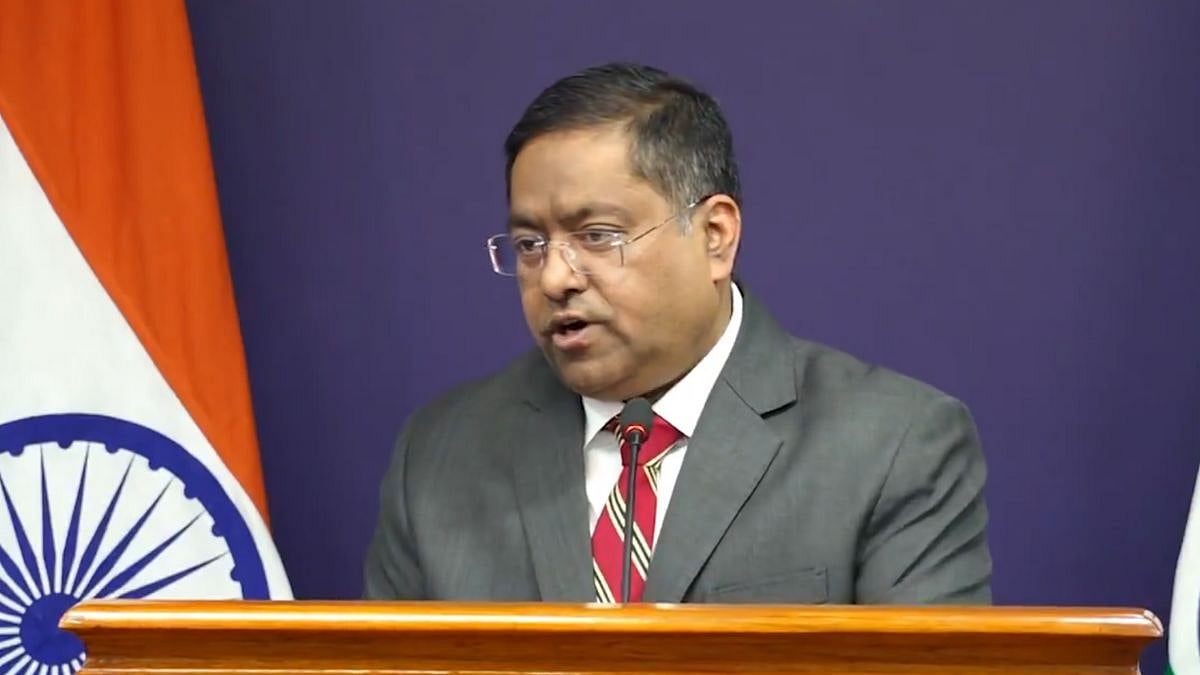
The Ministry of External Affairs (MEA) announced on Tuesday that discussions on the Ganga Water Treaty between India and Bangladesh will be conducted through existing bilateral mechanisms.
The MEA spokesperson, Randhir Jaiswal, stated that India and Bangladesh share 54 rivers, and the Joint Rivers Commission serves as the primary bilateral mechanism for addressing water-related issues.
Jaiswal emphasized that several technical-level mechanisms are also in place to facilitate discussions between the two countries on matters related to shared rivers and water resources.
He clarified that any discussion concerning the Ganga Water Treaty would take place through the established bilateral mechanisms between India and Bangladesh.
The Ganga Water Treaty, signed in 1996, governs the sharing of Ganga waters at the Farakka Barrage during the dry season.
This agreement has remained a crucial component of water cooperation between the two neighboring countries.
India and Bangladesh share several transboundary rivers, making water management and equitable sharing of river waters a key aspect of bilateral relations.
The Joint Rivers Commission and other technical-level mechanisms will play a vital role in facilitating discussions and ensuring the effective implementation of the Ganga Water Treaty.
The MEA's announcement highlights the importance of bilateral cooperation in managing shared water resources and addressing the concerns of both countries.
The Ganga Water Treaty has been an essential part of India-Bangladesh relations, and the continuation of discussions through bilateral mechanisms will help strengthen cooperation between the two nations.
In the context of India-Bangladesh relations, the management of shared water resources is a critical issue that requires cooperation and mutual understanding.
The use of bilateral mechanisms for discussing the Ganga Water Treaty demonstrates the commitment of both countries to resolving water-related issues through diplomatic channels.
This approach will help build trust and foster cooperation between India and Bangladesh, ultimately contributing to the development of a more stable and secure region.
The MEA's statement underscores the significance of the Ganga Water Treaty and the need for continued cooperation between India and Bangladesh in managing shared water resources.
As the two countries move forward with discussions on the treaty, it is essential to recognize the importance of bilateral cooperation in addressing the complex issues surrounding shared water resources.
The success of these discussions will depend on the ability of both countries to work together and find mutually beneficial solutions to the challenges they face.
In conclusion, the decision to discuss the Ganga Water Treaty through bilateral mechanisms is a positive step towards strengthening cooperation between India and Bangladesh.
It highlights the commitment of both countries to resolving water-related issues through diplomatic channels and demonstrates their willingness to work together to address the complex challenges surrounding shared water resources.
The continuation of discussions on the Ganga Water Treaty will be crucial in ensuring the effective management of shared water resources and promoting cooperation between India and Bangladesh.
This, in turn, will contribute to the development of a more stable and secure region, ultimately benefiting both countries and the wider region.
The importance of the Ganga Water Treaty cannot be overstated, and its successful implementation will depend on the continued cooperation and commitment of both India and Bangladesh.
As the two countries move forward, it is essential to recognize the significance of bilateral cooperation in addressing the complex issues surrounding shared water resources and to work towards finding mutually beneficial solutions.
In the end, the success of the Ganga Water Treaty will depend on the ability of India and Bangladesh to work together and find common ground on the issues that matter most to both countries.
This will require a commitment to cooperation, a willingness to listen to each other's concerns, and a dedication to finding solutions that benefit both nations.
The future of the Ganga Water Treaty and the management of shared water resources between India and Bangladesh will be shaped by the ability of both countries to work together and find mutually beneficial solutions to the challenges they face.
The MEA's announcement is a positive step in this direction, and it is essential to build on this momentum to ensure the continued success of the treaty and the promotion of cooperation between India and Bangladesh.
In the years to come, the management of shared water resources will remain a critical issue in India-Bangladesh relations, and the continuation of discussions on the Ganga Water Treaty will be essential in addressing the complex challenges surrounding this issue.
The use of bilateral mechanisms for discussing the treaty demonstrates the commitment of both countries to resolving water-related issues through diplomatic channels and highlights the importance of cooperation in addressing the complex issues surrounding shared water resources.
Ultimately, the success of the Ganga Water Treaty will depend on the ability of India and Bangladesh to work together and find mutually beneficial solutions to the challenges they face, and the continuation of discussions on the treaty will be crucial in ensuring the effective management of shared water resources and promoting cooperation between the two nations.
Frequently asked questions
What is the Ganga Water Treaty
The Ganga Water Treaty is an agreement between India and Bangladesh that governs the sharing of Ganga waters at the Farakka Barrage during the dry season.
How many rivers are shared between India and Bangladesh
India and Bangladesh share 54 rivers.