Delhi HC Supports DU Decision To Stall Appointments Over Exam Irregularities
Delhi High Court rules in favor of DU, NTA exam under scrutiny
'%3E%3Crect%20width%3D'96'%20height%3D'96'%20fill%3D'%231A5276'%2F%3E%3Ccircle%20cx%3D'30'%20cy%3D'24'%20r%3D'44'%20fill%3D'%23fff'%20opacity%3D'.12'%2F%3E%3Ccircle%20cx%3D'60'%20cy%3D'74'%20r%3D'40'%20fill%3D'%23000'%20opacity%3D'.10'%2F%3E%3C%2Fg%3E%3Cg%20fill%3D'%23fff'%3E%3Cpath%20d%3D'M31%2041%20L48%2031%20L65%2041%20Z'%2F%3E%3Crect%20x%3D'33'%20y%3D'43'%20width%3D'4'%20height%3D'17'%2F%3E%3Crect%20x%3D'41'%20y%3D'43'%20width%3D'4'%20height%3D'17'%2F%3E%3Crect%20x%3D'51'%20y%3D'43'%20width%3D'4'%20height%3D'17'%2F%3E%3Crect%20x%3D'59'%20y%3D'43'%20width%3D'4'%20height%3D'17'%2F%3E%3Crect%20x%3D'30'%20y%3D'62'%20width%3D'36'%20height%3D'4'%20rx%3D'1'%2F%3E%3C%2Fg%3E%3C%2Fsvg%3E)
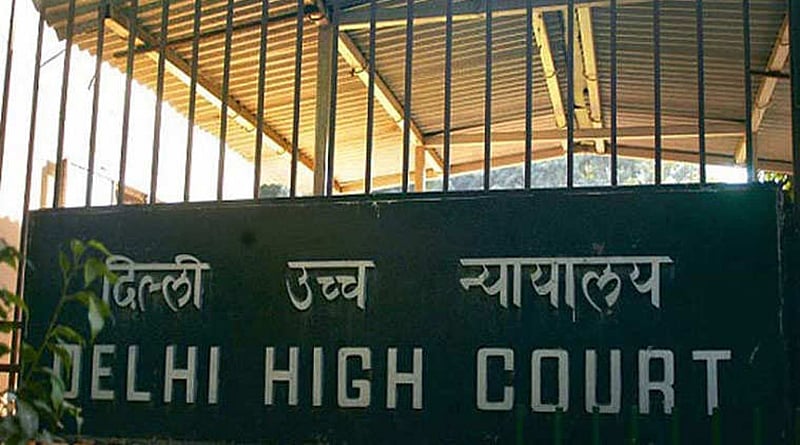
The Delhi High Court has ruled in favor of Delhi University's decision to put appointments on hold due to suspected unfair means in a public recruitment examination conducted by the National Testing Agency (NTA). The examination was for the posts of laboratory attendant and library attendant.
A Division Bench of Chief Justice Devendra Kumar Upadhyaya and Justice Tejas Karia set aside a Single Judge's order directing Delhi University to proceed with the appointment of selected candidates. The High Court held that when there are serious doubts over the merit list, the university is entitled to pause the appointment process and examine the matter.
Delhi University had constituted committees to examine suspected irregularities after concerns arose over the examination results. The committees found an abnormal concentration of successful candidates at certain examination centres, unusually high scores despite negative marking, similarities in response patterns, and common incorrect answers.
The Single Judge had earlier held that the university's subsequent enquiry was an afterthought or amounted to 'reverse engineering' to justify its decision to withhold the joining of selected candidates. However, the Division Bench disagreed, observing that the committee had examined the response patterns of successful candidates from the identified centres and found a discernible pattern in both correct and incorrect answers attempted by candidates.
The court emphasized that the examination process, particularly where it concerns recruitment to public institutions, has to be conducted in a free, fair, transparent, and unimpeachable manner. Any conduct that compromises the sanctity of an examination, including leakage of material, unauthorized assistance, manipulation of systems, collusion, tampering with data, or any other unfair method, strikes at the root of the selection process and must be viewed seriously.
The High Court concluded that the examination conducted by the NTA could not be held to have been conducted in a free, fair, and transparent manner. The finding puts the focus not merely on individual candidates but on the credibility of the recruitment exercise as a whole.
The ruling underlines the importance of protecting the credibility of a public recruitment process when questions arise over the integrity of an examination. The court's decision is a significant step towards ensuring that public institutions maintain the trust of the public by conducting fair and transparent recruitment processes.
In the context of public recruitment examinations, the High Court's ruling sets a precedent for universities and other public institutions to take proactive measures to investigate suspected irregularities and ensure the integrity of the examination process. This decision is likely to have far-reaching implications for the conduct of public recruitment examinations in India.
The Delhi High Court's ruling is a reminder that the credibility of public institutions is paramount, and any compromise on the integrity of the examination process can have serious consequences. The court's emphasis on the importance of conducting examinations in a free, fair, transparent, and unimpeachable manner is a significant step towards maintaining public trust in institutional selection and merit-based recruitment.
In conclusion, the Delhi High Court's decision to support Delhi University's decision to stall appointments due to suspected unfair means in the NTA recruitment exam is a significant step towards ensuring the integrity of public recruitment processes. The ruling highlights the importance of protecting the credibility of public institutions and maintaining the trust of the public by conducting fair and transparent recruitment processes.
The implications of this decision are far-reaching, and it is likely to have a significant impact on the conduct of public recruitment examinations in India. The court's emphasis on the importance of conducting examinations in a free, fair, transparent, and unimpeachable manner is a significant step towards maintaining public trust in institutional selection and merit-based recruitment.
The decision is also a reminder that public institutions have a duty to ensure that their recruitment processes are fair, transparent, and free from any irregularities. The High Court's ruling is a significant step towards achieving this goal and maintaining the credibility of public institutions in India.
The ruling is likely to be welcomed by those who have been advocating for greater transparency and accountability in public recruitment processes. The decision is a significant step towards ensuring that public institutions maintain the trust of the public by conducting fair and transparent recruitment processes.
In the end, the Delhi High Court's decision to support Delhi University's decision to stall appointments due to suspected unfair means in the NTA recruitment exam is a significant step towards ensuring the integrity of public recruitment processes. The ruling highlights the importance of protecting the credibility of public institutions and maintaining the trust of the public by conducting fair and transparent recruitment processes.
Frequently asked questions
What was the reason for the Delhi High Court's decision to support DU's decision to stall appointments?
The court ruled that the university had reasonable apprehensions that the merit list may not reflect genuine merit due to suspected unfair means in the NTA recruitment exam.
What were the irregularities found in the NTA recruitment exam?
The committees found an abnormal concentration of successful candidates at certain examination centres, unusually high scores despite negative marking, similarities in response patterns, and common incorrect answers.