Coral Reef Damage Detected Early
Researchers use seawater to monitor coral health, detecting damage before it's visible
'%3E%3Crect%20width%3D'96'%20height%3D'96'%20fill%3D'%23B3261E'%2F%3E%3Ccircle%20cx%3D'30'%20cy%3D'24'%20r%3D'44'%20fill%3D'%23fff'%20opacity%3D'.12'%2F%3E%3Ccircle%20cx%3D'60'%20cy%3D'74'%20r%3D'40'%20fill%3D'%23000'%20opacity%3D'.10'%2F%3E%3C%2Fg%3E%3Cg%20fill%3D'%23fff'%3E%3Crect%20x%3D'29'%20y%3D'49'%20width%3D'8'%20height%3D'19'%20rx%3D'1'%2F%3E%3Crect%20x%3D'39'%20y%3D'40'%20width%3D'9'%20height%3D'28'%20rx%3D'1'%2F%3E%3Crect%20x%3D'50'%20y%3D'45'%20width%3D'8'%20height%3D'23'%20rx%3D'1'%2F%3E%3Crect%20x%3D'60'%20y%3D'53'%20width%3D'7'%20height%3D'15'%20rx%3D'1'%2F%3E%3Crect%20x%3D'41'%20y%3D'34'%20width%3D'5'%20height%3D'6'%2F%3E%3C%2Fg%3E%3C%2Fsvg%3E)
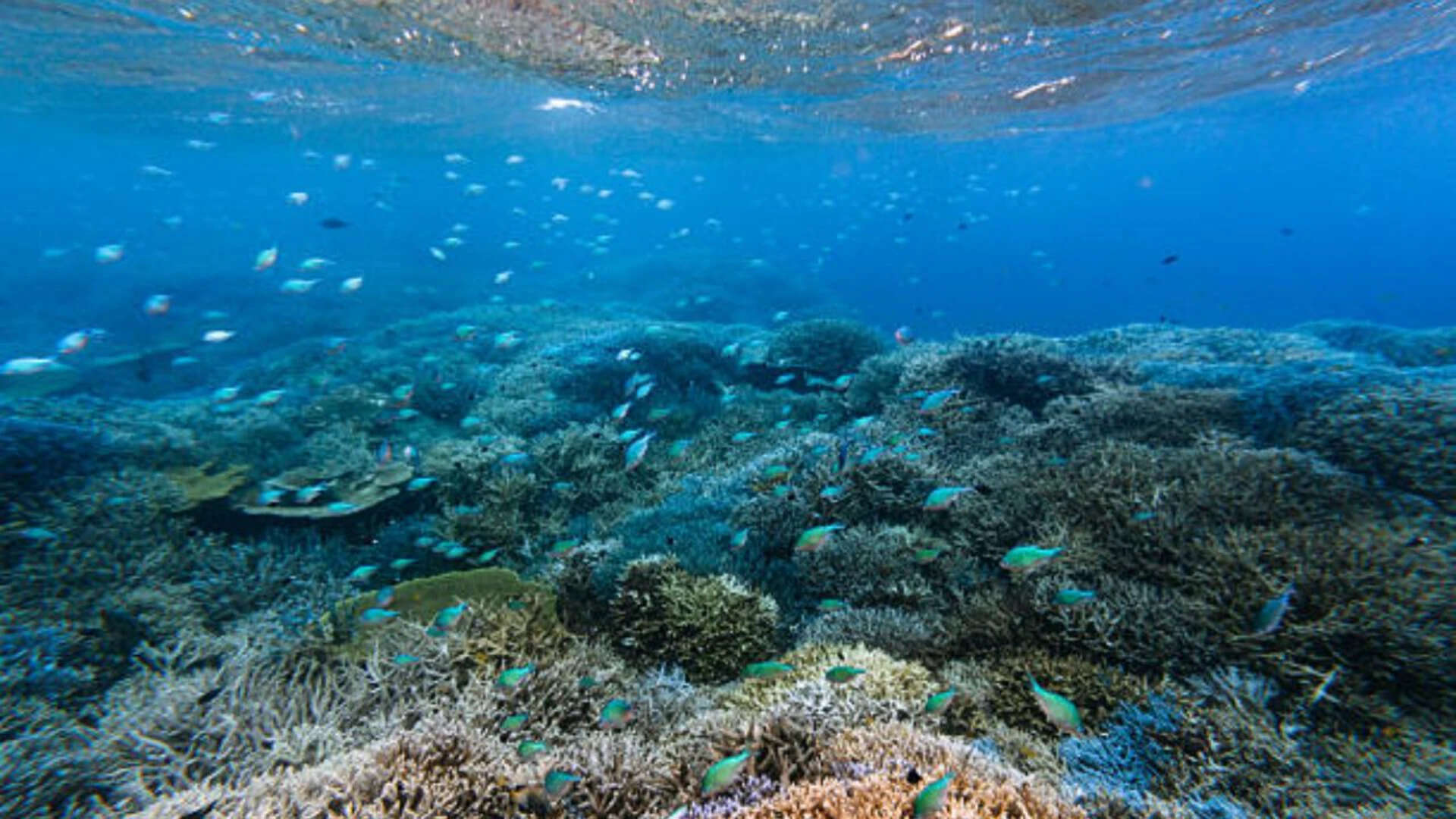
Researchers have developed a new approach to monitor the health of coral reefs by analyzing the chemistry and microbe content of seawater. This method, similar to blood tests used in human medicine to detect early signs of disease, allows for the detection of changes in coral reef health before any visible signs of stress appear.
The approach takes into account the significant influence of ocean currents on the chemical and microbial patterns in seawater. By studying these patterns, researchers can identify potential damage to coral reefs before it becomes visible, providing an early warning system for conservation efforts.
Coral reefs are vital ecosystems that support a vast array of marine life and provide important ecosystem services, including shoreline protection and water filtration. However, they are facing numerous threats, including climate change, pollution, and overfishing, which can cause significant damage and even death to the coral.
The new approach is an interdisciplinary effort, combining expertise from fields such as oceanography, microbiology, and ecology. By working together, researchers hope to develop a more effective way to monitor and protect coral reef health, ultimately helping to conserve these vital ecosystems.
The use of seawater chemistry and microbe analysis to monitor coral reef health is a relatively new field of research, but it has shown promising results. Studies have found that changes in seawater chemistry and microbe content can be indicative of coral stress and damage, even before any visible signs appear.
The development of this new approach is crucial for the conservation of coral reefs, as it provides a tool for early detection and prevention of damage. By detecting changes in coral reef health before they become visible, conservation efforts can be targeted more effectively, helping to protect these vital ecosystems.
The long-term goal of this research is to develop a comprehensive monitoring system that can be used to track coral reef health over time. This would provide valuable insights into the impacts of different threats on coral reefs and help to inform conservation efforts.
Overall, the use of seawater chemistry and microbe analysis to monitor coral reef health is a promising new approach that has the potential to make a significant impact on the conservation of these vital ecosystems.
In the context of ocean conservation, this research is significant as it provides a new tool for monitoring and protecting coral reefs. Coral reefs are not only important ecosystems, but they also provide important economic and social benefits to communities around the world. By developing effective methods for monitoring and conserving coral reef health, researchers can help to ensure the long-term sustainability of these ecosystems.
The impact of this research extends beyond the conservation of coral reefs, as it also has implications for human health and well-being. Coral reefs provide important ecosystem services, including shoreline protection and water filtration, which are essential for human communities. By protecting coral reefs, researchers can also help to protect human health and well-being.
In conclusion, the development of a new approach to monitor coral reef health using seawater chemistry and microbe analysis is a significant step forward in the conservation of these vital ecosystems. By providing an early warning system for coral reef damage, this research has the potential to make a significant impact on the long-term sustainability of coral reefs and the many benefits they provide to humans and the environment.
What it means for Mumbai and India is that this research can help inform conservation efforts and protect the coral reefs in the Indian Ocean, which are an important part of the country's marine ecosystem. The conservation of coral reefs is crucial for the health of the ocean and the many species that depend on them, and this research provides a new tool for achieving this goal.
Frequently asked questions
What is the new approach to monitor coral reef health?
The new approach uses seawater chemistry and microbe analysis to detect changes in coral reef health before visible signs of stress appear.
Why is it important to conserve coral reefs?
Coral reefs are vital ecosystems that support a vast array of marine life and provide important ecosystem services, including shoreline protection and water filtration.