Japan's Daisugi Technique Harvests Timber Sustainably
Japan's 600-year-old method, Daisugi, produces timber without cutting trees. This ancient technique is now gaining attention for its sustainability.
'%3E%3Crect%20width%3D'96'%20height%3D'96'%20fill%3D'%23B3261E'%2F%3E%3Ccircle%20cx%3D'30'%20cy%3D'24'%20r%3D'44'%20fill%3D'%23fff'%20opacity%3D'.12'%2F%3E%3Ccircle%20cx%3D'60'%20cy%3D'74'%20r%3D'40'%20fill%3D'%23000'%20opacity%3D'.10'%2F%3E%3C%2Fg%3E%3Cg%20fill%3D'%23fff'%3E%3Crect%20x%3D'29'%20y%3D'49'%20width%3D'8'%20height%3D'19'%20rx%3D'1'%2F%3E%3Crect%20x%3D'39'%20y%3D'40'%20width%3D'9'%20height%3D'28'%20rx%3D'1'%2F%3E%3Crect%20x%3D'50'%20y%3D'45'%20width%3D'8'%20height%3D'23'%20rx%3D'1'%2F%3E%3Crect%20x%3D'60'%20y%3D'53'%20width%3D'7'%20height%3D'15'%20rx%3D'1'%2F%3E%3Crect%20x%3D'41'%20y%3D'34'%20width%3D'5'%20height%3D'6'%2F%3E%3C%2Fg%3E%3C%2Fsvg%3E)
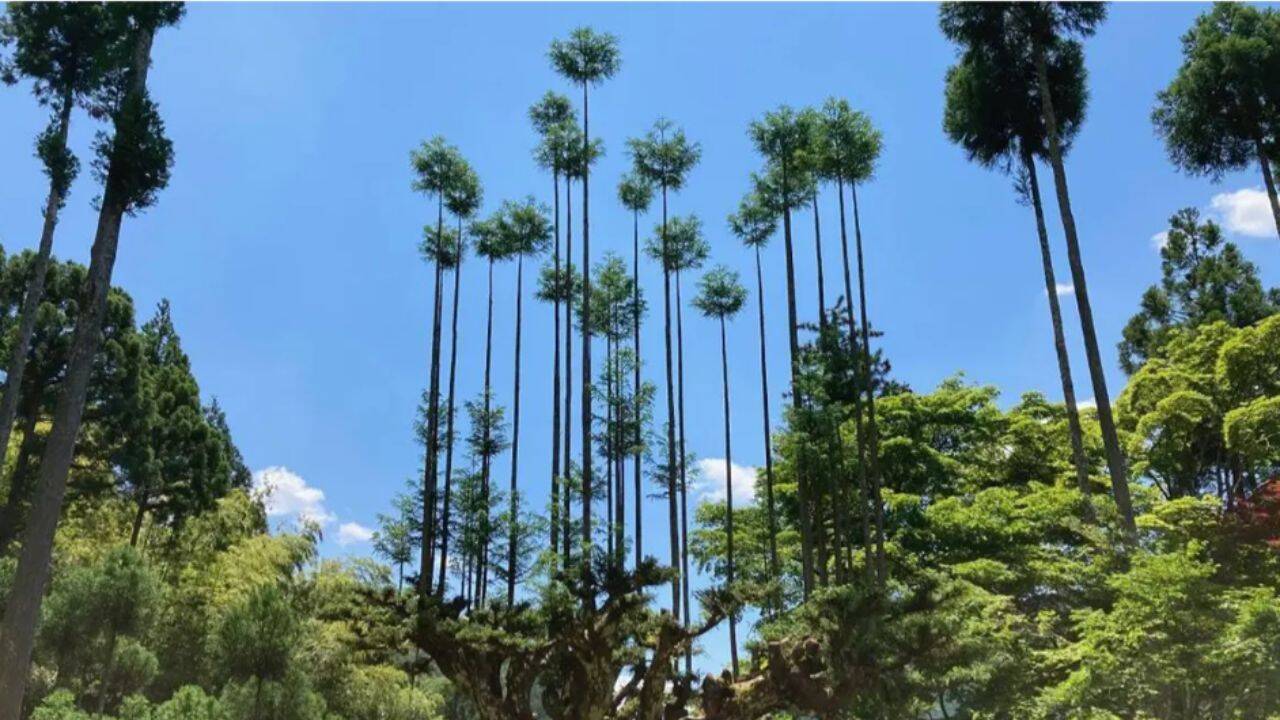
Japan's Daisugi technique, developed in Kyoto during the 14th century, offers a unique approach to harvesting timber. This 600-year-old method allows a single cedar tree to grow multiple straight trunks, which can be harvested for centuries without cutting down the entire tree.
The Daisugi technique involves pruning the branches of a cedar tree to encourage the growth of multiple trunks. This process can be repeated multiple times, allowing the tree to produce new trunks for harvesting. As a result, the tree remains intact, and the forest ecosystem is preserved.
The Daisugi technique was originally developed to meet the demand for high-quality timber in Japan. The method was used to produce timber for construction, furniture, and other purposes. Today, the technique is recognized as a sustainable forestry practice, which can help reduce the pressure on the world's forests.
Deforestation is a growing concern globally, with millions of trees being cut down every year. The Daisugi technique offers a potential solution to this problem, as it allows for the production of timber without cutting down entire trees. This approach can help preserve the world's forests, while also meeting the demand for timber.
The Daisugi technique is now gaining attention worldwide, as people look for sustainable ways to manage forests. The method is being studied and adopted by foresters and conservationists, who recognize its potential to reduce the impact of forestry on the environment.
In addition to its environmental benefits, the Daisugi technique also has cultural significance in Japan. The method has been passed down through generations of foresters, who have refined and perfected the technique over the centuries.
The Daisugi technique is an example of how traditional practices can contribute to sustainable development. By adopting and promoting this method, we can help reduce the pressure on the world's forests, while also preserving the cultural heritage of Japan.
In conclusion, Japan's Daisugi technique is a unique and sustainable approach to harvesting timber. The method offers a potential solution to the problem of deforestation, while also preserving the cultural heritage of Japan. As the world looks for ways to manage forests sustainably, the Daisugi technique is an important example to follow.
The significance of the Daisugi technique extends beyond Japan, as it offers a model for sustainable forestry practices globally. By adopting this approach, we can help reduce the impact of forestry on the environment, while also meeting the demand for timber. The Daisugi technique is a reminder that traditional practices can contribute to sustainable development, and that we can learn from the past to build a more sustainable future.
Frequently asked questions
What is the Daisugi technique?
The Daisugi technique is a 600-year-old method of harvesting timber without cutting down entire trees, by pruning branches to encourage multiple trunk growth.
Where did the Daisugi technique originate?
The Daisugi technique originated in Kyoto, Japan during the 14th century.