NASA Chases Solar Eclipse at 460mph
NASA to track total solar eclipse with 86 balloons. Eclipse occurs on August 12, 2026.
'%3E%3Crect%20width%3D'96'%20height%3D'96'%20fill%3D'%23B3261E'%2F%3E%3Ccircle%20cx%3D'30'%20cy%3D'24'%20r%3D'44'%20fill%3D'%23fff'%20opacity%3D'.12'%2F%3E%3Ccircle%20cx%3D'60'%20cy%3D'74'%20r%3D'40'%20fill%3D'%23000'%20opacity%3D'.10'%2F%3E%3C%2Fg%3E%3Cg%20fill%3D'%23fff'%3E%3Crect%20x%3D'29'%20y%3D'49'%20width%3D'8'%20height%3D'19'%20rx%3D'1'%2F%3E%3Crect%20x%3D'39'%20y%3D'40'%20width%3D'9'%20height%3D'28'%20rx%3D'1'%2F%3E%3Crect%20x%3D'50'%20y%3D'45'%20width%3D'8'%20height%3D'23'%20rx%3D'1'%2F%3E%3Crect%20x%3D'60'%20y%3D'53'%20width%3D'7'%20height%3D'15'%20rx%3D'1'%2F%3E%3Crect%20x%3D'41'%20y%3D'34'%20width%3D'5'%20height%3D'6'%2F%3E%3C%2Fg%3E%3C%2Fsvg%3E)
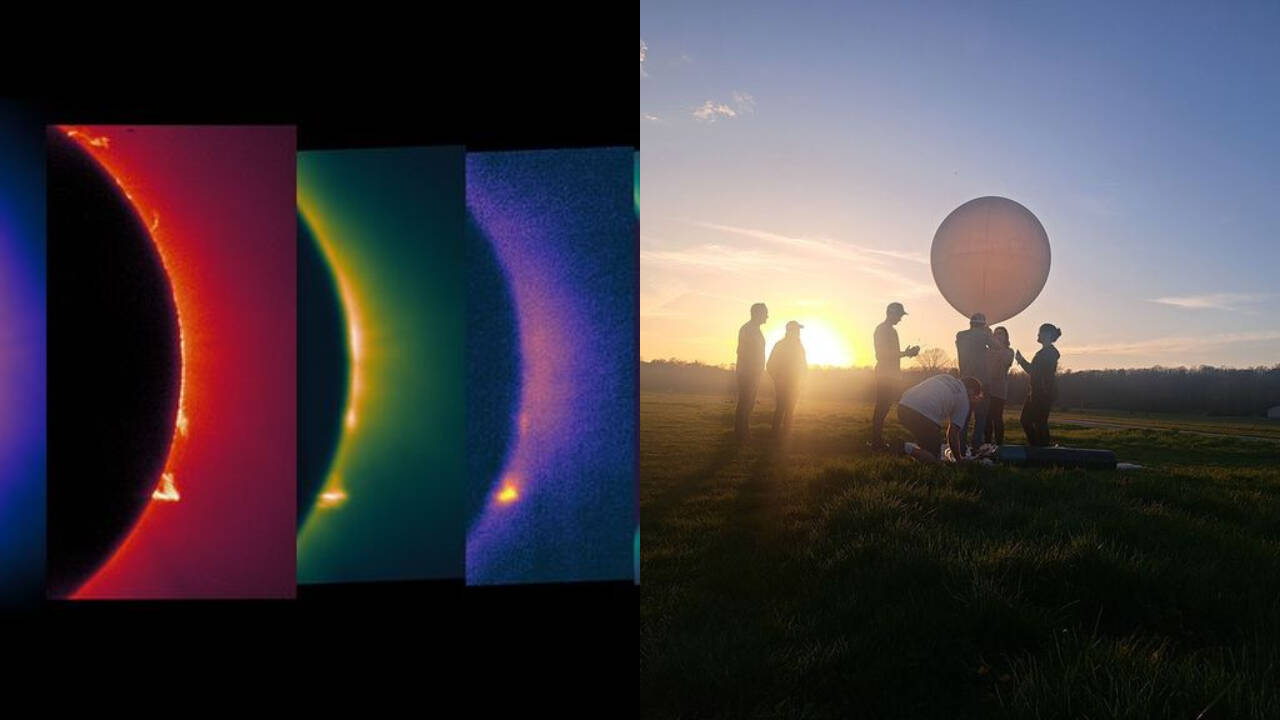
NASA is planning to chase the total solar eclipse on August 12, 2026, by flying 86 balloons at a speed of 460mph. This unique endeavor aims to track the eclipse and gather valuable data.
The total solar eclipse is a rare celestial event in which the Moon passes directly between the Earth and the Sun, blocking the Sun's light. This event provides scientists with a unique opportunity to study the Sun's corona and the Earth's atmosphere.
The 86 balloons will be equipped with specialized instruments to collect data on the eclipse. By flying at high speeds, the balloons will be able to track the eclipse as it moves across the Earth's surface.
NASA's mission to chase the solar eclipse is part of its ongoing efforts to study the Sun and its effects on the Earth. The data collected during this event will help scientists to better understand the Sun's behavior and its impact on the Earth's climate.
The total solar eclipse on August 12, 2026, will be visible from certain parts of the world, including North America. This event is expected to be a major astronomical event, attracting the attention of scientists and sky gazers alike.
The use of balloons to track the eclipse is a innovative approach, allowing scientists to collect data from high altitudes. The balloons will be able to reach heights of up to 30 km, providing a unique perspective on the eclipse.
NASA's mission to chase the solar eclipse is a complex operation, requiring careful planning and execution. The agency will work closely with scientists and engineers to ensure that the mission is a success.
The data collected during this event will be used to improve our understanding of the Sun and its effects on the Earth. This knowledge will be essential in helping us to better predict and prepare for future astronomical events.
In conclusion, NASA's plan to chase the total solar eclipse on August 12, 2026, with 86 balloons is a groundbreaking endeavor. This mission will provide scientists with valuable data and insights into the Sun's behavior, and will help us to better understand the Earth's place in the universe.
Frequently asked questions
What is the purpose of NASA's mission to chase the solar eclipse?
The purpose of NASA's mission is to collect data on the eclipse and study the Sun's corona and the Earth's atmosphere.
How will NASA track the solar eclipse?
NASA will track the eclipse using 86 balloons equipped with specialized instruments, flying at a speed of 460mph.