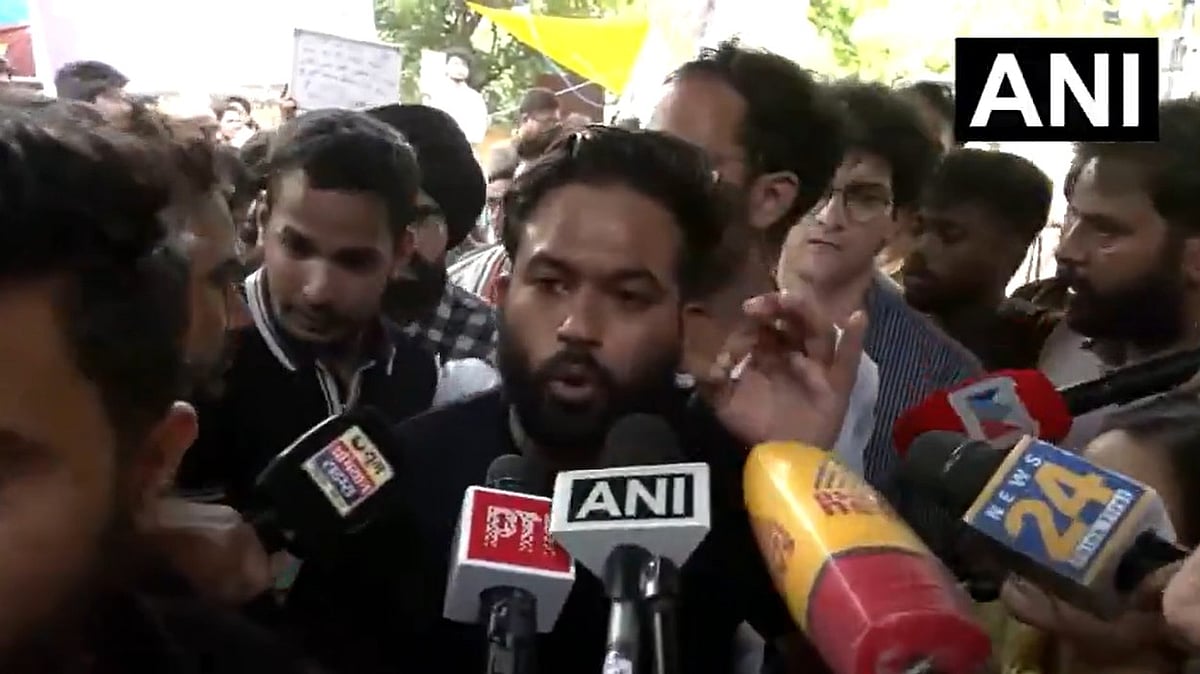
CJP Founder Detained, Students Lathicharged
CJP founder beaten and detained, students protesting lathicharged.
'%3E%3Crect%20width%3D'96'%20height%3D'96'%20fill%3D'%231A5276'%2F%3E%3Ccircle%20cx%3D'30'%20cy%3D'24'%20r%3D'44'%20fill%3D'%23fff'%20opacity%3D'.12'%2F%3E%3Ccircle%20cx%3D'60'%20cy%3D'74'%20r%3D'40'%20fill%3D'%23000'%20opacity%3D'.10'%2F%3E%3C%2Fg%3E%3Cg%20fill%3D'%23fff'%3E%3Cpath%20d%3D'M31%2041%20L48%2031%20L65%2041%20Z'%2F%3E%3Crect%20x%3D'33'%20y%3D'43'%20width%3D'4'%20height%3D'17'%2F%3E%3Crect%20x%3D'41'%20y%3D'43'%20width%3D'4'%20height%3D'17'%2F%3E%3Crect%20x%3D'51'%20y%3D'43'%20width%3D'4'%20height%3D'17'%2F%3E%3Crect%20x%3D'59'%20y%3D'43'%20width%3D'4'%20height%3D'17'%2F%3E%3Crect%20x%3D'30'%20y%3D'62'%20width%3D'36'%20height%3D'4'%20rx%3D'1'%2F%3E%3C%2Fg%3E%3C%2Fsvg%3E)

A significant incident occurred involving the founder of the CJP, Dipke, who was reportedly beaten and detained. This incident took place during a protest where students were also lathicharged, according to the party.
The CJP, a prominent organization, has been at the forefront of various social and political issues. The founder, Dipke, has been an active voice in raising awareness and advocating for change. The details of the protest and the events leading up to the detention of Dipke are still emerging.
According to the party, the students who were protesting were subjected to lathicharge, a form of crowd control that involves the use of batons. This method is often used by law enforcement to disperse crowds and maintain order. However, its use can be controversial, especially if it is deemed excessive or unnecessary.
The CJP has been vocal about various issues, including social justice and human rights. The organization has a strong presence and has been involved in several high-profile cases. The detention of its founder and the lathicharge of protesting students has sparked concern and outrage among its supporters.
The incident highlights the ongoing tensions between law enforcement and protesters in the country. There have been several instances of protests turning violent, with both sides accusing each other of aggression. The use of force by law enforcement has been a subject of debate, with many arguing that it is often excessive and unjustified.
The CJP has called for an investigation into the incident and has demanded the release of its founder. The organization has also condemned the use of force against the protesting students. The incident has sparked a wider debate about the rights of protesters and the role of law enforcement in maintaining order.
In the context of the country's history of protests and demonstrations, this incident is significant. It highlights the ongoing struggle for social justice and human rights, and the challenges faced by organizations like the CJP. The incident also raises questions about the balance between maintaining order and protecting the rights of citizens.
The detention of Dipke and the lathicharge of protesting students has significant implications for the country. It underscores the need for a nuanced approach to crowd control and the importance of protecting the rights of protesters. As the situation continues to unfold, it is likely that there will be further developments and reactions from various stakeholders.
In conclusion, the incident involving the CJP founder and the protesting students is a significant one, with far-reaching implications. It highlights the ongoing tensions between law enforcement and protesters, and the need for a balanced approach to maintaining order and protecting the rights of citizens. The incident is a reminder of the importance of social justice and human rights, and the role that organizations like the CJP play in advocating for change.