Supreme Court Issues Notice To Union Education Secretary
Notice issued over plea to regulate religious education for children under 14. Contempt petition filed against Union Education Secretary.
'%3E%3Crect%20width%3D'96'%20height%3D'96'%20fill%3D'%231A5276'%2F%3E%3Ccircle%20cx%3D'30'%20cy%3D'24'%20r%3D'44'%20fill%3D'%23fff'%20opacity%3D'.12'%2F%3E%3Ccircle%20cx%3D'60'%20cy%3D'74'%20r%3D'40'%20fill%3D'%23000'%20opacity%3D'.10'%2F%3E%3C%2Fg%3E%3Cg%20fill%3D'%23fff'%3E%3Cpath%20d%3D'M31%2041%20L48%2031%20L65%2041%20Z'%2F%3E%3Crect%20x%3D'33'%20y%3D'43'%20width%3D'4'%20height%3D'17'%2F%3E%3Crect%20x%3D'41'%20y%3D'43'%20width%3D'4'%20height%3D'17'%2F%3E%3Crect%20x%3D'51'%20y%3D'43'%20width%3D'4'%20height%3D'17'%2F%3E%3Crect%20x%3D'59'%20y%3D'43'%20width%3D'4'%20height%3D'17'%2F%3E%3Crect%20x%3D'30'%20y%3D'62'%20width%3D'36'%20height%3D'4'%20rx%3D'1'%2F%3E%3C%2Fg%3E%3C%2Fsvg%3E)
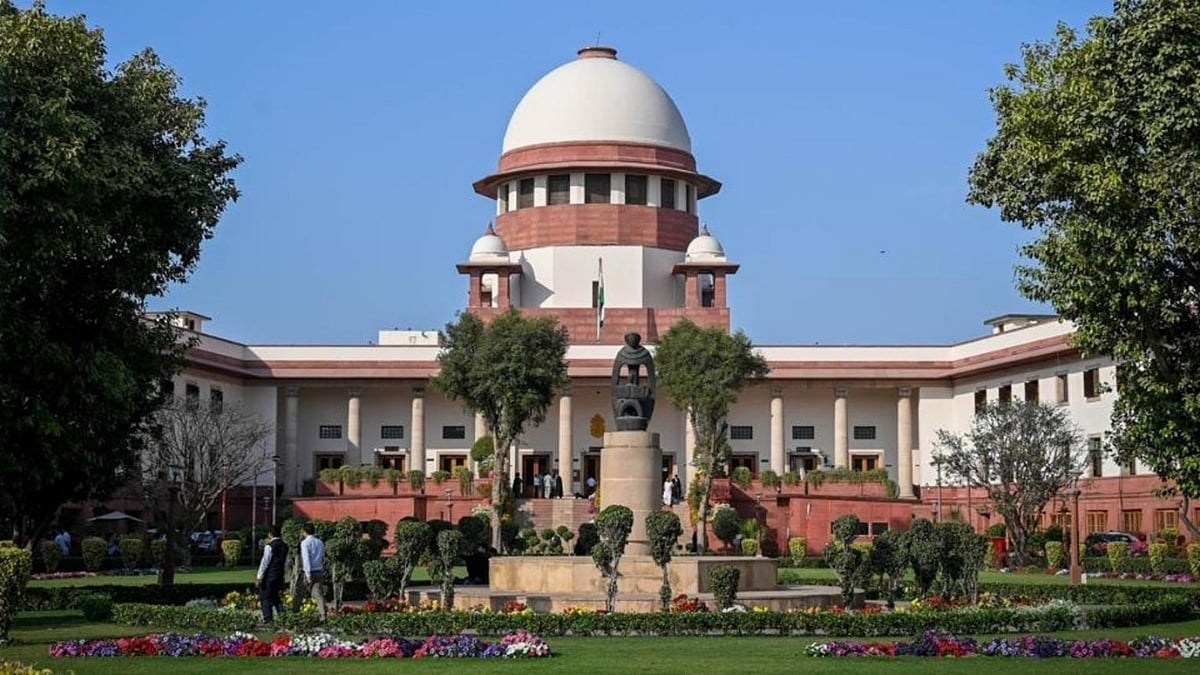
The Supreme Court has issued a notice to Union Education Secretary T.K. Anil Kumar in response to a contempt petition filed by advocate Ashwini Kumar Upadhyay. The petition alleges that the Education Secretary failed to comply with an earlier court direction to consider a representation seeking regulation of institutions imparting religious education to children below 14 years of age.
The contempt petition was filed by Upadhyay, who had submitted a representation to the Union Education Secretary seeking the registration and monitoring of institutions providing secular or religious education to children below 14 years. However, despite the Supreme Court's earlier direction to consider the representation, the Education Secretary failed to take a decision, prompting Upadhyay to approach the Court alleging non-compliance.
The matter has been directed to be listed after four weeks, and the Education Secretary has been dispensed with the requirement to appear in person. The Bench comprising Justice Dipankar Datta and Justice Sheel Nagu issued the notice and will hear the matter after four weeks.
Upadhyay's petition raises concerns over the thousands of non-registered institutions operating without adequate State supervision while imparting religious instruction to children. He alleges that such institutions could have implications for internal security, fraternity, unity, and national integration, and that young children could be vulnerable to being influenced or 'brainwashed' in the name of religion.
The plea also seeks directions concerning the interpretation of Article 30 of the Constitution, which deals with the rights of minorities to establish and administer educational institutions of their choice. Upadhyay argues that semi-religious minority and non-minority educational institutions should not fall within the protection of Article 30, and that the provision does not confer additional rights beyond those available under Article 19(1)(g).
The Supreme Court's decision to issue a notice to the Union Education Secretary is a significant development in the case, and the matter will be closely watched as it progresses. The Court's interpretation of Article 30 and its implications for religious education in India will be of great interest to educators, policymakers, and the general public.
The issue of regulating religious education for children under 14 is a complex one, and the Supreme Court's decision will have far-reaching implications for the education sector in India. The Court's ruling will need to balance the rights of minorities to establish and administer educational institutions of their choice with the need to ensure that children are not vulnerable to exploitation or indoctrination.
In conclusion, the Supreme Court's notice to the Union Education Secretary is an important step in the ongoing debate over the regulation of religious education in India. The matter will be closely watched as it progresses, and the Court's decision will have significant implications for the education sector and the rights of minorities in India.
The Supreme Court's decision to hear the matter after four weeks indicates that the Court is taking the issue seriously and is willing to consider the concerns raised by Upadhyay. The outcome of the case will depend on the Court's interpretation of the relevant laws and the evidence presented by the parties involved.
The case highlights the need for greater regulation and oversight of institutions imparting religious education to children in India. The Supreme Court's decision will provide clarity on the issue and will have significant implications for the education sector and the rights of minorities in India.
In the meantime, the Union Education Secretary will need to respond to the notice issued by the Supreme Court and provide an explanation for the alleged non-compliance with the earlier court direction. The Secretary will also need to consider the representation submitted by Upadhyay and take a decision on the matter.
The Supreme Court's decision will be a significant milestone in the ongoing debate over the regulation of religious education in India. The Court's ruling will provide clarity on the issue and will have far-reaching implications for the education sector and the rights of minorities in India.
The case is a reminder of the importance of ensuring that children are protected from exploitation and indoctrination, and that they have access to quality education that prepares them for life in a diverse and pluralistic society. The Supreme Court's decision will be closely watched, and its implications will be felt for years to come.
The issue of regulating religious education is a complex and sensitive one, and the Supreme Court's decision will need to balance competing interests and rights. The Court's ruling will provide clarity on the issue and will have significant implications for the education sector and the rights of minorities in India.
In conclusion, the Supreme Court's notice to the Union Education Secretary is an important step in the ongoing debate over the regulation of religious education in India. The matter will be closely watched as it progresses, and the Court's decision will have significant implications for the education sector and the rights of minorities in India.
The significance of the Supreme Court's decision cannot be overstated. The Court's ruling will provide clarity on the issue of regulating religious education and will have far-reaching implications for the education sector and the rights of minorities in India. The decision will be a major milestone in the ongoing debate over the regulation of religious education, and its implications will be felt for years to come.
The Supreme Court's decision will be a significant development in the case, and the matter will be closely watched as it progresses. The Court's interpretation of Article 30 and its implications for religious education in India will be of great interest to educators, policymakers, and the general public.
The issue of regulating religious education for children under 14 is a complex one, and the Supreme Court's decision will have far-reaching implications for the education sector in India. The Court's ruling will need to balance the rights of minorities to establish and administer educational institutions of their choice with the need to ensure that children are not vulnerable to exploitation or indoctrination.
In the end, the Supreme Court's decision will provide clarity on the issue of regulating religious education and will have significant implications for the education sector and the rights of minorities in India. The decision will be a major milestone in the ongoing debate over the regulation of religious education, and its implications will be felt for years to come.
Frequently asked questions
What is the contempt petition about?
The contempt petition was filed by advocate Ashwini Kumar Upadhyay against Union Education Secretary T.K. Anil Kumar, alleging non-compliance with an earlier court direction to consider a representation seeking regulation of institutions imparting religious education to children below 14 years of age.
What is the significance of the Supreme Court's decision?
The Supreme Court's decision will have far-reaching implications for the education sector and the rights of minorities in India, and will provide clarity on the issue of regulating religious education for children under 14.