Xi Jinping Visits India Amid LAC Tensions
Chinese President Xi Jinping arrives in India, historical pattern suggests New Delhi must stay vigilant. Past summits have been followed by military friction along the border.
'%3E%3Crect%20width%3D'96'%20height%3D'96'%20fill%3D'%234A235A'%2F%3E%3Ccircle%20cx%3D'30'%20cy%3D'24'%20r%3D'44'%20fill%3D'%23fff'%20opacity%3D'.12'%2F%3E%3Ccircle%20cx%3D'60'%20cy%3D'74'%20r%3D'40'%20fill%3D'%23000'%20opacity%3D'.10'%2F%3E%3C%2Fg%3E%3Cg%20fill%3D'none'%20stroke%3D'%23fff'%20stroke-width%3D'3'%3E%3Ccircle%20cx%3D'48'%20cy%3D'48'%20r%3D'16'%2F%3E%3Cellipse%20cx%3D'48'%20cy%3D'48'%20rx%3D'6.5'%20ry%3D'16'%2F%3E%3Cline%20x1%3D'32'%20y1%3D'42'%20x2%3D'64'%20y2%3D'42'%2F%3E%3Cline%20x1%3D'32'%20y1%3D'54'%20x2%3D'64'%20y2%3D'54'%2F%3E%3C%2Fg%3E%3C%2Fsvg%3E)
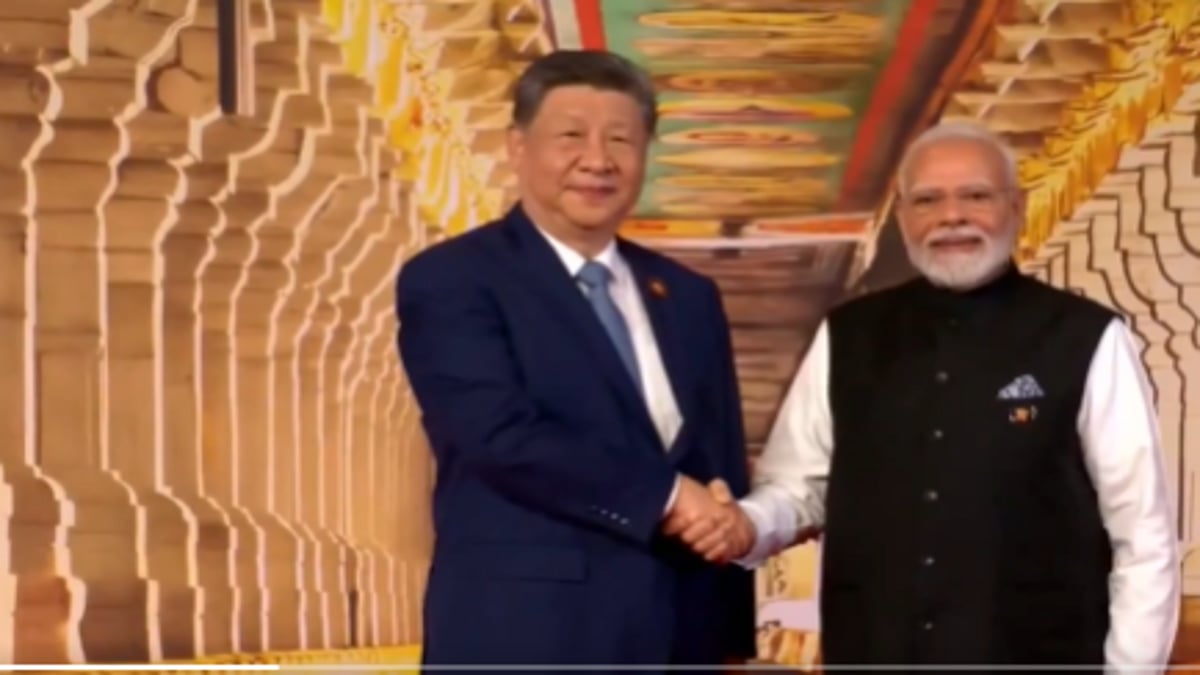
Chinese President Xi Jinping has arrived in New Delhi for the 18th BRICS Summit, marking his first visit to India in seven years. While the current diplomatic efforts bring economic relief and operational de-escalation along the Line of Actual Control (LAC), history suggests that high-level warmth from Beijing has frequently served as a prelude to strategic pressure on the ground.
The last decade of bilateral engagements has seen every major diplomatic summit involving President Xi followed by military friction or aggressive postures along the border. In 2014, over 1,000 PLA troops crossed the LAC in the Chumar sector of Eastern Ladakh during President Xi's visit to Gujarat. Similarly, the 2017 Doklam standoff and the 2020 Galwan Valley clash occurred after high-level diplomatic engagements.
Beijing's foreign policy operates on two distinct tracks - broad political declarations at international summits and granular security assertion on the ground. The post-2014 record shows that political handshakes in capital cities do not automatically translate into operational restraint along the border. For Indian security planners, assuming that high-level summitry guarantees long-term border stability has repeatedly proven to be a strategic miscalculation.
The military disengagement agreements reached in late 2024 at Depsang and Demchok resolved immediate operational friction and restored patrolling rights, paving the way for diplomatic normalisation. However, this disengagement does not alter the vast militarised infrastructure that China built across Tibet and Xinjiang post-2020.
Beijing views tactical cooling off as a necessary measure to manage global economic headwinds, not as a concession on its underlying territorial claims. Asymmetric economic dependencies persist, with Beijing holding significant structural leverage over India. While India has begun easing operational bottlenecks by accelerating business visas and resuming direct flights, Beijing continues to hold the upper hand.
The historical pattern of China's behavior along the LAC suggests that New Delhi must stay watchful and vigilant, even as diplomatic efforts continue. The current thaw in relations may bring short-term economic benefits, but it is crucial for India to remain prepared for potential strategic pressure from China.
In the context of the BRICS Summit, India must balance its economic interests with its security concerns. The summit provides an opportunity for India to engage with China and other nations on economic and diplomatic issues, but it is essential to remain aware of the historical pattern of China's behavior along the LAC.
The significance of this visit lies in its potential to shape the future of India-China relations. While the current diplomatic efforts are a positive step, it is crucial for India to remain vigilant and prepared for potential challenges along the border. The visit also highlights the importance of India's engagement with other nations, including those in the BRICS grouping, to counterbalance China's influence in the region.
In conclusion, the visit of Chinese President Xi Jinping to India is a significant event that requires careful consideration of the historical pattern of China's behavior along the LAC. While diplomatic efforts continue, it is essential for India to remain watchful and vigilant, prepared for potential strategic pressure from China.
Frequently asked questions
What is the significance of Xi Jinping's visit to India?
The visit is significant as it marks a potential thaw in India-China relations, but also requires India to remain vigilant and prepared for potential challenges along the border.
What is the historical pattern of China's behavior along the LAC?
The historical pattern suggests that high-level diplomatic engagements have frequently been followed by military friction or aggressive postures along the border.