14-Year-Old Tests AI For Stress Detection
A US student's study reveals basic AI models outperform ChatGPT-4o in stress detection.
'%3E%3Crect%20width%3D'96'%20height%3D'96'%20fill%3D'%23B3261E'%2F%3E%3Ccircle%20cx%3D'30'%20cy%3D'24'%20r%3D'44'%20fill%3D'%23fff'%20opacity%3D'.12'%2F%3E%3Ccircle%20cx%3D'60'%20cy%3D'74'%20r%3D'40'%20fill%3D'%23000'%20opacity%3D'.10'%2F%3E%3C%2Fg%3E%3Cg%20fill%3D'%23fff'%3E%3Crect%20x%3D'29'%20y%3D'49'%20width%3D'8'%20height%3D'19'%20rx%3D'1'%2F%3E%3Crect%20x%3D'39'%20y%3D'40'%20width%3D'9'%20height%3D'28'%20rx%3D'1'%2F%3E%3Crect%20x%3D'50'%20y%3D'45'%20width%3D'8'%20height%3D'23'%20rx%3D'1'%2F%3E%3Crect%20x%3D'60'%20y%3D'53'%20width%3D'7'%20height%3D'15'%20rx%3D'1'%2F%3E%3Crect%20x%3D'41'%20y%3D'34'%20width%3D'5'%20height%3D'6'%2F%3E%3C%2Fg%3E%3C%2Fsvg%3E)
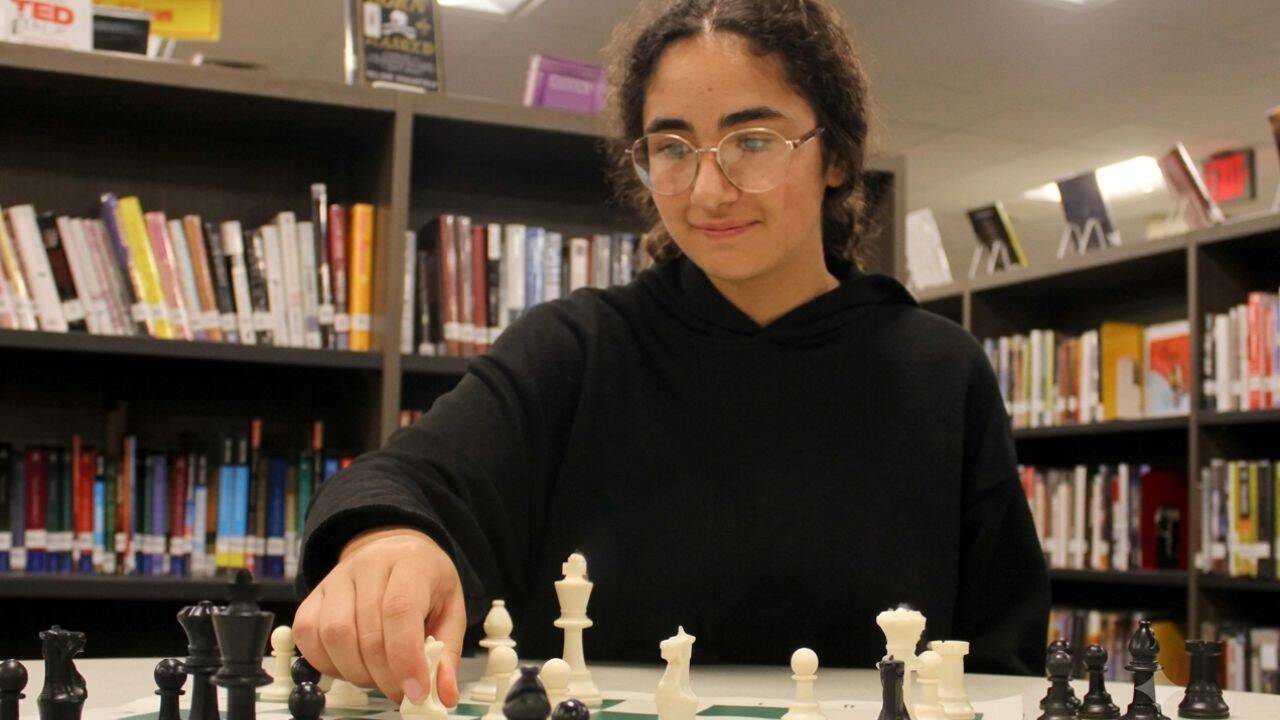
A 14-year-old student from New York, Zeynep Demirbas, conducted an experiment to test the accuracy of artificial intelligence models in detecting stress. She analyzed 3,553 Reddit posts using four different AI models to determine their effectiveness in identifying stress.
The results showed that MentalBERT, a basic AI model, performed the best with an accuracy rate of approximately 82%. On the other hand, ChatGPT-4o, a more advanced model, scored around 74%. These findings suggest that general-purpose large language models like ChatGPT-4o may not be reliable enough for assessing mental health.
Zeynep's study highlights the importance of developing specialized AI models for mental health assessment. Her research indicates that basic models like MentalBERT can be more effective in detecting stress than more complex models. This raises questions about the limitations of general-purpose AI models in understanding human emotions and mental health.
The use of AI in mental health assessment has gained significant attention in recent years. Many researchers and developers are exploring the potential of AI to detect mental health conditions such as depression, anxiety, and stress. However, Zeynep's study shows that there is still a need for more specialized and accurate AI models in this field.
The experiment involved analyzing Reddit posts to identify patterns and language associated with stress. The AI models were trained to recognize these patterns and detect stress in the posts. The results of the study provide valuable insights into the effectiveness of different AI models in mental health assessment.
Zeynep's research has significant implications for the development of AI-powered mental health tools. Her findings suggest that developers should focus on creating specialized models that are tailored to specific mental health conditions rather than relying on general-purpose models. This could lead to more accurate and reliable AI-powered mental health assessment tools.
In conclusion, Zeynep Demirbas's study demonstrates the potential of basic AI models in detecting stress and highlights the limitations of general-purpose models. Her research contributes to the ongoing efforts to develop more accurate and reliable AI-powered mental health assessment tools.
The significance of this study lies in its ability to provide insights into the effectiveness of AI models in mental health assessment. The findings of the study can be used to inform the development of more specialized AI models that can accurately detect mental health conditions. This can lead to improved mental health outcomes and more effective support for individuals struggling with mental health issues.
Overall, Zeynep's study is an important contribution to the field of AI-powered mental health assessment. It highlights the need for more specialized and accurate AI models and provides valuable insights into the effectiveness of different models in detecting stress.
Frequently asked questions
What was the purpose of Zeynep Demirbas's study?
The purpose of the study was to test the accuracy of AI models in detecting stress.
Which AI model performed the best in the study?
MentalBERT performed the best with an accuracy rate of approximately 82%.