NGT Acts Against Bhopal Authorities Over Open Burning Of Expired Medicines
NGT seeks response from Bhopal collector and departments over open burning of expired medicines. Toxic fumes pose threat to public health and environment.
'%3E%3Crect%20width%3D'96'%20height%3D'96'%20fill%3D'%23B3261E'%2F%3E%3Ccircle%20cx%3D'30'%20cy%3D'24'%20r%3D'44'%20fill%3D'%23fff'%20opacity%3D'.12'%2F%3E%3Ccircle%20cx%3D'60'%20cy%3D'74'%20r%3D'40'%20fill%3D'%23000'%20opacity%3D'.10'%2F%3E%3C%2Fg%3E%3Cg%20fill%3D'%23fff'%3E%3Crect%20x%3D'29'%20y%3D'49'%20width%3D'8'%20height%3D'19'%20rx%3D'1'%2F%3E%3Crect%20x%3D'39'%20y%3D'40'%20width%3D'9'%20height%3D'28'%20rx%3D'1'%2F%3E%3Crect%20x%3D'50'%20y%3D'45'%20width%3D'8'%20height%3D'23'%20rx%3D'1'%2F%3E%3Crect%20x%3D'60'%20y%3D'53'%20width%3D'7'%20height%3D'15'%20rx%3D'1'%2F%3E%3Crect%20x%3D'41'%20y%3D'34'%20width%3D'5'%20height%3D'6'%2F%3E%3C%2Fg%3E%3C%2Fsvg%3E)
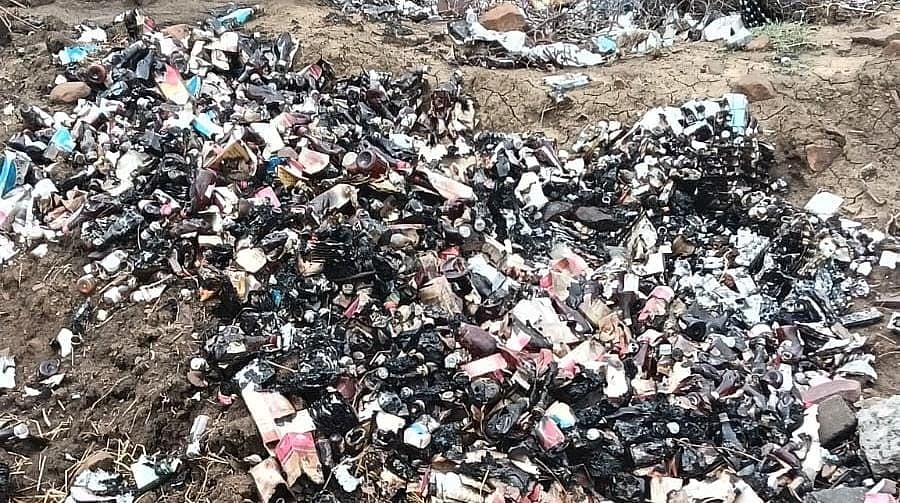
The National Green Tribunal (NGT) has taken suo motu cognisance of the open burning of expired medicines on government land behind the RTO complex in Bhopal, Madhya Pradesh. This action is in response to a serious violation of the Biomedical Waste Management Rules, 2016.
The NGT has questioned four departments, including the Bhopal district collector, state environment secretary, health secretary, and member secretary of the Madhya Pradesh Pollution Control Board. They have been asked to provide their responses regarding the disposal of illegal biomedical waste.
The case pertains to the alleged burning of expired medicine strips, syrup bottles, and injection vials at Rani Avantibai Transport Nagar, located behind the RTO complex in Kokta. The NGT has stated that the toxic fumes generated from the burning pose a significant threat to public health and the environment.
The Tribunal has sought to know how such illegal disposal of biomedical waste continued without the knowledge of law enforcement and regulatory agencies. It has also asked what action had been taken by departments responsible for public health and environmental protection.
The NGT has reiterated that expired medicines must be disposed of only through the incinerator of an authorised Common Biomedical Waste Treatment Facility (CBWTF), as mandated under the Biomedical Waste Management Rules, 2016. Open burning, burial, or disposal along with municipal solid waste is prohibited and constitutes an offence under the Environment (Protection) Act.
The NGT has directed the formation of a joint committee comprising officials from the Central Pollution Control Board, the health department, and the MPPCB to inspect the site and submit a factual and action-taken report within six weeks. The MPPCB has been appointed as the nodal agency for the committee.
The next hearing in the case is scheduled for September 7. The NGT's actions are aimed at ensuring that the authorities take necessary steps to prevent such illegal activities and protect the environment and public health.
The Biomedical Waste Management Rules, 2016, are in place to regulate the disposal of biomedical waste in India. The rules mandate that all healthcare facilities must dispose of their biomedical waste through authorised CBWTFs. The rules also provide for penalties for non-compliance, including imprisonment and fines.
The NGT's intervention in this case highlights the importance of proper disposal of biomedical waste and the need for strict enforcement of environmental laws. The case is a reminder that the authorities must take their responsibilities seriously and ensure that the environment and public health are protected.
In conclusion, the NGT's actions against the Bhopal authorities are a significant step towards ensuring that the environment and public health are protected. The case serves as a reminder that the authorities must take their responsibilities seriously and comply with environmental laws and regulations.
The NGT's order has far-reaching implications for the disposal of biomedical waste in India. It emphasizes the need for proper disposal of expired medicines and other biomedical waste through authorised CBWTFs. The order also highlights the importance of strict enforcement of environmental laws and regulations to prevent illegal activities that harm the environment and public health.
The case is a wake-up call for the authorities to take necessary steps to prevent such illegal activities and protect the environment and public health. It is essential that the authorities take the NGT's order seriously and comply with the environmental laws and regulations to prevent harm to the environment and public health.
The NGT's actions in this case demonstrate its commitment to protecting the environment and public health. The Tribunal's order is a significant step towards ensuring that the authorities take their responsibilities seriously and comply with environmental laws and regulations. The case serves as a reminder that the environment and public health must be protected, and the authorities must take necessary steps to prevent harm to them.
The NGT's order has significant implications for the environment and public health in India. It emphasizes the need for proper disposal of biomedical waste and strict enforcement of environmental laws and regulations. The order is a reminder that the authorities must take their responsibilities seriously and protect the environment and public health.
In the end, the NGT's actions in this case are a significant step towards protecting the environment and public health. The case serves as a reminder that the authorities must take their responsibilities seriously and comply with environmental laws and regulations to prevent harm to the environment and public health.
Frequently asked questions
What is the NGT's order regarding the disposal of expired medicines?
The NGT has ordered that expired medicines must be disposed of only through the incinerator of an authorised Common Biomedical Waste Treatment Facility (CBWTF).
What are the penalties for non-compliance with the Biomedical Waste Management Rules, 2016?
The penalties for non-compliance include imprisonment of up to five years and a fine of up to Rs 1 lakh.