Sleemnabad Tunnel To Irrigate 2.5 Lakh Hectares
Madhya Pradesh CM inspects tunnel, predicts boost to irrigation and drinking water.
'%3E%3Crect%20width%3D'96'%20height%3D'96'%20fill%3D'%231A5276'%2F%3E%3Ccircle%20cx%3D'30'%20cy%3D'24'%20r%3D'44'%20fill%3D'%23fff'%20opacity%3D'.12'%2F%3E%3Ccircle%20cx%3D'60'%20cy%3D'74'%20r%3D'40'%20fill%3D'%23000'%20opacity%3D'.10'%2F%3E%3C%2Fg%3E%3Cg%20fill%3D'%23fff'%3E%3Cpath%20d%3D'M31%2041%20L48%2031%20L65%2041%20Z'%2F%3E%3Crect%20x%3D'33'%20y%3D'43'%20width%3D'4'%20height%3D'17'%2F%3E%3Crect%20x%3D'41'%20y%3D'43'%20width%3D'4'%20height%3D'17'%2F%3E%3Crect%20x%3D'51'%20y%3D'43'%20width%3D'4'%20height%3D'17'%2F%3E%3Crect%20x%3D'59'%20y%3D'43'%20width%3D'4'%20height%3D'17'%2F%3E%3Crect%20x%3D'30'%20y%3D'62'%20width%3D'36'%20height%3D'4'%20rx%3D'1'%2F%3E%3C%2Fg%3E%3C%2Fsvg%3E)
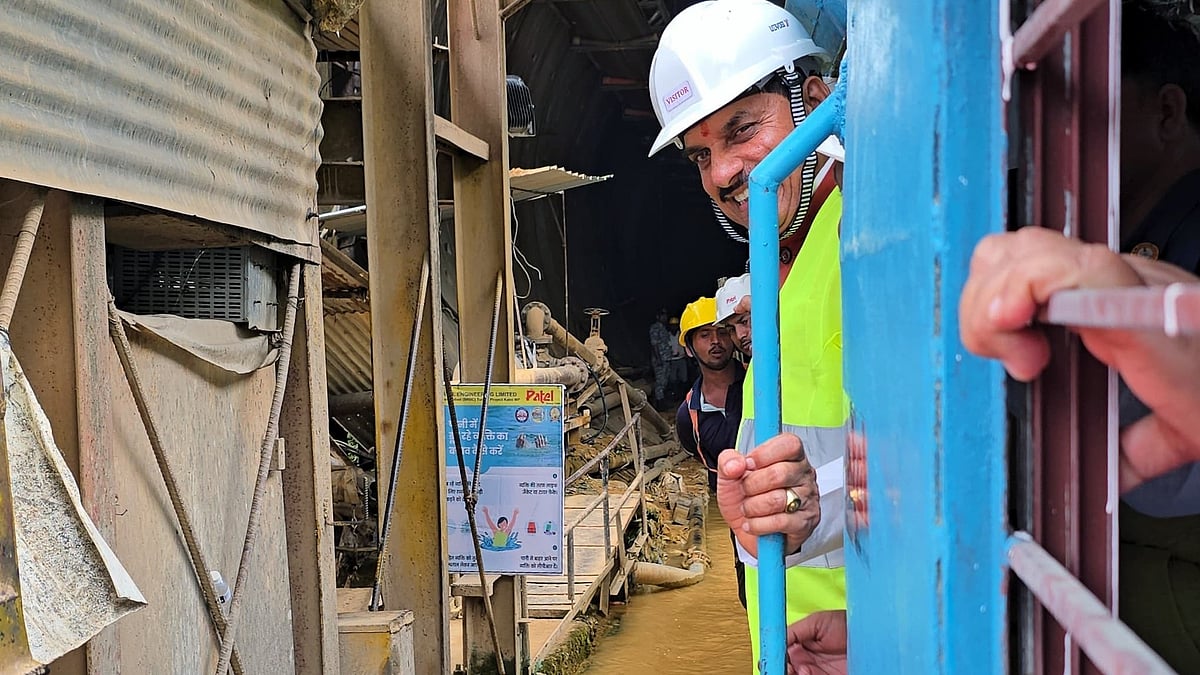
Madhya Pradesh Chief Minister Mohan Yadav recently inspected the 12 km-long Sleemnabad tunnel in Katni. The tunnel, once completed, is expected to increase the irrigation area by around 2.5 lakh hectares in five districts, including Katni, Rewa, Satna, Maihar, and Panna.
The Chief Minister interacted with the media after the inspection, stating that the tunnel will have a significant impact on the region's prosperity. He expressed gratitude towards Prime Minister Narendra Modi, noting that the central government contributed Rs 275 crores to the project, which has a total cost of Rs 1600 crores.
The Sleemnabad tunnel is designed to be safe for 100 years, even in the event of a severe earthquake. The tunnel's depth reaches up to 120 feet at some points, and its construction has overcome numerous challenges. The project has been executed without causing any significant infrastructure or environmental damage, despite passing beneath crossings, national highways, and densely populated areas.
The tunnel will facilitate the flow of Narmada water, while the Katni River will flow above it. The construction work was carried out in three shifts of 8 hours, with a modern machine brought in from Germany to accelerate the digging process.
During his visit, the Chief Minister also dedicated two Sandipni schools, one in Jhinjri and the other in Bahoriband, which were constructed at a cost of Rs 38.61 crores and Rs 35.63 crores, respectively. The Chief Minister urged farmers not to sell their lands, as the tunnel project is expected to boost agricultural production in the region, potentially surpassing that of Haryana and Punjab.
The Vindhya region, where the tunnel is located, is already considered prosperous, but the Chief Minister believes that the Sleemnabad tunnel will become a vital source of irrigation and drinking water, transforming the fortunes of the area. The project's successful completion will not only benefit the local population but also serve as a study case for engineering students, given the numerous challenges it has overcome.
The Sleemnabad tunnel project is a significant undertaking by the state government, demonstrating its commitment to improving the region's infrastructure and agricultural productivity. With its expected completion, the tunnel will play a crucial role in enhancing the livelihoods of farmers and residents in the five districts, making it a vital component of the region's development.
The project's impact will be felt across various sectors, from agriculture to drinking water supply, and its success will have far-reaching consequences for the region's economy and population. As the tunnel nears completion, it is expected to become a model for similar projects in the future, showcasing the potential for innovative engineering solutions to drive growth and development in rural areas.
In conclusion, the Sleemnabad tunnel project is a significant milestone in the development of the Vindhya region, with its potential to increase irrigation area, solve drinking water problems, and boost agricultural production. The project's successful completion will have a lasting impact on the region, transforming the lives of its residents and cementing its position as a major agricultural hub in the country.