Jharkhand CM Opposes Mineral Amendment Bill
Jharkhand CM Hemant Soren writes to PM Modi, BJP hits back
'%3E%3Crect%20width%3D'96'%20height%3D'96'%20fill%3D'%231A5276'%2F%3E%3Ccircle%20cx%3D'30'%20cy%3D'24'%20r%3D'44'%20fill%3D'%23fff'%20opacity%3D'.12'%2F%3E%3Ccircle%20cx%3D'60'%20cy%3D'74'%20r%3D'40'%20fill%3D'%23000'%20opacity%3D'.10'%2F%3E%3C%2Fg%3E%3Cg%20fill%3D'%23fff'%3E%3Cpath%20d%3D'M31%2041%20L48%2031%20L65%2041%20Z'%2F%3E%3Crect%20x%3D'33'%20y%3D'43'%20width%3D'4'%20height%3D'17'%2F%3E%3Crect%20x%3D'41'%20y%3D'43'%20width%3D'4'%20height%3D'17'%2F%3E%3Crect%20x%3D'51'%20y%3D'43'%20width%3D'4'%20height%3D'17'%2F%3E%3Crect%20x%3D'59'%20y%3D'43'%20width%3D'4'%20height%3D'17'%2F%3E%3Crect%20x%3D'30'%20y%3D'62'%20width%3D'36'%20height%3D'4'%20rx%3D'1'%2F%3E%3C%2Fg%3E%3C%2Fsvg%3E)
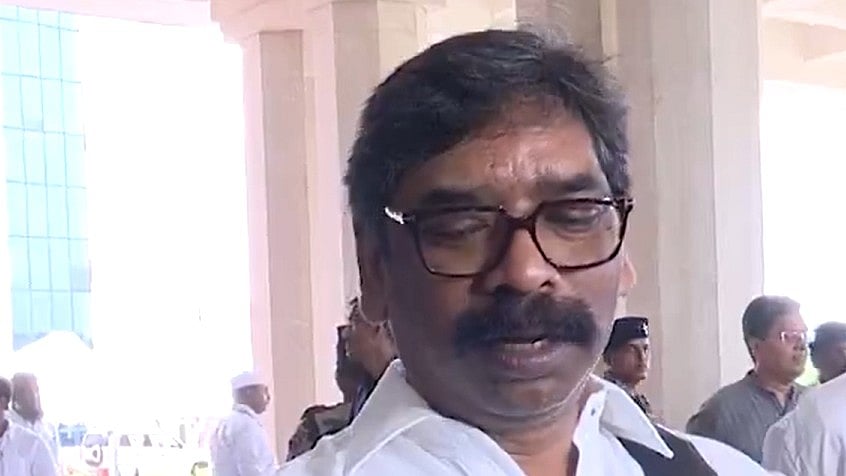
Jharkhand Chief Minister Hemant Soren has written to Prime Minister Narendra Modi seeking reconsideration of the Mines and Minerals (Development and Regulation) Amendment Bill, 2026. Soren contends that the proposed restrictions on states' mineral taxation power raise serious constitutional, fiscal, developmental, and federal concerns.
The Jharkhand government's main objection is to the proposed Section 9D of the MMDR Act, which restricts state governments from imposing taxes, cess, or other levies on mineral rights and mineral-bearing lands except under conditions prescribed by the Centre. Soren argues that mining revenue accounted for 84.9 percent of the state's non-tax revenue in 2024-25 and that the state's Mineral Bearing Land Cess, enacted in 2024, is expected to generate around Rs 11,000 crore annually.
Soren has also written to the Leader of the Opposition in the Lok Sabha, Rahul Gandhi, pointing out the financial implications of the Bill and urging him for his support. However, the BJP has hit back at the CM, with state BJP president Aditya Sahu accusing the state government of misleading people and using the issue for political gains.
Sahu contends that the issue of cess concerns the entire country and that the amendment seeks to bring uniformity to the system. He refers to the broader “One Nation, One Tax” approach, saying that the move would put an end to what he describes as “loot in the name of cess”. Sahu argues that the MMDR amendment would be a positive step towards building a developed India and would make the mining sector more competitive, transparent, predictable, and investor-friendly.
Sahu claims that the amendment does not take away the states' rights over land and minerals, nor does it abolish any tax imposed or collected by states on minerals. He says that the Centre is not preventing state governments from imposing taxes, but rather provides that state governments can levy taxes, cess, or other surcharges in accordance with rules prescribed by the Centre to ensure uniformity and stability in the mineral sector.
The BJP leader also claims that the amendment would have no impact on the royalty received by mineral-rich states or on revenues from the District Mineral Foundation (DMF) and the National Mineral Exploration Trust (NMET). The controversy surrounding the Mineral Amendment Bill highlights the ongoing debate between the Centre and states over mineral taxation and the balance of power between the two.
The Jharkhand government's opposition to the Bill is driven by concerns over the potential loss of revenue and the erosion of state autonomy. On the other hand, the Centre argues that the amendment is necessary to bring uniformity and stability to the mineral sector, and to promote investment and development.
The outcome of this controversy will have significant implications for the mining sector and the balance of power between the Centre and states. It remains to be seen how the issue will be resolved and what impact it will have on the country's mineral taxation policy.
In conclusion, the controversy surrounding the Mineral Amendment Bill is a complex issue that involves competing interests and ideologies. While the Jharkhand government opposes the Bill on grounds of revenue loss and erosion of state autonomy, the Centre argues that it is necessary for promoting investment and development. The issue highlights the ongoing debate over mineral taxation and the balance of power between the Centre and states.
The implications of this controversy are far-reaching, and it will be important to monitor developments in the coming days and weeks. The outcome will have significant consequences for the mining sector, state governments, and the country as a whole.
The debate over the Mineral Amendment Bill is a reminder of the complexities and challenges of governance in a federal system. It highlights the need for careful consideration and negotiation between different stakeholders to ensure that the interests of all parties are taken into account.
Ultimately, the resolution of this controversy will depend on the ability of the Centre and states to find common ground and work towards a solution that balances competing interests and promotes the greater good.