Nepal Floods: Scientists Flagged Warning Signs Months Before Disaster
Nepal's Rasuwa district hit by devastating flash floods. Scientists warned of glacier instability months ago.
'%3E%3Crect%20width%3D'96'%20height%3D'96'%20fill%3D'%234A235A'%2F%3E%3Ccircle%20cx%3D'30'%20cy%3D'24'%20r%3D'44'%20fill%3D'%23fff'%20opacity%3D'.12'%2F%3E%3Ccircle%20cx%3D'60'%20cy%3D'74'%20r%3D'40'%20fill%3D'%23000'%20opacity%3D'.10'%2F%3E%3C%2Fg%3E%3Cg%20fill%3D'none'%20stroke%3D'%23fff'%20stroke-width%3D'3'%3E%3Ccircle%20cx%3D'48'%20cy%3D'48'%20r%3D'16'%2F%3E%3Cellipse%20cx%3D'48'%20cy%3D'48'%20rx%3D'6.5'%20ry%3D'16'%2F%3E%3Cline%20x1%3D'32'%20y1%3D'42'%20x2%3D'64'%20y2%3D'42'%2F%3E%3Cline%20x1%3D'32'%20y1%3D'54'%20x2%3D'64'%20y2%3D'54'%2F%3E%3C%2Fg%3E%3C%2Fsvg%3E)
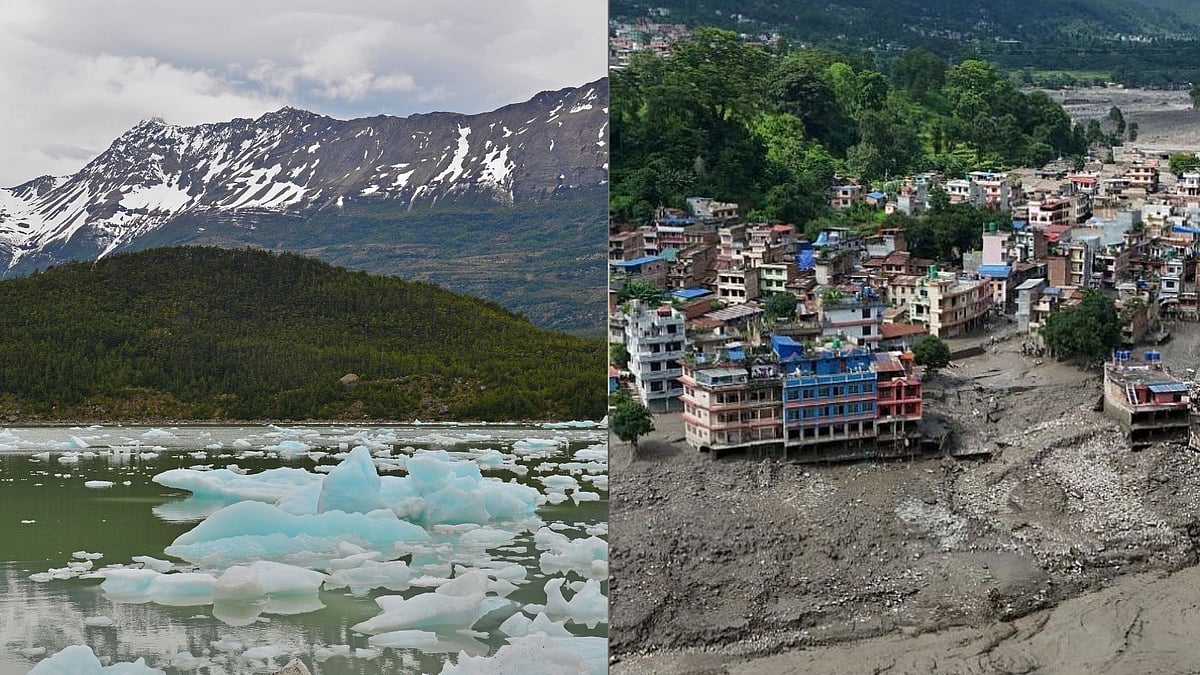
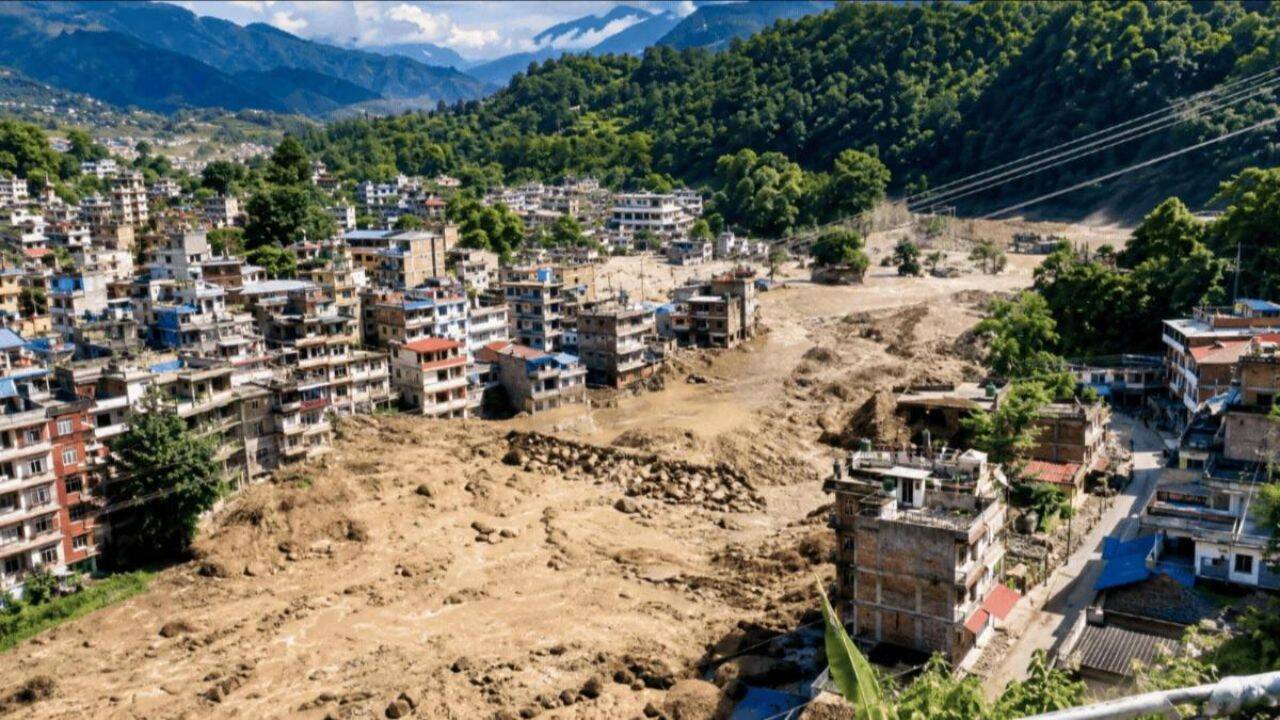
The recent flash floods in Nepal's Rasuwa district have highlighted the growing threat of rapidly changing glaciers and unstable high-altitude terrain in the Himalayas.
Scientists are still investigating the exact cause of the disaster, but preliminary assessments suggest that an ice-rock avalanche from a high-altitude area may have triggered the sudden surge. A large mass of ice and rock is believed to have entered the Lhende Khola, a tributary of the Bhote Koshi River, causing a torrent of water, sediment, and huge boulders to flow downstream.
The immediate trigger for the flood may have been a geological event, but experts say that the changing Himalayan climate could be making such events more likely. One worrying development is the occurrence of rainfall at elevations above 4,000 meters, where snowfall would traditionally be expected. Rising temperatures could explain the shift from snow to rain at these elevations, which can accelerate glacier retreat and weaken frozen ground, leaving mountain slopes increasingly vulnerable.
When rain falls on snow-free and unstable terrain, it can rapidly increase runoff and loosen rocks and debris, turning a relatively local mountain collapse into a destructive downstream flood. This type of event is known as a Glacial Lake Outburst Flood (GLOF).
The warning signs for this disaster were highlighted months ago. Two reports released by the International Centre for Integrated Mountain Development (ICIMOD) in March found that glaciers across the Hindu Kush Himalaya have been losing ice at an accelerating rate. Between 1990 and 2020, glaciers in the region lost around 12 percent of their total area and 9 percent of their estimated ice reserves.
ICIMOD's HKH Glacier Outlook 2026 found that glacier wastage had doubled since 2000, with up to 27 meters of glacier thickness lost since 1975 in some areas. Researchers warned that parts of the Himalayan cryosphere could be approaching critical tipping points that may lead to irreversible retreat.
The Nepal disaster is a stark reminder of the need for urgent action to address the impacts of climate change in the Himalayan region. The region's unique geography and fragile ecosystem make it particularly vulnerable to the effects of rising temperatures and changing precipitation patterns.
As the region continues to experience more frequent and intense flooding events, it is essential that governments, scientists, and communities work together to develop strategies for mitigating and adapting to these changes. This includes monitoring glacier health, improving early warning systems, and implementing sustainable land use practices.
The devastating aftermath of the glacier collapse that triggered Nepal's catastrophic flash flood is a clear indication of the need for immediate attention to this issue. The international community must come together to support the people of Nepal and the wider Himalayan region in their efforts to build resilience to the impacts of climate change.
In conclusion, the Nepal floods are a wake-up call for the world to take action on climate change. The warning signs were flagged by scientists months before the disaster, and it is essential that we learn from this tragedy to prevent similar events from occurring in the future.
Frequently asked questions
What is a Glacial Lake Outburst Flood (GLOF)?
A GLOF is a type of flood that occurs when a glacial lake bursts, releasing a large amount of water and debris downstream.
How much ice have glaciers in the Hindu Kush Himalaya lost since 1990?
Glaciers in the region have lost around 12 percent of their total area and 9 percent of their estimated ice reserves since 1990.