Why Passwords Are Easily Forgotten
Passwords are hard to remember, science explains why. Human memory isn't built for them.
'%3E%3Crect%20width%3D'96'%20height%3D'96'%20fill%3D'%231B5E20'%2F%3E%3Ccircle%20cx%3D'30'%20cy%3D'24'%20r%3D'44'%20fill%3D'%23fff'%20opacity%3D'.12'%2F%3E%3Ccircle%20cx%3D'60'%20cy%3D'74'%20r%3D'40'%20fill%3D'%23000'%20opacity%3D'.10'%2F%3E%3C%2Fg%3E%3Cg%3E%3Ccircle%20cx%3D'48'%20cy%3D'48'%20r%3D'15'%20fill%3D'%23fff'%2F%3E%3Cpath%20d%3D'M43%2034%20Q50%2048%2043%2062'%20fill%3D'none'%20stroke%3D'%238a94a6'%20stroke-width%3D'2.4'%2F%3E%3Cpath%20d%3D'M47%2033%20Q54%2048%2047%2063'%20fill%3D'none'%20stroke%3D'%238a94a6'%20stroke-width%3D'1.8'%20stroke-dasharray%3D'1.5%203'%2F%3E%3C%2Fg%3E%3C%2Fsvg%3E)
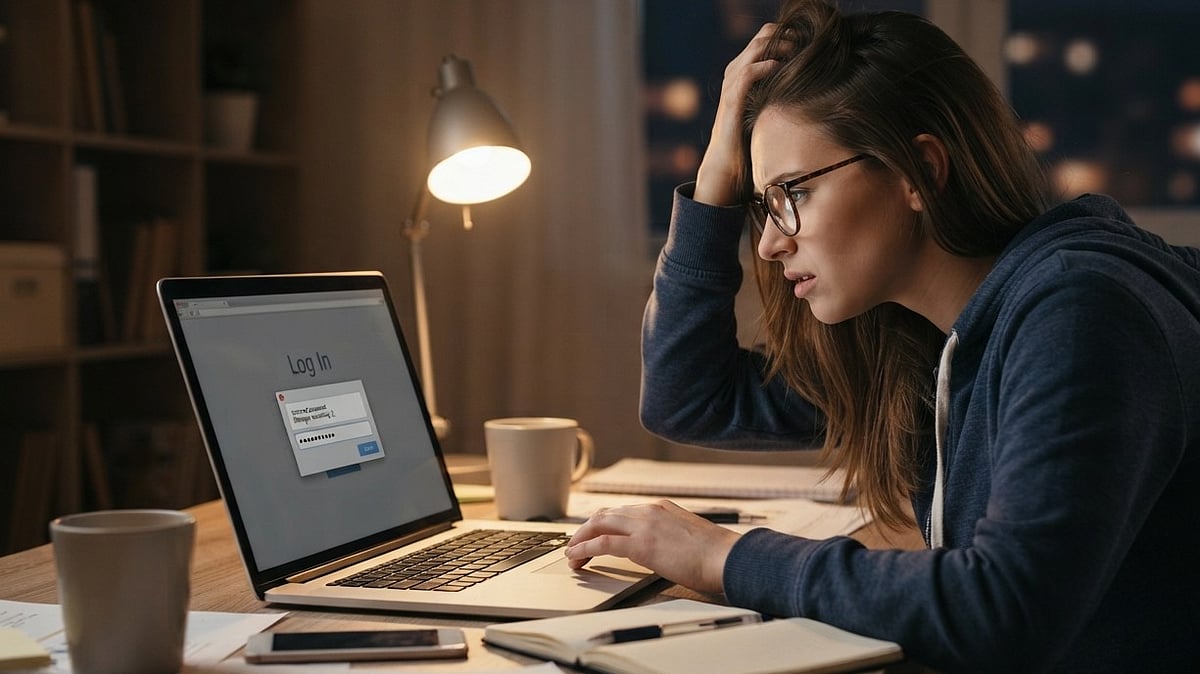
Somewhere between the requirements of adding a capital letter and including a special character, many people struggle to remember their passwords. It's common to recall memories from years ago, such as a school roll number or song lyrics, but forget a password created just last week.
This phenomenon can be frustrating, especially when trying to access an app or account. However, according to science, it's not a matter of being careless or having a poor memory. The brain is simply not designed to store and recall meaningless combinations of letters, numbers, and symbols.
Dr. Bhushan Patil, a Consultant Psychiatrist at AIMS Hospital in Dombivli, explains that the brain is designed to remember information that is meaningful, emotionally relevant, or repeated regularly. Random combinations of characters, such as those found in passwords, do not fit into these categories and are therefore difficult to recall.
The problem is exacerbated by the fact that every website requires a unique and complex password, which increases cognitive load and makes it more likely for people to forget or confuse their passwords. As a result, many people resort to using a single password or variations of it for multiple accounts, despite knowing the security risks.
This behavior is not driven by laziness, but rather by biology. The brain prefers familiar patterns and takes shortcuts to reduce mental effort. Even when people understand the risks associated with reusing passwords, the fear of forgetting and being locked out of an account often outweighs concerns about online safety.
According to password manager NordPass, the average person now has to manage around 120 personal passwords, which can be overwhelming. This number does not include office logins, which can add to the overall complexity of password management.
In conclusion, forgetting passwords is a common phenomenon that can be attributed to the way the brain processes and stores information. Rather than being a matter of poor memory or carelessness, it's a result of the brain's limitations and the complexity of password management.
The struggle to remember passwords is a widespread issue, and it's not just a matter of individual forgetfulness. It's a problem that highlights the need for more user-friendly and secure password management systems.
Ultimately, the issue of password forgetfulness is a complex one, and it requires a comprehensive solution that takes into account the limitations of human memory and the need for online security.
By understanding the science behind password forgetfulness, we can work towards developing more effective and secure password management systems that are designed with the user in mind.
Frequently asked questions
Why do people forget passwords easily?
People forget passwords easily because the brain is not designed to store and recall meaningless combinations of letters, numbers, and symbols.
Is reusing passwords a common practice?
Yes, reusing passwords is a common practice, driven by the brain's preference for familiar patterns and the need to reduce mental effort.