India Launches UNSC Campaign
India seeks UN Security Council seat, presents SHANTI vision.
'%3E%3Crect%20width%3D'96'%20height%3D'96'%20fill%3D'%234A235A'%2F%3E%3Ccircle%20cx%3D'30'%20cy%3D'24'%20r%3D'44'%20fill%3D'%23fff'%20opacity%3D'.12'%2F%3E%3Ccircle%20cx%3D'60'%20cy%3D'74'%20r%3D'40'%20fill%3D'%23000'%20opacity%3D'.10'%2F%3E%3C%2Fg%3E%3Cg%20fill%3D'none'%20stroke%3D'%23fff'%20stroke-width%3D'3'%3E%3Ccircle%20cx%3D'48'%20cy%3D'48'%20r%3D'16'%2F%3E%3Cellipse%20cx%3D'48'%20cy%3D'48'%20rx%3D'6.5'%20ry%3D'16'%2F%3E%3Cline%20x1%3D'32'%20y1%3D'42'%20x2%3D'64'%20y2%3D'42'%2F%3E%3Cline%20x1%3D'32'%20y1%3D'54'%20x2%3D'64'%20y2%3D'54'%2F%3E%3C%2Fg%3E%3C%2Fsvg%3E)
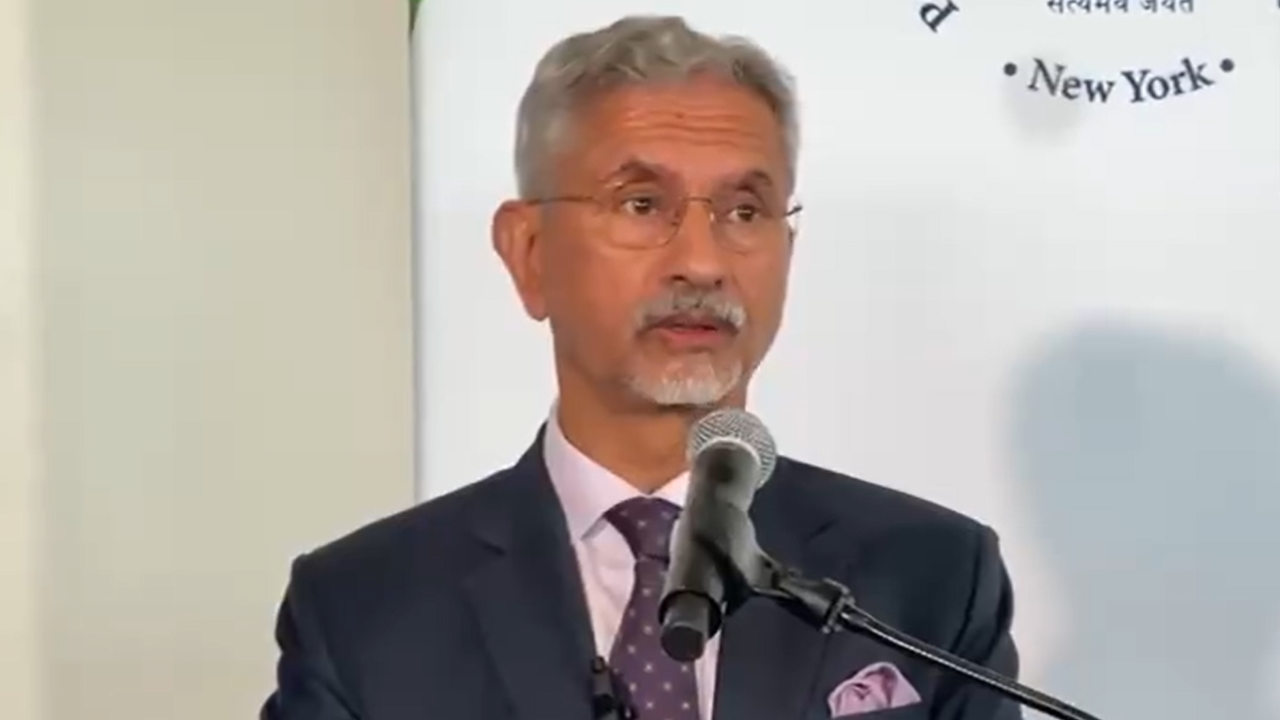
India has officially launched its campaign for a United Nations Security Council seat for the 2028-29 term. The announcement was made by External Affairs Minister S Jaishankar, who highlighted India's peacekeeping and development partnerships.
The minister unveiled India's SHANTI vision, which outlines the country's approach to global governance and cooperation among nations. The SHANTI vision is expected to play a key role in India's campaign for the UNSC seat.
India is seeking support for its candidature amid a changing global landscape. The country has previously served eight terms as a non-permanent member of the Security Council and is now seeking to return to the council.
As a non-permanent member, India has contributed significantly to the work of the Security Council, including through its peacekeeping missions and development partnerships. The country's experience and expertise in these areas are expected to be key factors in its campaign for the UNSC seat.
The United Nations Security Council is responsible for maintaining international peace and security, and India's candidacy is seen as an opportunity for the country to play a more significant role in global governance. The campaign for the 2028-29 term is expected to be highly competitive, with several other countries also vying for a seat on the council.
India's SHANTI vision is based on the principles of mutual respect, cooperation, and dialogue. The vision outlines India's commitment to working with other countries to address global challenges and promote peace and security.
The launch of India's campaign for the UNSC seat is seen as a significant development in the country's foreign policy. The campaign is expected to be a major priority for the government in the coming months, with India seeking to build support from other countries for its candidature.
The outcome of the campaign will depend on a variety of factors, including the level of support India receives from other countries and the country's ability to demonstrate its commitment to global governance and cooperation.
India's bid for the UNSC seat is also seen as an opportunity for the country to promote its national interests and values on the global stage. The country's experience and expertise in areas such as peacekeeping and development partnerships are expected to be key factors in its campaign.
In conclusion, India's launch of its campaign for the UNSC seat marks an important milestone in the country's foreign policy. The country's SHANTI vision and its commitment to global governance and cooperation are expected to play a key role in the campaign, and the outcome will depend on a variety of factors, including the level of support India receives from other countries.
The significance of this development for India and the global community cannot be overstated. A seat on the UNSC would provide India with a unique opportunity to shape global policy and promote peace and security. It would also be a testament to India's growing influence on the global stage and its commitment to working with other countries to address global challenges.