Ayurveda Promotes Hair Care Through Simple Daily Habits
Ayurveda helps create a routine for healthy hair. Learn about common mistakes and Ayurvedic hair care routines.
'%3E%3Crect%20width%3D'96'%20height%3D'96'%20fill%3D'%23B3261E'%2F%3E%3Ccircle%20cx%3D'30'%20cy%3D'24'%20r%3D'44'%20fill%3D'%23fff'%20opacity%3D'.12'%2F%3E%3Ccircle%20cx%3D'60'%20cy%3D'74'%20r%3D'40'%20fill%3D'%23000'%20opacity%3D'.10'%2F%3E%3C%2Fg%3E%3Cg%20fill%3D'%23fff'%3E%3Crect%20x%3D'29'%20y%3D'49'%20width%3D'8'%20height%3D'19'%20rx%3D'1'%2F%3E%3Crect%20x%3D'39'%20y%3D'40'%20width%3D'9'%20height%3D'28'%20rx%3D'1'%2F%3E%3Crect%20x%3D'50'%20y%3D'45'%20width%3D'8'%20height%3D'23'%20rx%3D'1'%2F%3E%3Crect%20x%3D'60'%20y%3D'53'%20width%3D'7'%20height%3D'15'%20rx%3D'1'%2F%3E%3Crect%20x%3D'41'%20y%3D'34'%20width%3D'5'%20height%3D'6'%2F%3E%3C%2Fg%3E%3C%2Fsvg%3E)
Having lustrous hair is a result of a long-term routine. Ayurveda provides a solution for achieving healthy and beautiful hair by setting a routine.
A hair care routine is essential for preserving the scalp's natural pH and moisture, aiding hair growth, and lowering infection, hair fall, breakage, and split ends. Common mistakes in hair care include over-washing, which removes natural scalp oil, using hot water, which damages moisture, and roughly drying the hair or not drying it neatly, causing breakage or split ends.
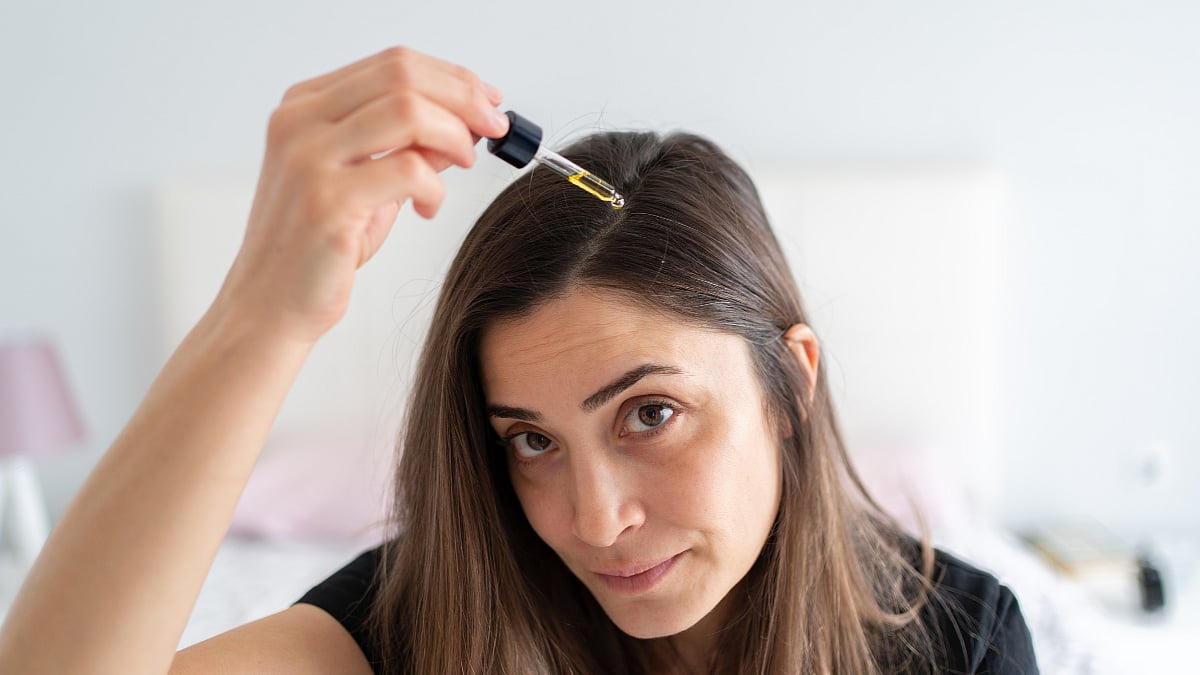
Ayurvedic hair care treatment focuses on methods according to body and dosha type. The Ayurvedic hair care routine involves several steps, including oil massage, which nourishes the roots, boosts hair growth, and removes issues like dryness or frizz. Warm oil enters the shafts and roots better, and it is recommended to oil the hair an hour before washing or overnight.
Different oils are suitable for different doshas and hair types. Bhringraj oil boosts hair growth, nourishes the scalp, and reduces hair loss and greying. Amla oil works for all doshas, keeping follicles healthy, giving hair shine, and lowering greying. Coconut oil works for all hair types and doshas, conditioning and nourishing hair, and fighting issues such as styling damage.
In Ayurveda, hair types are classified according to dosha. Vata hair is thin and straight, and can be absorbent. Pitta hair is curvy and slightly thick, and aggravation can cause early greying, follicle blockage, and hair loss. Kapha hair is naturally thick, shiny, and curly, and worsening can cause too much sebum on the scalp, resulting in dandruff and hair fall.
Shampooing is another essential step in the Ayurvedic hair care routine. It is recommended to use a gentle Ayurvedic shampoo or cleanse to wash the hair gently, and maintain scalp cleanness. The frequency of shampooing depends on the hair type and dosha needs.
Conditioning is also crucial in the Ayurvedic hair care routine. After washing, it is recommended to condition the hair to ensure moisture and good oils remain on the hair and scalp, smooth the hair, and avoid issues such as fall, breakage, and external damage. A conditioner should be applied from the mid-length to the end of the hair, and not on the scalp.
In addition to these steps, dietary habits also play a significant role in hair care. A diet rich in protein, iron, zinc, and omega-3 fatty acids, along with hydration, is essential for healthy hair. Foods such as lentils, leafy greens, nuts, seeds, dairy products, and healthy fats are recommended.
Lifestyle habits, such as avoiding stress through yoga and meditation, also contribute to healthy hair. By following these simple daily habits and Ayurvedic hair care routines, individuals can achieve stronger, healthier hair.
In conclusion, Ayurveda provides a comprehensive approach to hair care, focusing on the individual's body and dosha type. By understanding the common mistakes in hair care and following the Ayurvedic hair care routine, individuals can achieve lustrous, healthy hair. With the right combination of oil massage, shampooing, conditioning, dietary habits, and lifestyle habits, individuals can promote hair growth, reduce hair fall, and achieve the hair they desire.