Mathura Muslim Artisans Craft Krishna Decorations for Janmashtami
Muslim artisans in Mathura create intricate decorations for Janmashtami, showcasing communal harmony. Their craft tradition has been passed down through generations.
'%3E%3Crect%20width%3D'96'%20height%3D'96'%20fill%3D'%231B5E20'%2F%3E%3Ccircle%20cx%3D'30'%20cy%3D'24'%20r%3D'44'%20fill%3D'%23fff'%20opacity%3D'.12'%2F%3E%3Ccircle%20cx%3D'60'%20cy%3D'74'%20r%3D'40'%20fill%3D'%23000'%20opacity%3D'.10'%2F%3E%3C%2Fg%3E%3Cg%3E%3Ccircle%20cx%3D'48'%20cy%3D'48'%20r%3D'15'%20fill%3D'%23fff'%2F%3E%3Cpath%20d%3D'M43%2034%20Q50%2048%2043%2062'%20fill%3D'none'%20stroke%3D'%238a94a6'%20stroke-width%3D'2.4'%2F%3E%3Cpath%20d%3D'M47%2033%20Q54%2048%2047%2063'%20fill%3D'none'%20stroke%3D'%238a94a6'%20stroke-width%3D'1.8'%20stroke-dasharray%3D'1.5%203'%2F%3E%3C%2Fg%3E%3C%2Fsvg%3E)
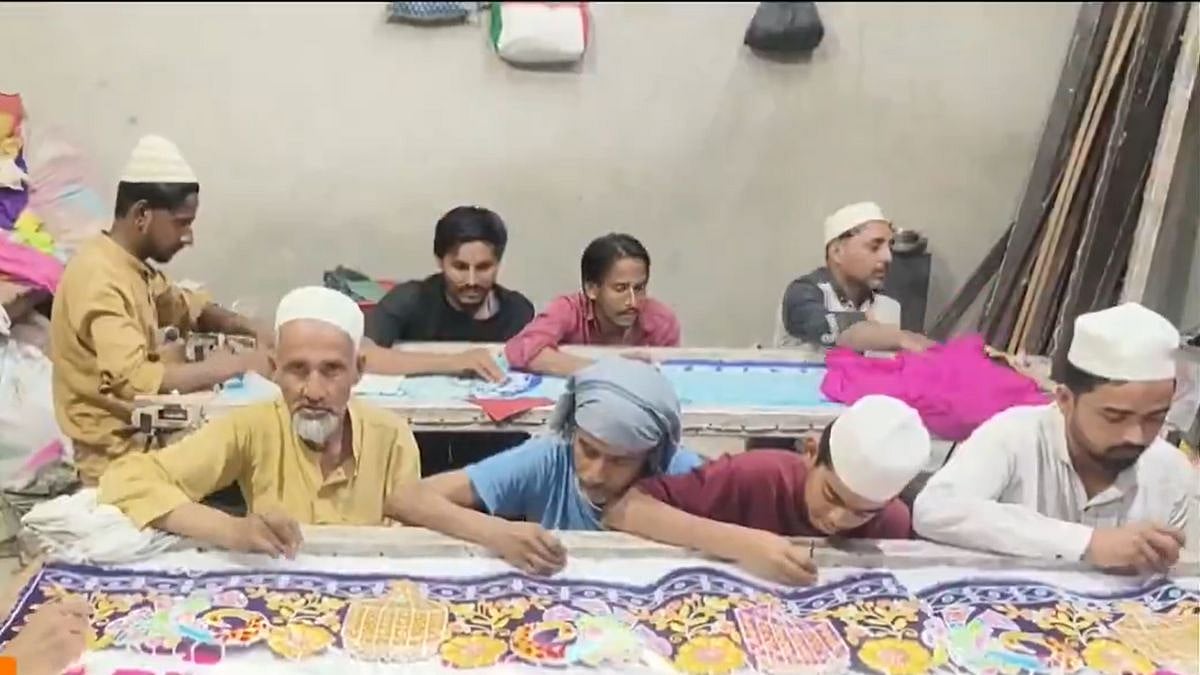
As Mathura prepares to celebrate Gokulashtami 2026, a unique tradition continues to highlight the city’s spirit of communal harmony. Every year, Muslim artisans in Uttar Pradesh's Mathura play an important role in creating intricate decorations, tableaux, and decorative items used during Janmashtami celebrations.
These artisans have been handcrafting Lord Krishna’s attire, crowns, and ornaments for generations, preserving a cherished tradition and showcasing India’s shared cultural heritage. Many of these artisans have been carrying out this work for generations, with young members of their families now continuing the legacy.
The artisans take immense pride in making these exquisite adornments, each one meticulously crafted entirely by hand. They work for days to bring these artistic displays to life, carefully painting, cutting, and assembling every element by hand. The decorations are then installed at temples and pandals across Mathura and nearby areas.
Mathura, regarded as the birthplace of Lord Krishna, witnesses grand celebrations during Janmashtami. Temples, homes, and streets are decorated with colorful jhankis (tableaux), flowers, lights, and artistic installations depicting episodes from Krishna’s life. Behind many of these elaborate decorations are local craftsmen who work tirelessly to bring these artistic displays to life.
This year, Mathura is gearing up to welcome around 50 lakh devotees for Krishna Janmashtami on September 4, with elaborate security and crowd management arrangements. The city will also showcase Krishna Leelas in the sky using 500 drones, adding to the grand celebrations.
Mathura’s Ganga-Jamuni tehzeeb represents the unified, peaceful way of life of Hindus and Muslims in the Braj area. It combines regional customs of Lord Krishna with Islamic practices, evident in the city’s unique tradition of Muslim artisans crafting Krishna decorations. This tradition is a symbol of the city’s communal harmony and a testament to the power of faith and culture to bring people together.
As the city celebrates Janmashtami, the role of Muslim artisans in creating intricate decorations serves as a reminder of the importance of preserving traditional crafts and promoting communal harmony. Their work is a beautiful example of India’s shared cultural heritage and a celebration of the country’s diversity.
In the end, the story of Mathura’s Muslim artisans is one of faith, harmony, and tradition. It highlights the importance of preserving cultural heritage and promoting communal understanding, and serves as a reminder of the power of art and culture to bring people together.
Frequently asked questions
What is the significance of Mathura's Ganga-Jamuni tehzeeb?
Mathura's Ganga-Jamuni tehzeeb represents the unified, peaceful way of life of Hindus and Muslims in the Braj area, combining regional customs of Lord Krishna with Islamic practices.
How do Muslim artisans contribute to Janmashtami celebrations in Mathura?
Muslim artisans in Mathura create intricate decorations, tableaux, and decorative items used during Janmashtami celebrations, preserving a cherished tradition and showcasing India’s shared cultural heritage.