Eric Schmidt Unhappy with Sergey Brin's Politics
Ex-Google CEO opposes former boss's $100m funding, wealth tax plans
'%3E%3Crect%20width%3D'96'%20height%3D'96'%20fill%3D'%234A235A'%2F%3E%3Ccircle%20cx%3D'30'%20cy%3D'24'%20r%3D'44'%20fill%3D'%23fff'%20opacity%3D'.12'%2F%3E%3Ccircle%20cx%3D'60'%20cy%3D'74'%20r%3D'40'%20fill%3D'%23000'%20opacity%3D'.10'%2F%3E%3C%2Fg%3E%3Cg%20fill%3D'none'%20stroke%3D'%23fff'%20stroke-width%3D'3'%3E%3Ccircle%20cx%3D'48'%20cy%3D'48'%20r%3D'16'%2F%3E%3Cellipse%20cx%3D'48'%20cy%3D'48'%20rx%3D'6.5'%20ry%3D'16'%2F%3E%3Cline%20x1%3D'32'%20y1%3D'42'%20x2%3D'64'%20y2%3D'42'%2F%3E%3Cline%20x1%3D'32'%20y1%3D'54'%20x2%3D'64'%20y2%3D'54'%2F%3E%3C%2Fg%3E%3C%2Fsvg%3E)
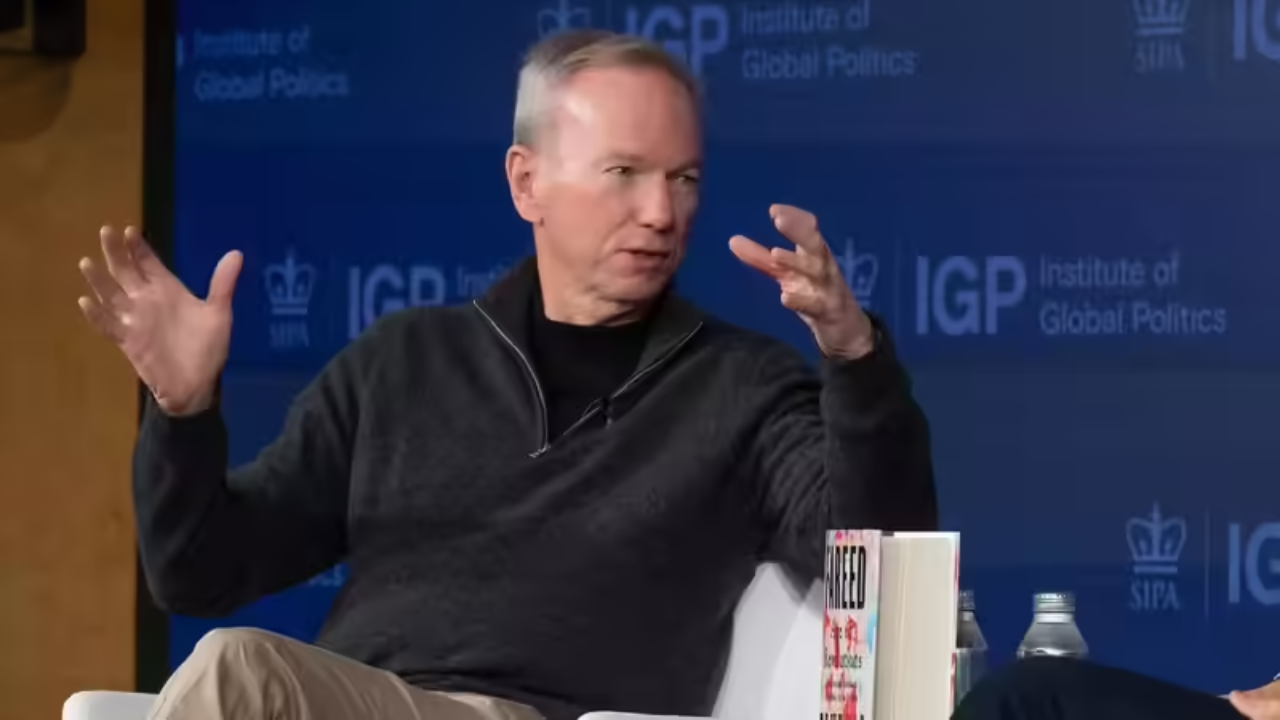
Eric Schmidt, the former CEO of Google, has expressed his discontent with his former boss Sergey Brin's financial backing for various political measures. Specifically, Schmidt is unhappy with Brin's decision to invest $100 million in challenging California's Proposition 40.
Schmidt's irritation stems from Brin's investments in several ballot initiatives, particularly a proposed wealth tax that would impact individuals with a net worth exceeding $1 billion. As a billionaire himself, Schmidt is determined to thwart this proposed tax.
The wealth tax, if implemented, would have significant implications for billionaires like Schmidt and Brin. It is likely that Schmidt's opposition to the tax is driven by his own financial interests, as well as his philosophical stance on taxation and wealth distribution.
Sergey Brin, co-founder of Google, has been actively involved in various philanthropic and political endeavors. His decision to invest in these ballot initiatives reflects his commitment to using his wealth to influence policy and drive social change.
The proposed wealth tax has sparked a heated debate about income inequality and the role of the wealthy in society. Proponents of the tax argue that it would help reduce economic disparities and generate revenue for social programs. Opponents, like Schmidt, argue that it would stifle economic growth and discourage entrepreneurship.
The rift between Schmidt and Brin highlights the complexities of the relationship between wealth, power, and politics. As two of the most influential figures in the tech industry, their opinions and actions have significant implications for the broader debate about taxation and economic policy.
In the context of the ongoing debate about income inequality and taxation, Schmidt's opposition to the wealth tax is likely to be seen as a significant development. It remains to be seen how this will play out, but one thing is clear: the wealthy and powerful will continue to shape the conversation about taxation and economic policy.
The significance of this development extends beyond the personal opinions of Schmidt and Brin. It highlights the need for a nuanced and informed discussion about the role of wealth and power in shaping economic policy. As the debate about taxation and income inequality continues to unfold, it is essential to consider the perspectives of all stakeholders, including the wealthy and powerful.
In conclusion, Eric Schmidt's unhappiness with Sergey Brin's political endeavors reflects a deeper divide about the role of wealth and power in shaping economic policy. As the debate about taxation and income inequality continues to evolve, it is crucial to consider the implications of the proposed wealth tax and the perspectives of all stakeholders involved.
Frequently asked questions
Why is Eric Schmidt unhappy with Sergey Brin's politics?
Eric Schmidt is unhappy with Sergey Brin's financial backing for political measures, including a proposed wealth tax that would impact billionaires.
What is the proposed wealth tax about?
The proposed wealth tax would impact individuals with a net worth exceeding $1 billion, with the aim of reducing economic disparities and generating revenue for social programs.