Maharashtra Introduces DELTA Act For Blockchain Property Tokenisation
Maharashtra to unlock property value, CM Fadnavis directs draft of DELTA Act
'%3E%3Crect%20width%3D'96'%20height%3D'96'%20fill%3D'%23B3261E'%2F%3E%3Ccircle%20cx%3D'30'%20cy%3D'24'%20r%3D'44'%20fill%3D'%23fff'%20opacity%3D'.12'%2F%3E%3Ccircle%20cx%3D'60'%20cy%3D'74'%20r%3D'40'%20fill%3D'%23000'%20opacity%3D'.10'%2F%3E%3C%2Fg%3E%3Cg%20fill%3D'%23fff'%3E%3Crect%20x%3D'29'%20y%3D'49'%20width%3D'8'%20height%3D'19'%20rx%3D'1'%2F%3E%3Crect%20x%3D'39'%20y%3D'40'%20width%3D'9'%20height%3D'28'%20rx%3D'1'%2F%3E%3Crect%20x%3D'50'%20y%3D'45'%20width%3D'8'%20height%3D'23'%20rx%3D'1'%2F%3E%3Crect%20x%3D'60'%20y%3D'53'%20width%3D'7'%20height%3D'15'%20rx%3D'1'%2F%3E%3Crect%20x%3D'41'%20y%3D'34'%20width%3D'5'%20height%3D'6'%2F%3E%3C%2Fg%3E%3C%2Fsvg%3E)
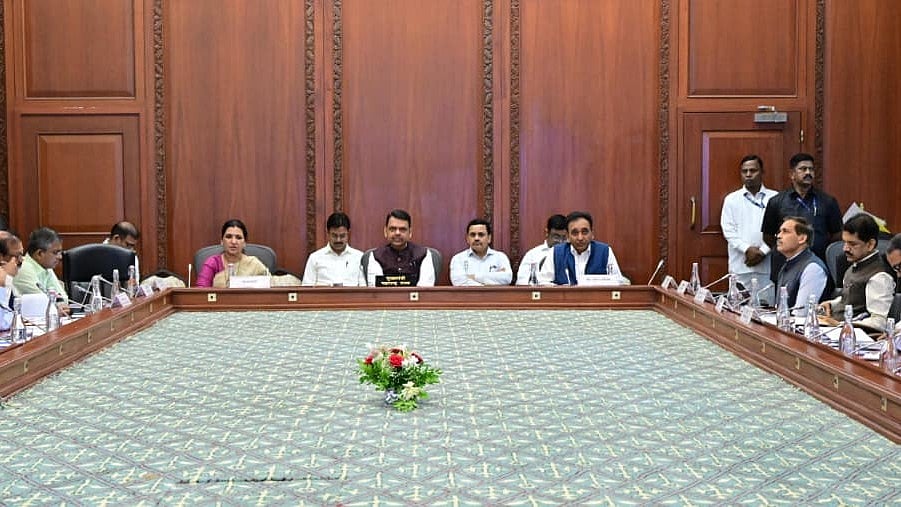
The Maharashtra government is set to introduce a groundbreaking law to unlock the economic potential of immovable properties through blockchain-based tokenisation.
Chief Minister Devendra Fadnavis has directed officials to draft the proposed DELTA (Maharashtra Digitisation and Exchange of Land Token Assets) Act, which aims to enable property owners to realise the latent value of their assets.
The legislation is part of the state's goal to become a USD 1 trillion economy by 2030. Fadnavis chaired a meeting at Sahyadri Guest House on Monday, where he instructed the Urban Development and Law & Judiciary departments to constitute an expert committee.
This committee will comprise representatives from the Securities and Exchange Board of India (SEBI), the Bombay Stock Exchange (BSE), the National Stock Exchange (NSE), and domain experts to prepare a comprehensive legal framework.
Under the proposed law, immovable properties would be tokenised using blockchain technology, allowing digital transactions linked to the underlying value of land. The Chief Minister emphasized the need for legal certainty, transparency, and protection of ownership rights.
He also asked officials to study international best practices and the relevant regulatory framework of the Government of India while drafting the legislation. If enacted, Maharashtra would become the first state in the country to introduce a dedicated law for blockchain-based property tokenisation.
The proposed framework would simplify property transactions and mortgage financing, generating new economic opportunities for property owners and boosting the state's revenue through emerging digital asset technologies.
The introduction of the DELTA Act is a significant step towards leveraging technology to unlock the economic potential of immovable properties in Maharashtra.
The state's goal of becoming a USD 1 trillion economy by 2030 is ambitious, and the DELTA Act is expected to play a crucial role in achieving this target.
The use of blockchain technology in property transactions is expected to increase transparency, reduce fraud, and provide a secure and efficient way of conducting property deals.
The Maharashtra government's decision to introduce the DELTA Act is a testament to its commitment to embracing innovative technologies and creating a conducive business environment.
As the state moves forward with the implementation of the DELTA Act, it is likely to have a significant impact on the real estate sector and the economy as a whole.
In conclusion, the introduction of the DELTA Act is a significant development in the Maharashtra government's efforts to unlock the economic potential of immovable properties. The use of blockchain technology is expected to increase transparency, reduce fraud, and provide a secure and efficient way of conducting property deals. The state's goal of becoming a USD 1 trillion economy by 2030 is ambitious, and the DELTA Act is expected to play a crucial role in achieving this target.
Frequently asked questions
What is the DELTA Act?
The DELTA Act is a proposed law to unlock the economic potential of immovable properties through blockchain-based tokenisation.
What is the goal of the DELTA Act?
The goal of the DELTA Act is to enable property owners to realise the latent value of their assets and create new revenue streams for the state.