Mumbai Corporators Slam BMC Fogging Drive Amid Rising Malaria Cases
Mumbai corporators demand action at construction sites, more fogging machines
'%3E%3Crect%20width%3D'96'%20height%3D'96'%20fill%3D'%23B3261E'%2F%3E%3Ccircle%20cx%3D'30'%20cy%3D'24'%20r%3D'44'%20fill%3D'%23fff'%20opacity%3D'.12'%2F%3E%3Ccircle%20cx%3D'60'%20cy%3D'74'%20r%3D'40'%20fill%3D'%23000'%20opacity%3D'.10'%2F%3E%3C%2Fg%3E%3Cg%20fill%3D'%23fff'%3E%3Crect%20x%3D'29'%20y%3D'49'%20width%3D'8'%20height%3D'19'%20rx%3D'1'%2F%3E%3Crect%20x%3D'39'%20y%3D'40'%20width%3D'9'%20height%3D'28'%20rx%3D'1'%2F%3E%3Crect%20x%3D'50'%20y%3D'45'%20width%3D'8'%20height%3D'23'%20rx%3D'1'%2F%3E%3Crect%20x%3D'60'%20y%3D'53'%20width%3D'7'%20height%3D'15'%20rx%3D'1'%2F%3E%3Crect%20x%3D'41'%20y%3D'34'%20width%3D'5'%20height%3D'6'%2F%3E%3C%2Fg%3E%3C%2Fsvg%3E)
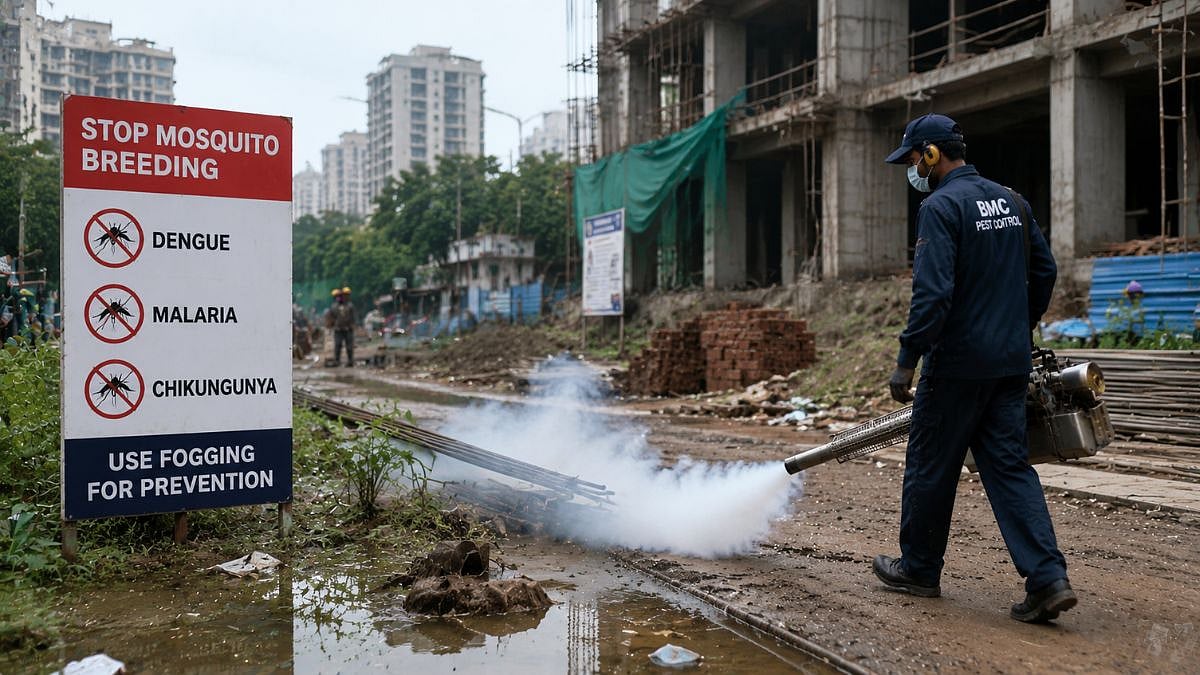
Mumbai corporators have criticized the BMC's fogging drive, saying it is ineffective in controlling the rise of malaria and dengue cases in the city. The corporators, who belong to different parties, alleged that the BMC's fogging drive exists only on paper and that several construction sites have stagnant water left untreated.
The criticism came during a discussion in the BMC's Standing Committee, where Shiv Sena (UBT) corporators demanded at least one fogging machine for every ward. They highlighted the presence of stagnant water and mosquito larvae at several construction sites. Congress corporator Ajanta Yadav said that fogging must be more effective in eliminating larvae.
BJP corporators Shivkumar Jha and Shital Gambhir also raised concerns about the BMC's pest control department, saying that repeated calls go unanswered and corporators are not informed when fogging teams arrive. Gambhir also questioned the use of old fogging machines and asked whether they have an expiry date.
The Leader of House, Ganesh Khankar, said that the issue has been raised in the past three meetings but no concrete decision has been taken by the civic authorities. The Standing Committee chairman, Prabhakar Shinde, stressed the need for immediate preventive measures, especially during the monsoon season.
According to civic data, malaria cases have risen by 11.4% from 2,852 cases during June 1-August 15, 2025, to 3,177 cases in the same period in 2026. Dengue cases, however, declined by 11.3% from 1,217 to 1,079 cases.
The rise in malaria cases has sparked concerns among corporators, who are demanding regular and effective fogging at construction sites and other mosquito-breeding hotspots. The BMC has been directed to submit a detailed report on the issue at the next meeting.
The monsoon season has brought a surge in mosquito-borne diseases, and the BMC's inability to control the situation has raised questions about its effectiveness. The corporators' demands for more fogging machines and regular fogging at construction sites are aimed at preventing the spread of diseases.
The BMC's fogging drive is a crucial measure to control the spread of mosquito-borne diseases, and its ineffectiveness has serious consequences for the health and well-being of Mumbai's residents. The civic body must take immediate action to address the concerns raised by corporators and ensure that the fogging drive is effective in controlling the rise of malaria and dengue cases.
In conclusion, the rise in malaria cases in Mumbai is a serious concern that requires immediate attention from the BMC. The corporators' demands for more fogging machines and regular fogging at construction sites are a step in the right direction, and the civic body must take concrete measures to address the issue and prevent the spread of diseases.
The situation highlights the need for effective measures to control mosquito-borne diseases in Mumbai, and the BMC must take a proactive approach to address the issue. The health and well-being of Mumbai's residents depend on it, and the civic body must ensure that it takes all necessary steps to prevent the spread of diseases.
The BMC's response to the situation will be crucial in determining the outcome, and the civic body must take immediate action to address the concerns raised by corporators. The rise in malaria cases is a wake-up call for the BMC, and it must take concrete measures to control the situation and prevent the spread of diseases.
In the end, the BMC's ability to control the spread of mosquito-borne diseases will depend on its effectiveness in implementing measures to prevent the breeding of mosquitoes. The corporators' demands for more fogging machines and regular fogging at construction sites are a step in the right direction, and the civic body must take concrete measures to address the issue and ensure the health and well-being of Mumbai's residents.
Frequently asked questions
What is the current situation with malaria cases in Mumbai?
Malaria cases have risen by 11.4% from 2,852 cases during June 1-August 15, 2025, to 3,177 cases in the same period in 2026.
What are the corporators demanding to control the spread of mosquito-borne diseases?
The corporators are demanding regular and effective fogging at construction sites and other mosquito-breeding hotspots, as well as more fogging machines.