Thailand Deploys 3D-Printed Shelters
Thailand helps young seagrass survive with 3D-printed shelters. Innovative approach aids conservation.
'%3E%3Crect%20width%3D'96'%20height%3D'96'%20fill%3D'%23B3261E'%2F%3E%3Ccircle%20cx%3D'30'%20cy%3D'24'%20r%3D'44'%20fill%3D'%23fff'%20opacity%3D'.12'%2F%3E%3Ccircle%20cx%3D'60'%20cy%3D'74'%20r%3D'40'%20fill%3D'%23000'%20opacity%3D'.10'%2F%3E%3C%2Fg%3E%3Cg%20fill%3D'%23fff'%3E%3Crect%20x%3D'29'%20y%3D'49'%20width%3D'8'%20height%3D'19'%20rx%3D'1'%2F%3E%3Crect%20x%3D'39'%20y%3D'40'%20width%3D'9'%20height%3D'28'%20rx%3D'1'%2F%3E%3Crect%20x%3D'50'%20y%3D'45'%20width%3D'8'%20height%3D'23'%20rx%3D'1'%2F%3E%3Crect%20x%3D'60'%20y%3D'53'%20width%3D'7'%20height%3D'15'%20rx%3D'1'%2F%3E%3Crect%20x%3D'41'%20y%3D'34'%20width%3D'5'%20height%3D'6'%2F%3E%3C%2Fg%3E%3C%2Fsvg%3E)
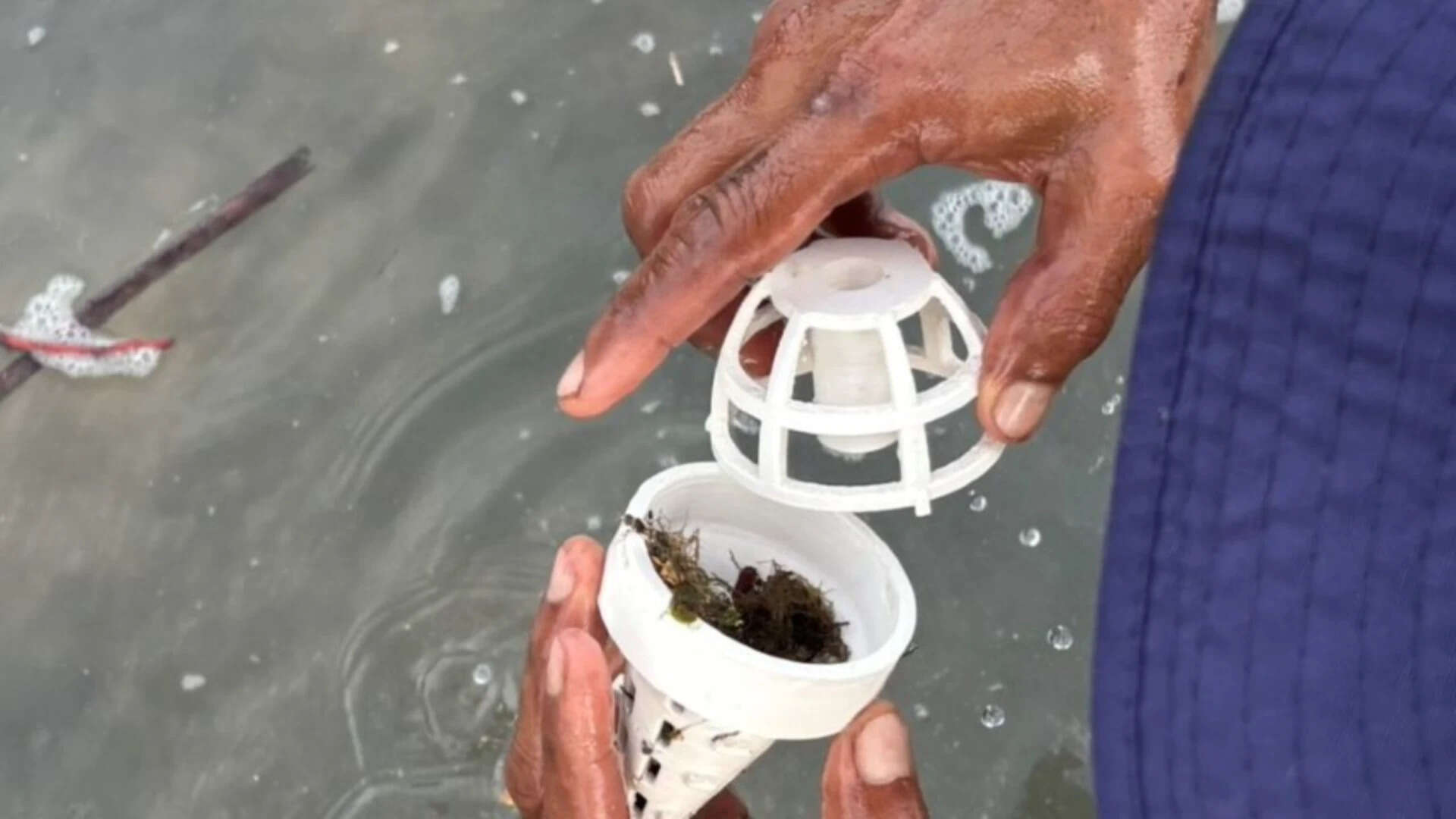
In a bid to conserve and protect young seagrass, Thailand has turned to innovative technology, utilizing 3D-printed shelters to provide a safe environment for these marine plants to grow. Seagrass plays a crucial role in marine ecosystems, serving as a habitat for numerous species and helping to maintain water quality. However, young seagrass is often vulnerable to damage from waves and strong currents, which can hinder its ability to establish itself and thrive.
The 3D-printed shelters are designed to mimic the natural environment in which seagrass grows, providing protection from harsh weather conditions and predators. By creating a safe space for young seagrass to develop, these shelters aim to increase the chances of survival and promote healthy growth.
This initiative is part of a broader conservation effort in Thailand, which recognizes the importance of preserving marine biodiversity. Seagrass beds are not only essential for the health of marine ecosystems but also provide important ecosystem services, including shoreline stabilization and water filtration.
Thailand's use of 3D-printed technology to aid in seagrass conservation is a notable example of how innovation can be applied to environmental challenges. As the world continues to face the impacts of climate change and habitat destruction, such creative solutions can play a vital role in protecting vulnerable species and ecosystems.
The success of this project could have significant implications for marine conservation efforts globally, highlighting the potential for technology to support environmental sustainability. By embracing innovative approaches like 3D-printed shelters, conservationists can explore new ways to protect and preserve critical habitats like seagrass beds.
In the context of global marine conservation, Thailand's initiative serves as a positive example of proactive measures being taken to address environmental challenges. It underscores the importance of collaboration between technology, conservation, and community efforts to protect our planet's precious marine resources.
The use of 3D-printed shelters for young seagrass in Thailand demonstrates a forward-thinking approach to conservation, one that could inspire similar initiatives in other parts of the world. As we move forward in our efforts to protect marine ecosystems, such innovations will be crucial in helping us achieve our goals.
In conclusion, Thailand's deployment of 3D-printed shelters to aid young seagrass survival is a commendable step towards marine conservation. This project not only highlights the potential of technology in supporting environmental sustainability but also emphasizes the need for continued innovation and collaboration in our efforts to protect the world's marine biodiversity.
Frequently asked questions
What is Thailand using to help young seagrass?
Thailand is using 3D-printed shelters to help young seagrass survive.
Why is seagrass important?
Seagrass is important because it provides a habitat for numerous species, helps maintain water quality, and supports shoreline stabilization.