Japanese Horseshoe Bats Adapt Echolocation Calls
Bats adjust calls to match colony frequencies, improving prey detection. Study reveals unique echolocation strategy.
'%3E%3Crect%20width%3D'96'%20height%3D'96'%20fill%3D'%23B3261E'%2F%3E%3Ccircle%20cx%3D'30'%20cy%3D'24'%20r%3D'44'%20fill%3D'%23fff'%20opacity%3D'.12'%2F%3E%3Ccircle%20cx%3D'60'%20cy%3D'74'%20r%3D'40'%20fill%3D'%23000'%20opacity%3D'.10'%2F%3E%3C%2Fg%3E%3Cg%20fill%3D'%23fff'%3E%3Crect%20x%3D'29'%20y%3D'49'%20width%3D'8'%20height%3D'19'%20rx%3D'1'%2F%3E%3Crect%20x%3D'39'%20y%3D'40'%20width%3D'9'%20height%3D'28'%20rx%3D'1'%2F%3E%3Crect%20x%3D'50'%20y%3D'45'%20width%3D'8'%20height%3D'23'%20rx%3D'1'%2F%3E%3Crect%20x%3D'60'%20y%3D'53'%20width%3D'7'%20height%3D'15'%20rx%3D'1'%2F%3E%3Crect%20x%3D'41'%20y%3D'34'%20width%3D'5'%20height%3D'6'%2F%3E%3C%2Fg%3E%3C%2Fsvg%3E)
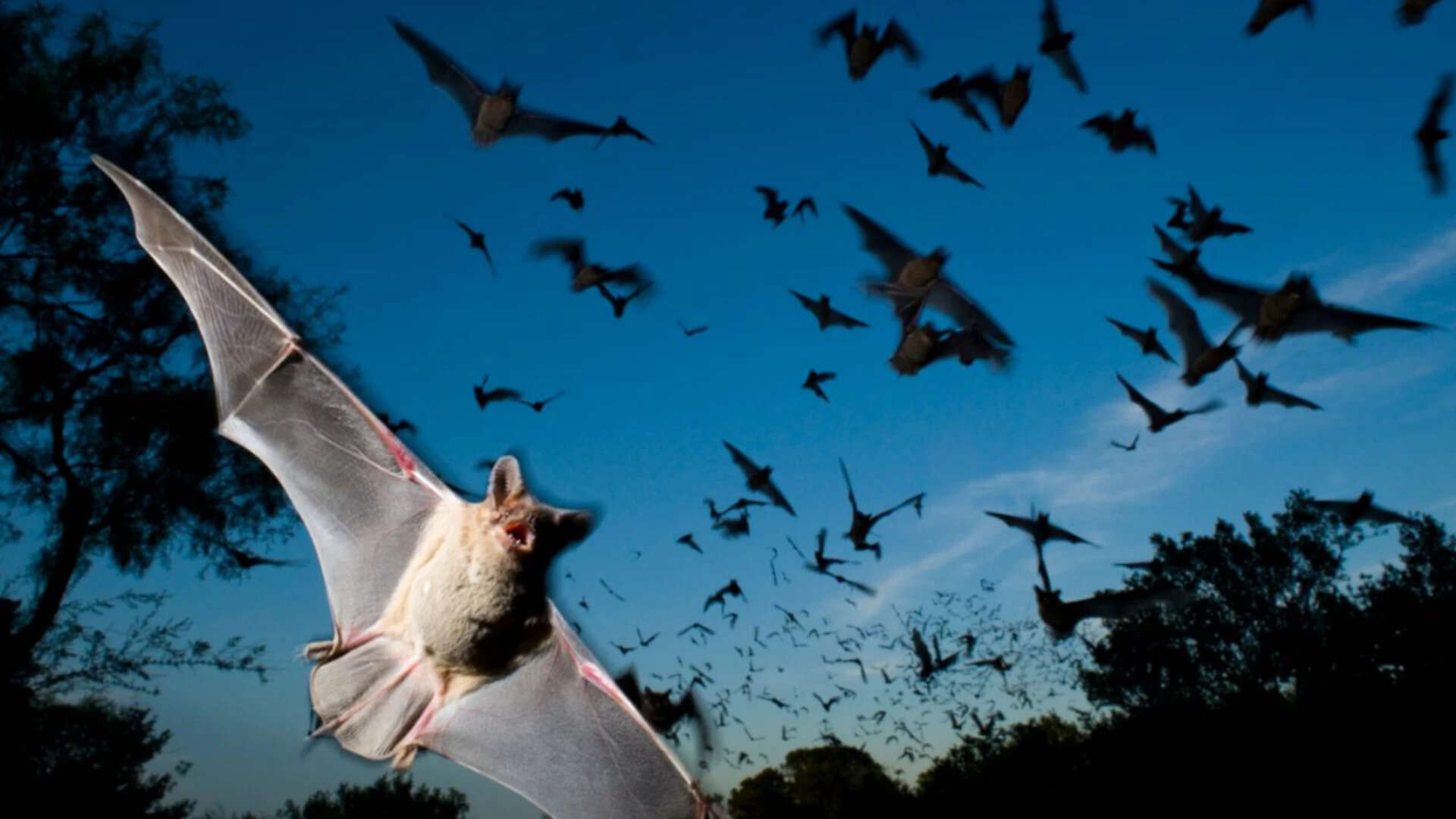
A recent study has made a fascinating discovery about the greater Japanese horseshoe bat's echolocation abilities.
These bats have been found to adjust their echolocation calls to match the frequencies used by other members of their colony.
This unique strategy allows the bats to create a shared frequency, which in turn creates a clearer listening range.
As a result, the bats are able to detect prey more effectively, even when there are many overlapping calls from nearby colony members.
The researchers behind the study were surprised to find that the bats did not avoid using frequencies that were already in use by other bats.
Instead, they found that the bats would adjust their calls to match the frequencies used by others, creating a kind of echolocation harmony.
This strategy is thought to be an adaptation to the noisy environment of the bat colony, where many bats are using echolocation calls at the same time.
By matching their frequencies, the bats are able to cut through the noise and detect prey more easily.
The study's findings have important implications for our understanding of echolocation and how bats use it to navigate and find prey.
It also highlights the complex social behavior of bats and how they are able to adapt to their environment in unique and fascinating ways.
In the world of biology, this study is a significant discovery that sheds new light on the behavior of these fascinating creatures.
The greater Japanese horseshoe bat is just one of many species of bats that use echolocation, and this study will likely have implications for our understanding of echolocation in other species as well.
The discovery of this unique echolocation strategy is a reminder of the incredible diversity and complexity of the natural world.
It highlights the importance of continued research and study into the behavior and biology of animals like the greater Japanese horseshoe bat.
Overall, the study of the greater Japanese horseshoe bat's echolocation abilities is a fascinating area of research that continues to reveal new and exciting insights into the behavior of these amazing animals.
Frequently asked questions
How do Japanese horseshoe bats adapt to noisy environments?
They adjust their echolocation calls to match the frequencies used by other bats in their colony.
What is the benefit of this echolocation strategy?
It creates a clearer listening range, allowing bats to detect prey more effectively despite many overlapping calls.