Finance Panel Chief: Panchayats Must Generate Own Revenue
Panchayats and urban local bodies should be financially self-reliant, says Jaybhan Singh Pavaiya.
'%3E%3Crect%20width%3D'96'%20height%3D'96'%20fill%3D'%231A5276'%2F%3E%3Ccircle%20cx%3D'30'%20cy%3D'24'%20r%3D'44'%20fill%3D'%23fff'%20opacity%3D'.12'%2F%3E%3Ccircle%20cx%3D'60'%20cy%3D'74'%20r%3D'40'%20fill%3D'%23000'%20opacity%3D'.10'%2F%3E%3C%2Fg%3E%3Cg%20fill%3D'%23fff'%3E%3Cpath%20d%3D'M31%2041%20L48%2031%20L65%2041%20Z'%2F%3E%3Crect%20x%3D'33'%20y%3D'43'%20width%3D'4'%20height%3D'17'%2F%3E%3Crect%20x%3D'41'%20y%3D'43'%20width%3D'4'%20height%3D'17'%2F%3E%3Crect%20x%3D'51'%20y%3D'43'%20width%3D'4'%20height%3D'17'%2F%3E%3Crect%20x%3D'59'%20y%3D'43'%20width%3D'4'%20height%3D'17'%2F%3E%3Crect%20x%3D'30'%20y%3D'62'%20width%3D'36'%20height%3D'4'%20rx%3D'1'%2F%3E%3C%2Fg%3E%3C%2Fsvg%3E)
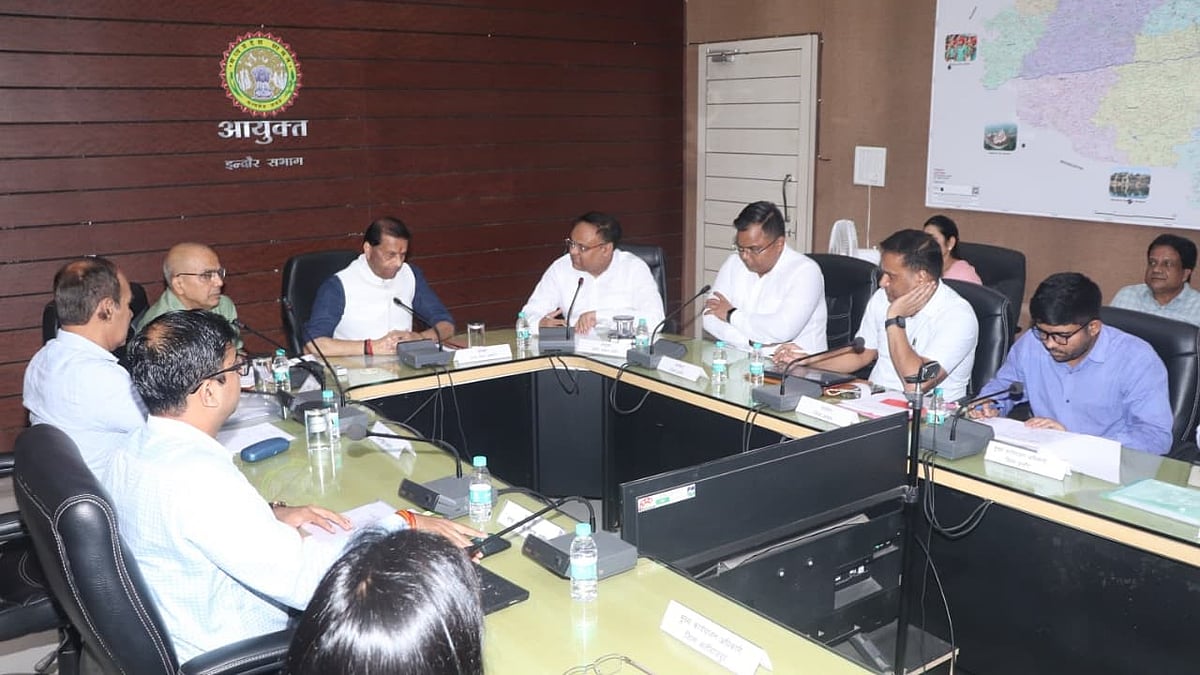
Jaybhan Singh Pavaiya, Chairman of the Sixth State Finance Commission, stated that Panchayats and urban local bodies must develop their own revenue sources to become financially self-reliant.
He made this statement during a divisional-level meeting at the Commissioner's office in Indore, Madhya Pradesh, on Wednesday. Pavaiya emphasized that the Commission's recommendations would be based on the actual needs and ground-level experiences of local bodies.
The meeting was attended by several senior officials, including Divisional Commissioner Bhaskar Lakshakar, Commission Member KK Singh, Collector Shivam Verma, and Commission Member Secretary Virendra Kumar. MP Shankar Lalwani and Minister Tulsi Silawat also participated in the discussion.
Pavaiya sought details on the problems, requirements, and achievements of local bodies and discussed measures to improve their financial health and operational efficiency. He encouraged innovations in sanitation, waste management, environmental conservation, and other local responsibilities.
The Chairman cited Indore's successful initiatives in waste disposal, resource recovery, and tax collection as examples of measures that could boost local bodies' income and help make them self-reliant. He emphasized the need for local bodies to generate their own revenue instead of relying solely on Central and State government grants.
The meeting concluded with Collector Shivam Verma proposing a vote of thanks. The discussion highlighted the importance of financial self-reliance for Panchayats and urban local bodies in Madhya Pradesh.
Pavaiya's statement is significant, as it emphasizes the need for local bodies to take ownership of their financial management. By generating their own revenue, local bodies can become more independent and effective in delivering services to their communities.
The Sixth State Finance Commission's recommendations are expected to play a crucial role in shaping the financial management of local bodies in Madhya Pradesh. The Commission's emphasis on ground-level experiences and actual needs of local bodies is likely to result in more effective and targeted recommendations.
In the context of Madhya Pradesh, the need for financial self-reliance is particularly important. The state has been working to improve the financial management of its local bodies, and the Commission's recommendations are expected to support this effort.
Overall, Pavaiya's statement highlights the importance of financial self-reliance for local bodies in Madhya Pradesh. By generating their own revenue and becoming more independent, local bodies can deliver better services to their communities and contribute to the state's overall development.
The meeting in Indore demonstrates the Commission's commitment to engaging with local stakeholders and understanding their needs and challenges. The discussion is expected to inform the Commission's recommendations and contribute to the development of more effective financial management systems for local bodies in Madhya Pradesh.
In conclusion, the Sixth State Finance Commission's emphasis on financial self-reliance for local bodies is a significant step towards improving their effectiveness and independence. By generating their own revenue and becoming more self-reliant, local bodies can play a more important role in delivering services to their communities and contributing to the state's overall development.
Frequently asked questions
Why should Panchayats and urban local bodies generate their own revenue?
To become financially self-reliant and less dependent on government grants.
What initiatives can help local bodies generate revenue?
Innovations in sanitation, waste management, and tax collection can boost local bodies' income.