Readers Face Self-Censorship In Public
Incidents of book attacks spark concern, readers second-guess choices
'%3E%3Crect%20width%3D'96'%20height%3D'96'%20fill%3D'%23B3261E'%2F%3E%3Ccircle%20cx%3D'30'%20cy%3D'24'%20r%3D'44'%20fill%3D'%23fff'%20opacity%3D'.12'%2F%3E%3Ccircle%20cx%3D'60'%20cy%3D'74'%20r%3D'40'%20fill%3D'%23000'%20opacity%3D'.10'%2F%3E%3C%2Fg%3E%3Cg%20fill%3D'%23fff'%3E%3Crect%20x%3D'29'%20y%3D'49'%20width%3D'8'%20height%3D'19'%20rx%3D'1'%2F%3E%3Crect%20x%3D'39'%20y%3D'40'%20width%3D'9'%20height%3D'28'%20rx%3D'1'%2F%3E%3Crect%20x%3D'50'%20y%3D'45'%20width%3D'8'%20height%3D'23'%20rx%3D'1'%2F%3E%3Crect%20x%3D'60'%20y%3D'53'%20width%3D'7'%20height%3D'15'%20rx%3D'1'%2F%3E%3Crect%20x%3D'41'%20y%3D'34'%20width%3D'5'%20height%3D'6'%2F%3E%3C%2Fg%3E%3C%2Fsvg%3E)
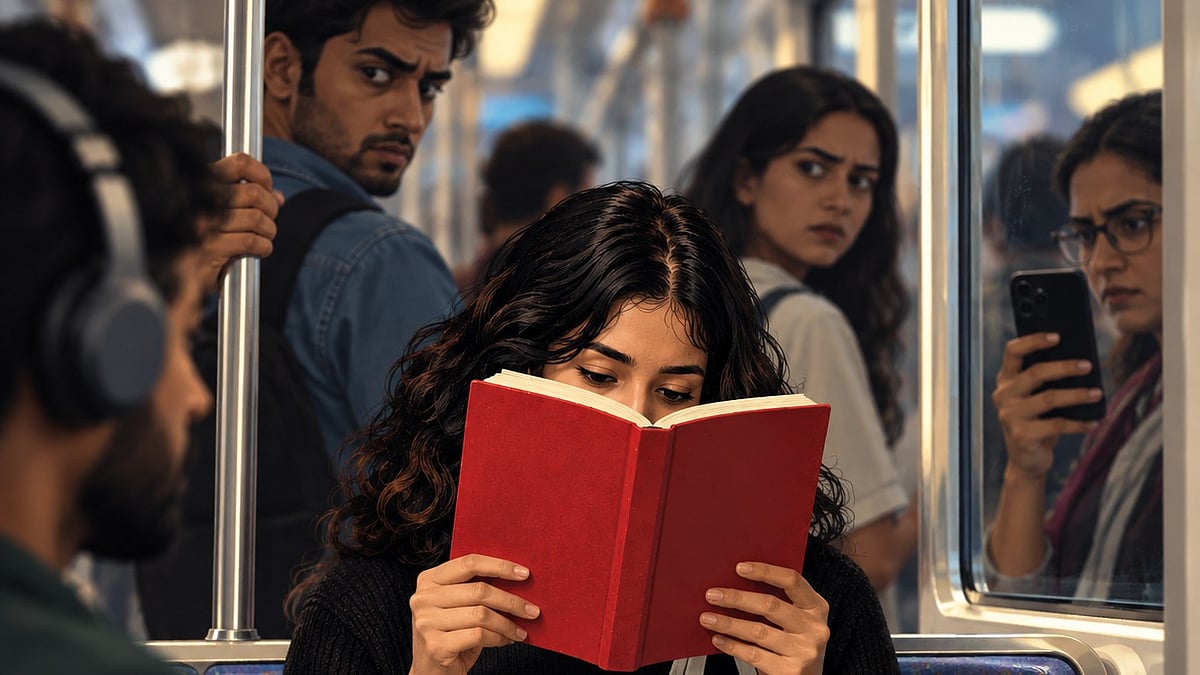
A recent incident involving a fringe group attacking a silent reading session has raised questions about the freedom to read in public. The attack on readers who were reading Anne Frank's The Diary of a Young Girl and a book by Malala Yousafzai has brought attention to the issue of self-censorship.
Rahul Saini, founder of Paperbacktalks BookClub, believes that freedom to read is closely tied to curiosity and does not require agreement with the content. He emphasizes that reading a book does not necessarily mean endorsing its views.
However, many readers have started to second-guess their choices when reading in public spaces. Riddhi Rajesh Rasam, an avid reader, says she has found herself selecting books that are less likely to initiate unwanted conversations. This subtle tendency is a form of self-censorship that can be difficult to recognize.
Divya Sonigra, a content writer, describes this as a problem that can be harder to identify than formal censorship. The fear of social backlash can lead readers to leave certain books untouched, even if they are fully available and legal.
Saini has spent five years running his book club, with active communities in four major cities in India. In his experience, the freedom to read is essential for fostering curiosity and promoting critical thinking.
The incident has sparked a debate about the importance of protecting the freedom to read in public. Many readers and authors believe that this freedom is essential for promoting intellectual curiosity and critical thinking.
The rise of self-censorship has significant implications for the literary community. It can limit the diversity of books that are read and discussed, and can also stifle critical thinking and intellectual curiosity.
In conclusion, the incident has highlighted the need to protect the freedom to read in public. Readers, authors, and literary organizations must work together to promote a culture of intellectual curiosity and critical thinking, and to ensure that readers feel free to read whatever they want without fear of social backlash.
The issue of self-censorship is complex and multifaceted. It requires a nuanced understanding of the social and cultural context in which readers make their choices. By promoting a culture of intellectual curiosity and critical thinking, we can work towards creating a society where readers feel free to read whatever they want, without fear of social backlash.
Ultimately, the freedom to read is essential for promoting intellectual curiosity, critical thinking, and empathy. It is essential that we protect this freedom and promote a culture of reading that is diverse, inclusive, and respectful of different perspectives.
Frequently asked questions
What is self-censorship in reading?
Self-censorship in reading refers to the practice of avoiding certain books or topics due to fear of social backlash or judgment.
Why is freedom to read important?
Freedom to read is essential for promoting intellectual curiosity, critical thinking, and empathy.