Tata Power Installs 1,800 EV Charging Points in Mumbai, Navi Mumbai
Tata Power expands EV charging network, crosses 1,800 points in Mumbai, Navi Mumbai. State network tops 2,400 points.
'%3E%3Crect%20width%3D'96'%20height%3D'96'%20fill%3D'%23B3261E'%2F%3E%3Ccircle%20cx%3D'30'%20cy%3D'24'%20r%3D'44'%20fill%3D'%23fff'%20opacity%3D'.12'%2F%3E%3Ccircle%20cx%3D'60'%20cy%3D'74'%20r%3D'40'%20fill%3D'%23000'%20opacity%3D'.10'%2F%3E%3C%2Fg%3E%3Cg%20fill%3D'%23fff'%3E%3Crect%20x%3D'29'%20y%3D'49'%20width%3D'8'%20height%3D'19'%20rx%3D'1'%2F%3E%3Crect%20x%3D'39'%20y%3D'40'%20width%3D'9'%20height%3D'28'%20rx%3D'1'%2F%3E%3Crect%20x%3D'50'%20y%3D'45'%20width%3D'8'%20height%3D'23'%20rx%3D'1'%2F%3E%3Crect%20x%3D'60'%20y%3D'53'%20width%3D'7'%20height%3D'15'%20rx%3D'1'%2F%3E%3Crect%20x%3D'41'%20y%3D'34'%20width%3D'5'%20height%3D'6'%2F%3E%3C%2Fg%3E%3C%2Fsvg%3E)
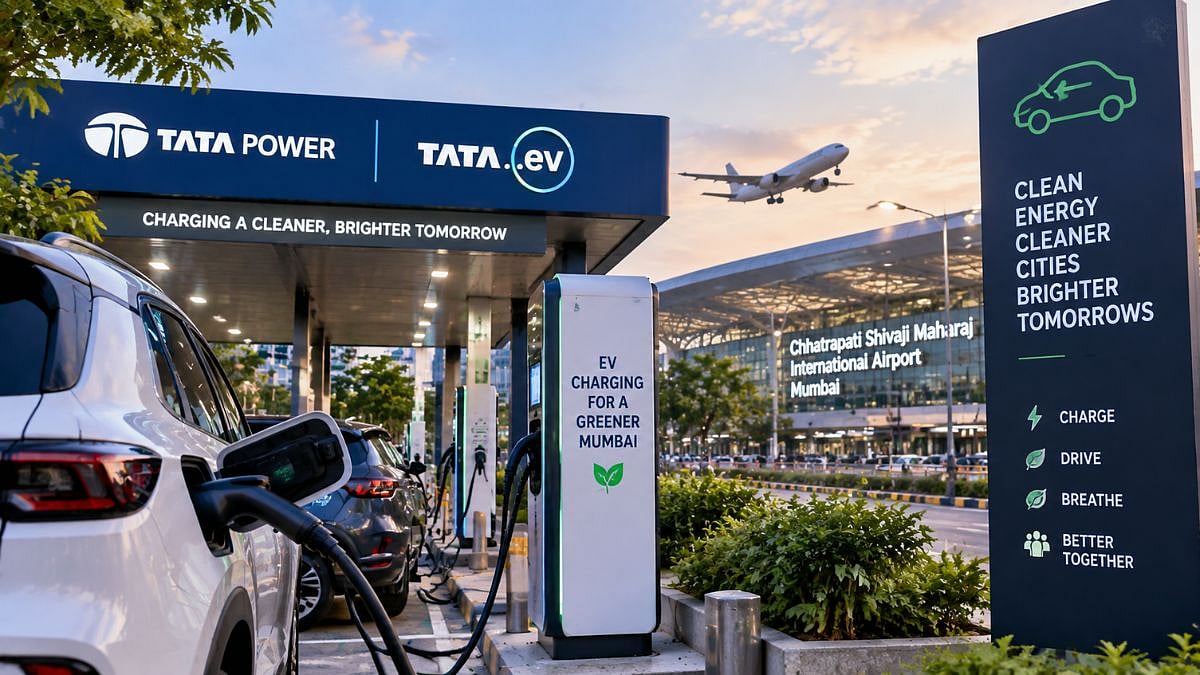
Tata Power has achieved a significant milestone in its efforts to expand the electric vehicle (EV) charging infrastructure in Mumbai and Navi Mumbai. The company has successfully installed over 1,800 EV charging points across these two cities, while its network in Maharashtra has grown to more than 2,400 points.
The expansion of the charging network is a testament to the growing demand for electric vehicles in the state. As more people switch to EVs, the need for a robust charging infrastructure has become increasingly important. Tata Power's efforts to strengthen the state's charging ecosystem are expected to play a crucial role in promoting the adoption of electric vehicles.
One of the key additions to the charging network is the 600-kW Mega Charger hub located near the Chhatrapati Shivaji Maharaj International Airport. This facility has 16 charging guns, including six 60-kW and two 120-kW fast chargers, and can charge 16 EVs simultaneously. The location of the hub on a busy airport corridor is intended to serve private EV owners as well as taxis, ride-hailing fleets, and other high-frequency users.
The wider network of 10 Mega Charger hubs spans across Maharashtra, Telangana, Andhra Pradesh, and Uttar Pradesh, with 25 fast chargers and 56 charging guns adding a cumulative 2.7 MW of charging capacity. In Maharashtra, the network also includes a Mega Charger at Sai International in Sangli, located on the Pune-Bengaluru corridor.
Tata Power's larger ecosystem now comprises over 6,700 public and captive charging points, 2.5 lakh+ home chargers, and 1,200+ bus charging points across more than 690 cities and towns. The company has set a target of installing 10,000 public charging points and 7.5 lakh home chargers by 2030.
The expansion of the charging network is expected to reduce range anxiety and make electric mobility a more practical option for everyday commuters and commercial fleets. As the demand for electric vehicles continues to grow, the need for a robust charging infrastructure will become increasingly important.
In Maharashtra, the challenge will be ensuring that the rapidly growing charging network keeps pace with EV adoption. The installation of more fast chargers on major roads, airport corridors, and intercity routes could play a crucial role in promoting the adoption of electric vehicles.
The growth of the EV charging network is a positive development for the environment, as it is expected to reduce carbon emissions and promote sustainable mobility. As the world transitions to a more sustainable future, the expansion of the EV charging network is an important step in the right direction.
In conclusion, Tata Power's efforts to expand the EV charging network in Mumbai and Navi Mumbai are a significant milestone in the company's efforts to promote sustainable mobility. As the demand for electric vehicles continues to grow, the need for a robust charging infrastructure will become increasingly important, and Tata Power is well-positioned to play a leading role in this effort.
The company's target of installing 10,000 public charging points and 7.5 lakh home chargers by 2030 is ambitious, but it is a necessary step to promote the adoption of electric vehicles. As the world transitions to a more sustainable future, the expansion of the EV charging network is an important step in the right direction.
Overall, the expansion of the EV charging network is a positive development for the environment, and it is expected to play a crucial role in promoting sustainable mobility in the years to come.
Frequently asked questions
How many EV charging points has Tata Power installed in Mumbai and Navi Mumbai?
Tata Power has installed over 1,800 EV charging points in Mumbai and Navi Mumbai.
What is the target of Tata Power for installing public charging points by 2030?
Tata Power targets to install 10,000 public charging points by 2030.