IAS Officer Divya Mittal Quits Uttar Pradesh Bureaucracy
Divya Mittal, a 2013-batch IAS officer, has quit after 13 years. Her decision raises questions about the administrative system.
'%3E%3Crect%20width%3D'96'%20height%3D'96'%20fill%3D'%231A5276'%2F%3E%3Ccircle%20cx%3D'30'%20cy%3D'24'%20r%3D'44'%20fill%3D'%23fff'%20opacity%3D'.12'%2F%3E%3Ccircle%20cx%3D'60'%20cy%3D'74'%20r%3D'40'%20fill%3D'%23000'%20opacity%3D'.10'%2F%3E%3C%2Fg%3E%3Cg%20fill%3D'%23fff'%3E%3Cpath%20d%3D'M31%2041%20L48%2031%20L65%2041%20Z'%2F%3E%3Crect%20x%3D'33'%20y%3D'43'%20width%3D'4'%20height%3D'17'%2F%3E%3Crect%20x%3D'41'%20y%3D'43'%20width%3D'4'%20height%3D'17'%2F%3E%3Crect%20x%3D'51'%20y%3D'43'%20width%3D'4'%20height%3D'17'%2F%3E%3Crect%20x%3D'59'%20y%3D'43'%20width%3D'4'%20height%3D'17'%2F%3E%3Crect%20x%3D'30'%20y%3D'62'%20width%3D'36'%20height%3D'4'%20rx%3D'1'%2F%3E%3C%2Fg%3E%3C%2Fsvg%3E)
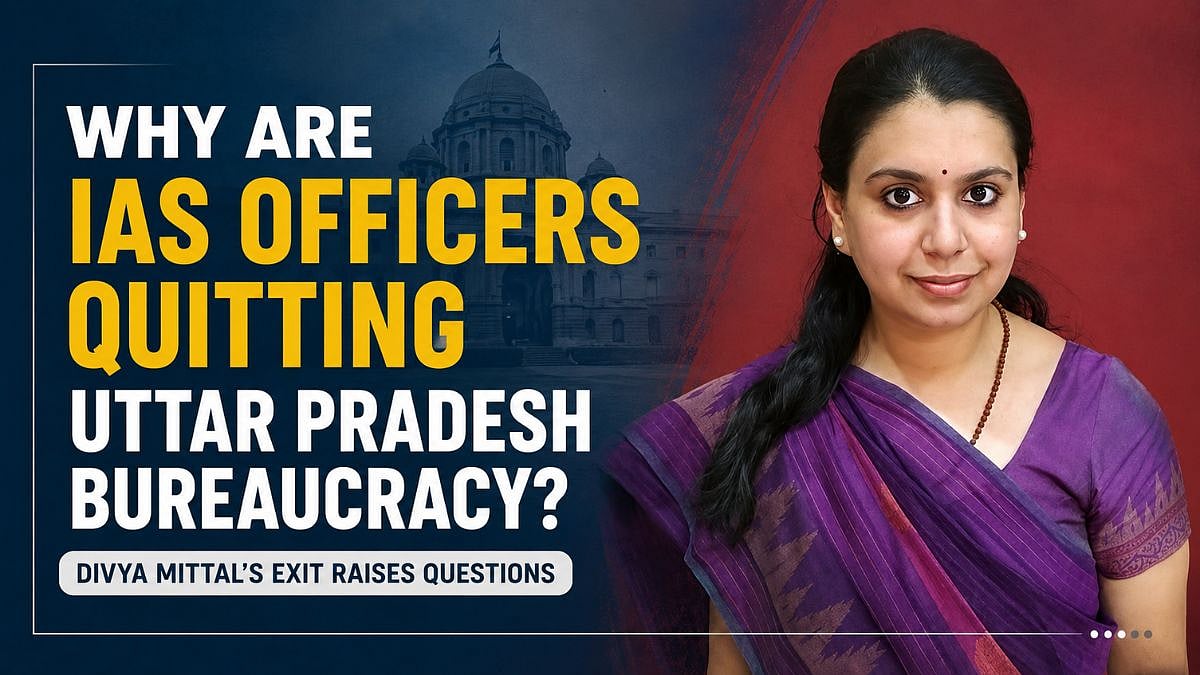
Divya Mittal, a 42-year-old IAS officer, has resigned from her position after 13 years of service in the Uttar Pradesh bureaucracy. Mittal, who served as district magistrate of Mirzapur and Deoria, was known for her hands-on approach and initiatives to improve the lives of people in remote areas.
Her decision to quit has raised eyebrows, as she had a long administrative career ahead of her. Mittal's farewell message did not blame the government or allege political interference, making it difficult to attribute her resignation to a single cause.
Mittal is not the only IAS officer to have quit the Uttar Pradesh cadre in recent years. Since 2017, several officers have opted for voluntary retirement or resigned before completing their tenure. These include Mohammad Mustafa, Amod Kumar, and Vidya Bhushan, among others.
The pattern of departures raises questions about the administrative system and whether it is making enough use of the talent it recruits. The IAS has traditionally offered prestige, authority, and the opportunity to influence people's lives, but the profile of its recruits has changed. Many officers now enter government after studying at leading institutions in India or abroad and, in some cases, after working in the private sector.
Mittal's background is a case in point. An IIT Delhi and IIM Bangalore alumnus, she worked in London as an exotic derivatives trader before returning to India and joining the IAS. Her decision to leave after 13 years, therefore, deserves more attention than a routine resignation.
The changing nature of administrative work is also a factor. For many officers, the district magistrate's job represents the most satisfying phase of the IAS career, as it allows them to directly address problems and see the impact of their decisions. As officers rise through the system, their work increasingly moves into secretariat files and meetings, which can be less satisfying.
The departures of IAS officers like Mittal raise questions about the future of the administrative system and whether it can retain top talent. The institution needs to ask questions about its own role in retaining officers and providing them with meaningful work.
The loss of experienced officers like Mittal can have a significant impact on the administration of Uttar Pradesh. The state needs officers who can provide effective leadership and implement policies that benefit the people.
In conclusion, the resignation of Divya Mittal and other IAS officers from the Uttar Pradesh cadre raises important questions about the administrative system and its ability to retain top talent. The institution needs to reflect on its own role in retaining officers and providing them with meaningful work, and the state needs to ensure that it can attract and retain the best officers to provide effective leadership and implement policies that benefit the people.
The issue of IAS officers quitting the bureaucracy is not limited to Uttar Pradesh, but it is a concern that needs to be addressed at the national level. The government needs to take steps to ensure that the administrative system is attractive to top talent and provides them with opportunities to make a meaningful difference in people's lives.
Overall, the resignation of Divya Mittal and other IAS officers is a wake-up call for the administrative system to reflect on its own role in retaining officers and providing them with meaningful work. It is an opportunity for the institution to ask questions and make changes to ensure that it can attract and retain the best officers to provide effective leadership and implement policies that benefit the people.
The future of the administrative system depends on its ability to retain top talent and provide them with opportunities to make a meaningful difference in people's lives. The government needs to take steps to ensure that the system is attractive to the best officers and provides them with the support and resources they need to succeed.
In the end, the resignation of Divya Mittal and other IAS officers is a reminder that the administrative system needs to evolve to meet the changing needs of the country and its people. It is an opportunity for the institution to reflect on its own role and make changes to ensure that it can attract and retain the best officers to provide effective leadership and implement policies that benefit the people.
Frequently asked questions
Why did Divya Mittal quit the IAS?
Mittal's farewell message did not blame the government or allege political interference, making it difficult to attribute her resignation to a single cause.
How many IAS officers have quit the Uttar Pradesh cadre in recent years?
Several IAS officers have quit the Uttar Pradesh cadre in recent years, including Mohammad Mustafa, Amod Kumar, and Vidya Bhushan, among others.