India's Vitamin D Deficiency Rises Despite Abundant Sunlight
Low Vitamin D levels, weak bones, and fatigue plague Indians, who turn to pills instead of sun exposure.
'%3E%3Crect%20width%3D'96'%20height%3D'96'%20fill%3D'%23B3261E'%2F%3E%3Ccircle%20cx%3D'30'%20cy%3D'24'%20r%3D'44'%20fill%3D'%23fff'%20opacity%3D'.12'%2F%3E%3Ccircle%20cx%3D'60'%20cy%3D'74'%20r%3D'40'%20fill%3D'%23000'%20opacity%3D'.10'%2F%3E%3C%2Fg%3E%3Cg%20fill%3D'%23fff'%3E%3Crect%20x%3D'29'%20y%3D'49'%20width%3D'8'%20height%3D'19'%20rx%3D'1'%2F%3E%3Crect%20x%3D'39'%20y%3D'40'%20width%3D'9'%20height%3D'28'%20rx%3D'1'%2F%3E%3Crect%20x%3D'50'%20y%3D'45'%20width%3D'8'%20height%3D'23'%20rx%3D'1'%2F%3E%3Crect%20x%3D'60'%20y%3D'53'%20width%3D'7'%20height%3D'15'%20rx%3D'1'%2F%3E%3Crect%20x%3D'41'%20y%3D'34'%20width%3D'5'%20height%3D'6'%2F%3E%3C%2Fg%3E%3C%2Fsvg%3E)
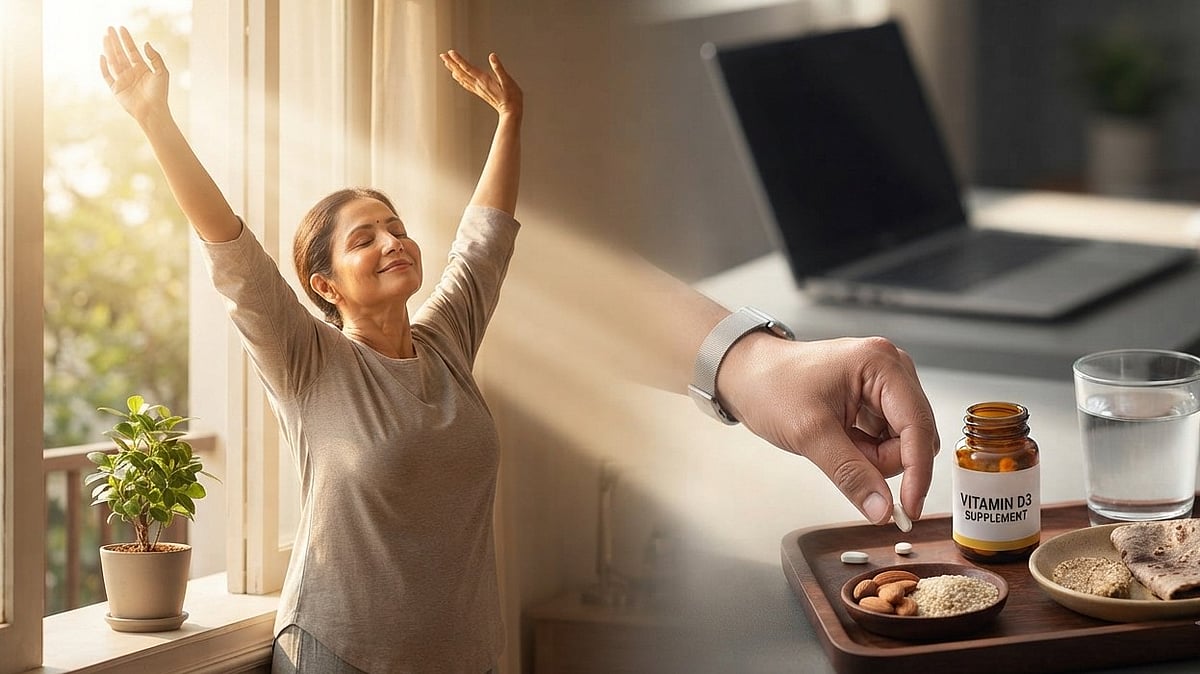
India, a country with an abundance of sunlight, is witnessing a growing trend of Vitamin D deficiency among its population. Despite the availability of sunlight, many Indians are experiencing low Vitamin D levels, weak bones, fatigue, muscle aches, and poor immunity. This has led to a surge in the consumption of Vitamin D supplements, with people opting for pills instead of soaking up the sun.
The human body's dependence on Vitamin D supplements is a cause for concern, as it highlights a disconnect between the body and something as basic as sunlight. Many Indians spend most of their day indoors, avoiding the sun due to heat, tanning, pigmentation, pollution, or fear of skin damage. Children are also playing less outdoors, while adults are stuck to screens, further reducing their exposure to sunlight.
Vitamin D is produced in the skin when it is exposed to UVB rays from sunlight. However, factors such as timing, season, pollution, clothing, skin pigmentation, sunscreen use, age, body composition, and health status influence the body's ability to produce Vitamin D. A 2024 study published in Scientific Reports found that 58% of adults aged 45 years and above from South India were Vitamin D deficient, while 23% were insufficient.
The calcium-Vitamin D boom is also driven by fear, with people consuming supplements to prevent weak bones, fractures, and ageing. However, bone health is not built by calcium alone. Vitamin D helps the body absorb calcium, but the body also needs magnesium, protein, movement, strength training, gut health, hormonal balance, and adequate nutrition. Bones respond to load, and a sedentary lifestyle can undermine the benefits of calcium and Vitamin D supplements.
Supplements are tools, not replacements for lifestyle. While some people may genuinely need supplements, self-prescribing high-dose Vitamin D or calcium without testing is not recommended. Excessive or unnecessary supplementation can have adverse effects, and more is not always better.
The growing dependence on Vitamin D supplements in India should be a wake-up call for people to re-evaluate their lifestyle. Instead of relying on pills, Indians should focus on spending more time outdoors, engaging in physical activity, and maintaining a balanced diet. This can help address the underlying causes of Vitamin D deficiency and promote overall health and well-being.
In conclusion, India's Vitamin D deficiency is a complex issue that requires a comprehensive approach. While supplements have their place, they should not be seen as a replacement for a healthy lifestyle. By making conscious choices to spend more time outdoors, engage in physical activity, and maintain a balanced diet, Indians can reduce their reliance on Vitamin D supplements and promote overall health and well-being.
The trend of Vitamin D deficiency in India is a reminder that health is not just about consuming nutrients, but also about maintaining a balance between lifestyle, nutrition, and physical activity. By acknowledging this, Indians can take the first step towards addressing the underlying causes of Vitamin D deficiency and promoting overall health and well-being.
Ultimately, the question is not 'supplement or sunlight?' but rather why the human body has become so disconnected from something as basic as the sun. By re-evaluating our lifestyle and making conscious choices, we can reduce our reliance on Vitamin D supplements and promote overall health and well-being.
The importance of addressing Vitamin D deficiency cannot be overstated. It is a critical aspect of maintaining overall health and well-being, and Indians must take proactive steps to address this issue. By doing so, we can reduce the burden of Vitamin D deficiency and promote a healthier, more balanced lifestyle.
In the end, it is up to each individual to take responsibility for their health and well-being. By making informed choices and adopting a balanced lifestyle, Indians can reduce their reliance on Vitamin D supplements and promote overall health and well-being. This is a critical step towards addressing the growing trend of Vitamin D deficiency in India and promoting a healthier, more balanced lifestyle.
Frequently asked questions
What is the main cause of Vitamin D deficiency in India?
The main cause of Vitamin D deficiency in India is the lack of sun exposure, as many people spend most of their day indoors.
Can Vitamin D supplements replace sunlight?
No, Vitamin D supplements cannot replace sunlight, as they are only a tool to support overall health and well-being, and a balanced lifestyle is still necessary.