China Develops EUV Lithography Prototype
China makes breakthrough in EUV tech, challenging Western dominance. Mass production possible by 2030.
'%3E%3Crect%20width%3D'96'%20height%3D'96'%20fill%3D'%234A235A'%2F%3E%3Ccircle%20cx%3D'30'%20cy%3D'24'%20r%3D'44'%20fill%3D'%23fff'%20opacity%3D'.12'%2F%3E%3Ccircle%20cx%3D'60'%20cy%3D'74'%20r%3D'40'%20fill%3D'%23000'%20opacity%3D'.10'%2F%3E%3C%2Fg%3E%3Cg%20fill%3D'none'%20stroke%3D'%23fff'%20stroke-width%3D'3'%3E%3Ccircle%20cx%3D'48'%20cy%3D'48'%20r%3D'16'%2F%3E%3Cellipse%20cx%3D'48'%20cy%3D'48'%20rx%3D'6.5'%20ry%3D'16'%2F%3E%3Cline%20x1%3D'32'%20y1%3D'42'%20x2%3D'64'%20y2%3D'42'%2F%3E%3Cline%20x1%3D'32'%20y1%3D'54'%20x2%3D'64'%20y2%3D'54'%2F%3E%3C%2Fg%3E%3C%2Fsvg%3E)
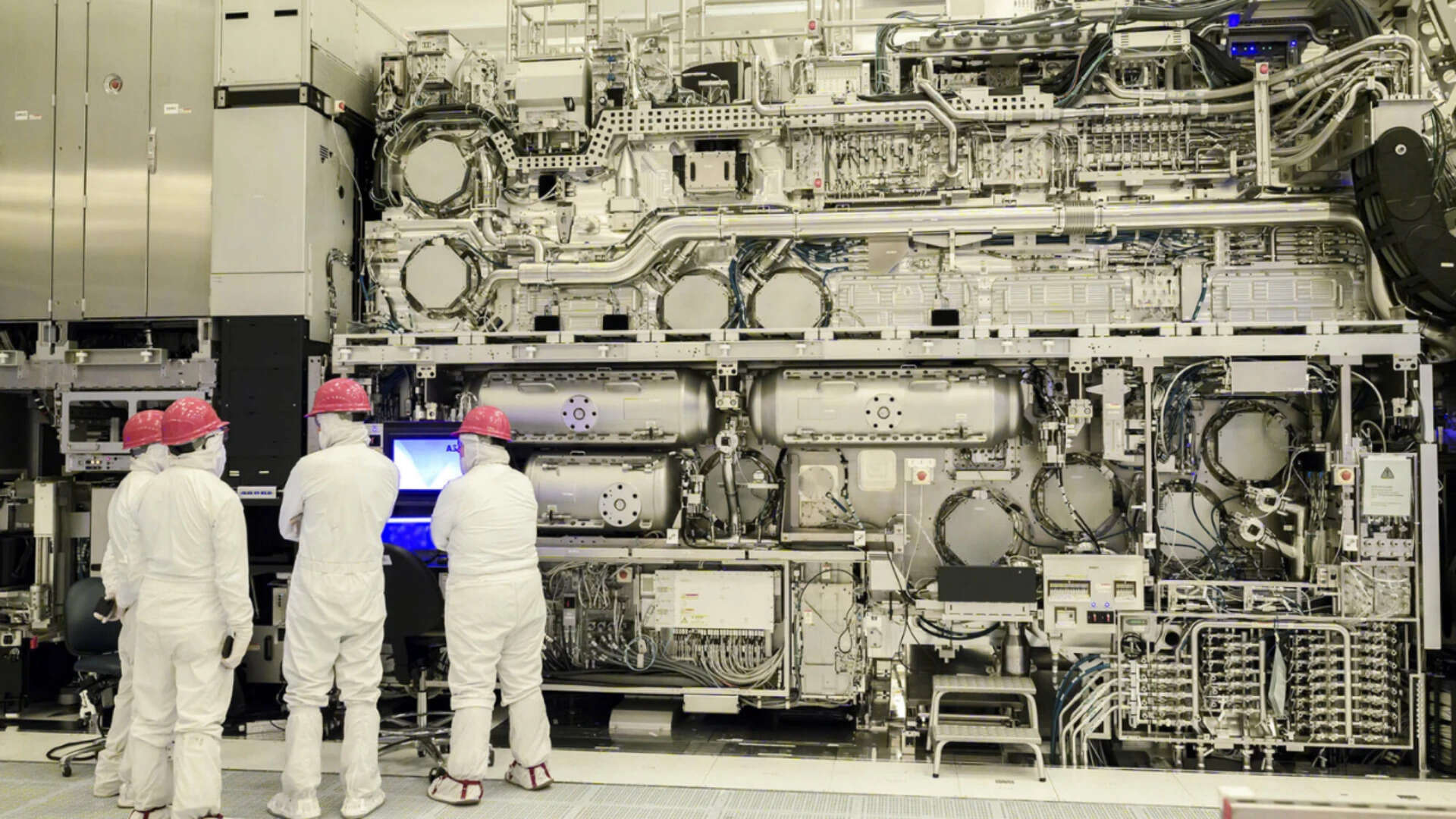
China has made a significant breakthrough in developing a functional prototype of an Extreme Ultraviolet (EUV) lithography system, a crucial technology in chip manufacturing. This achievement challenges the long-held Western assumptions about China's capabilities in producing advanced semiconductors.
The EUV lithography system is a complex technology that enables the creation of tiny transistors on microchips, which are essential for various electronic devices. China's development of this system is a result of a combination of indigenous innovation and strategic procurement of necessary components through various networks.
Experts believe that with this breakthrough, China could potentially achieve mass production of EUV lithography systems by 2030. This would mark a significant shift in the global semiconductor landscape, as China would be able to produce advanced chips domestically, reducing its reliance on foreign technology.
The development of EUV lithography systems is a highly complex and challenging process, requiring significant investments in research and development. The technology has been dominated by Western companies, such as ASML in the Netherlands, which has been the sole supplier of EUV lithography systems to major chip manufacturers.
China's breakthrough in EUV technology has significant implications for the global semiconductor industry. It could lead to increased competition and potentially disrupt the existing supply chain. The development also underscores China's determination to become self-sufficient in advanced technologies and reduce its dependence on foreign suppliers.
The global semiconductor industry is a highly competitive and rapidly evolving field, with countries and companies constantly striving to develop new and innovative technologies. China's achievement in EUV lithography is a testament to its growing capabilities in this field and its commitment to becoming a major player in the global semiconductor market.
In the context of the global semiconductor landscape, China's development of EUV lithography systems is a significant milestone. It demonstrates the country's ability to develop complex technologies and challenges the existing dominance of Western companies in this field.
The potential mass production of EUV lithography systems by 2030 could have far-reaching implications for the global economy and trade. It could lead to increased competition and potentially disrupt the existing supply chain, as China becomes a major player in the global semiconductor market.
In conclusion, China's development of a functional prototype of an EUV lithography system is a significant breakthrough that challenges Western assumptions about China's chip manufacturing capabilities. The potential for mass production by 2030 marks a significant shift in the global semiconductor landscape and underscores China's determination to become self-sufficient in advanced technologies.
This development is likely to have significant implications for India, as the country seeks to develop its own semiconductor industry and reduce its reliance on foreign technology. The Indian government has launched several initiatives to promote the development of the domestic semiconductor industry, and China's breakthrough in EUV technology could potentially impact these efforts.
Overall, China's achievement in EUV lithography is a significant milestone in the global semiconductor industry, and its implications will be closely watched by countries and companies around the world.