Mumbai Gets New Glossary For Colonial Buildings
Explore Mumbai's colonial architecture with a new glossary. Discover vibrant vocabulary to appreciate the city's historic buildings.
'%3E%3Crect%20width%3D'96'%20height%3D'96'%20fill%3D'%23B3261E'%2F%3E%3Ccircle%20cx%3D'30'%20cy%3D'24'%20r%3D'44'%20fill%3D'%23fff'%20opacity%3D'.12'%2F%3E%3Ccircle%20cx%3D'60'%20cy%3D'74'%20r%3D'40'%20fill%3D'%23000'%20opacity%3D'.10'%2F%3E%3C%2Fg%3E%3Cg%20fill%3D'%23fff'%3E%3Crect%20x%3D'29'%20y%3D'49'%20width%3D'8'%20height%3D'19'%20rx%3D'1'%2F%3E%3Crect%20x%3D'39'%20y%3D'40'%20width%3D'9'%20height%3D'28'%20rx%3D'1'%2F%3E%3Crect%20x%3D'50'%20y%3D'45'%20width%3D'8'%20height%3D'23'%20rx%3D'1'%2F%3E%3Crect%20x%3D'60'%20y%3D'53'%20width%3D'7'%20height%3D'15'%20rx%3D'1'%2F%3E%3Crect%20x%3D'41'%20y%3D'34'%20width%3D'5'%20height%3D'6'%2F%3E%3C%2Fg%3E%3C%2Fsvg%3E)
Mumbai's colonial buildings have a new glossary to help appreciate their architectural details. The idea for this book came from archaeologists who needed a vocabulary to describe the technicalities of these historic structures.
The glossary aims to provide a comprehensive list of terms to help describe the intricate details of Mumbai's colonial buildings. This will enable archaeologists, historians, and enthusiasts to better understand and appreciate the city's rich architectural heritage.
The book is a result of a need expressed by archaeologists who, despite being well-versed in the history and background of buildings, sometimes lacked the vocabulary to describe their architectural details. The glossary will fill this gap and provide a common language for experts and enthusiasts to discuss and appreciate Mumbai's colonial architecture.
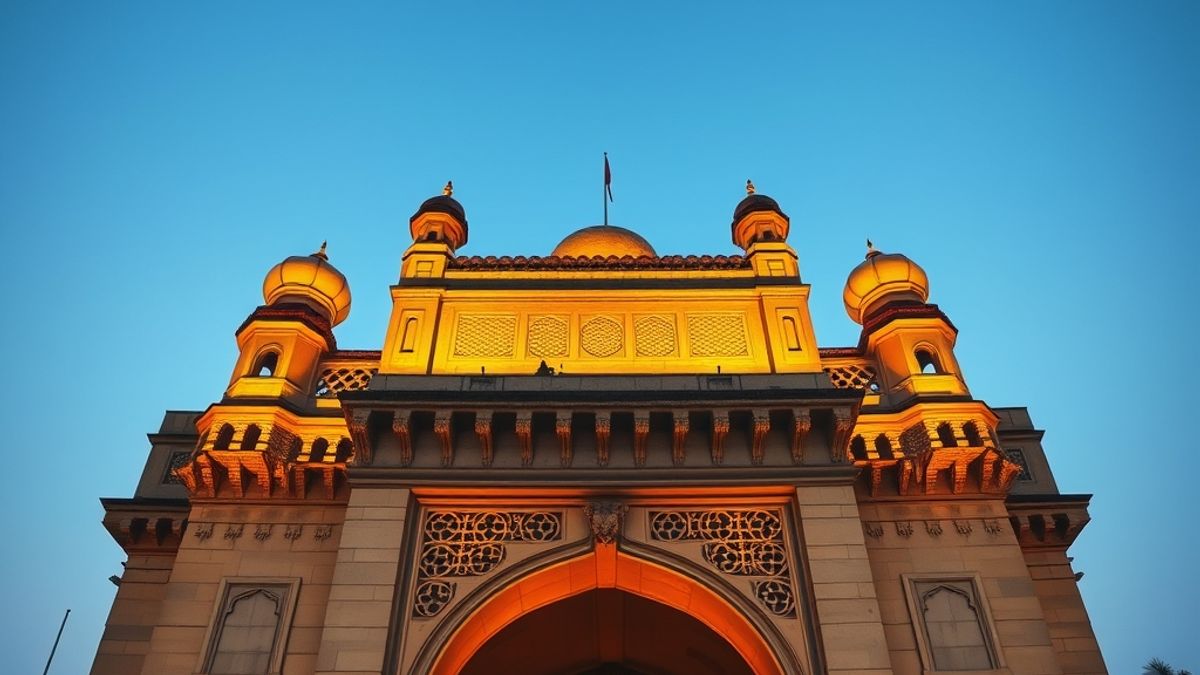
Mumbai's colonial buildings are a testament to the city's rich history and cultural diversity. The city is home to many iconic buildings, including the Victoria Terminus, the Bombay High Court, and the Gateway of India. These buildings showcase a unique blend of architectural styles, including Gothic, Victorian, and Art Deco.
The new glossary will help to promote a greater understanding and appreciation of Mumbai's colonial architecture. It will also provide a valuable resource for researchers, students, and enthusiasts who are interested in learning more about the city's historic buildings.
The publication of the glossary is a significant development for Mumbai's cultural and architectural scene. It highlights the importance of preserving and promoting the city's rich cultural heritage. The glossary will also contribute to a greater awareness and appreciation of Mumbai's colonial buildings, which are an integral part of the city's identity.
In conclusion, the new glossary is a valuable resource for anyone interested in Mumbai's colonial architecture. It provides a comprehensive list of terms to help describe the intricate details of the city's historic buildings. The glossary will promote a greater understanding and appreciation of Mumbai's rich architectural heritage and contribute to the preservation of the city's cultural identity.
The significance of this glossary extends beyond the realm of architecture and history. It also highlights the importance of language and vocabulary in appreciating and understanding cultural heritage. The glossary will enable people to engage with Mumbai's colonial buildings in a more meaningful way, which will contribute to a greater sense of pride and ownership among the city's residents.
Overall, the new glossary is a welcome addition to Mumbai's cultural and architectural scene. It will provide a valuable resource for experts and enthusiasts alike and contribute to a greater appreciation and understanding of the city's rich cultural heritage.
Frequently asked questions
What is the purpose of the new glossary for Mumbai's colonial buildings?
The glossary provides a comprehensive list of terms to help describe the intricate details of Mumbai's historic buildings, enabling experts and enthusiasts to better understand and appreciate the city's rich architectural heritage.
Why was the glossary created?
The glossary was created to fill the gap in vocabulary needed by archaeologists and historians to describe the technicalities of Mumbai's colonial buildings.