Maine Engineers Develop Solar Oyster Conveyor
Maine engineers create solar-powered oyster farming system. Increases production, reduces labor.
'%3E%3Crect%20width%3D'96'%20height%3D'96'%20fill%3D'%23B3261E'%2F%3E%3Ccircle%20cx%3D'30'%20cy%3D'24'%20r%3D'44'%20fill%3D'%23fff'%20opacity%3D'.12'%2F%3E%3Ccircle%20cx%3D'60'%20cy%3D'74'%20r%3D'40'%20fill%3D'%23000'%20opacity%3D'.10'%2F%3E%3C%2Fg%3E%3Cg%20fill%3D'%23fff'%3E%3Crect%20x%3D'29'%20y%3D'49'%20width%3D'8'%20height%3D'19'%20rx%3D'1'%2F%3E%3Crect%20x%3D'39'%20y%3D'40'%20width%3D'9'%20height%3D'28'%20rx%3D'1'%2F%3E%3Crect%20x%3D'50'%20y%3D'45'%20width%3D'8'%20height%3D'23'%20rx%3D'1'%2F%3E%3Crect%20x%3D'60'%20y%3D'53'%20width%3D'7'%20height%3D'15'%20rx%3D'1'%2F%3E%3Crect%20x%3D'41'%20y%3D'34'%20width%3D'5'%20height%3D'6'%2F%3E%3C%2Fg%3E%3C%2Fsvg%3E)
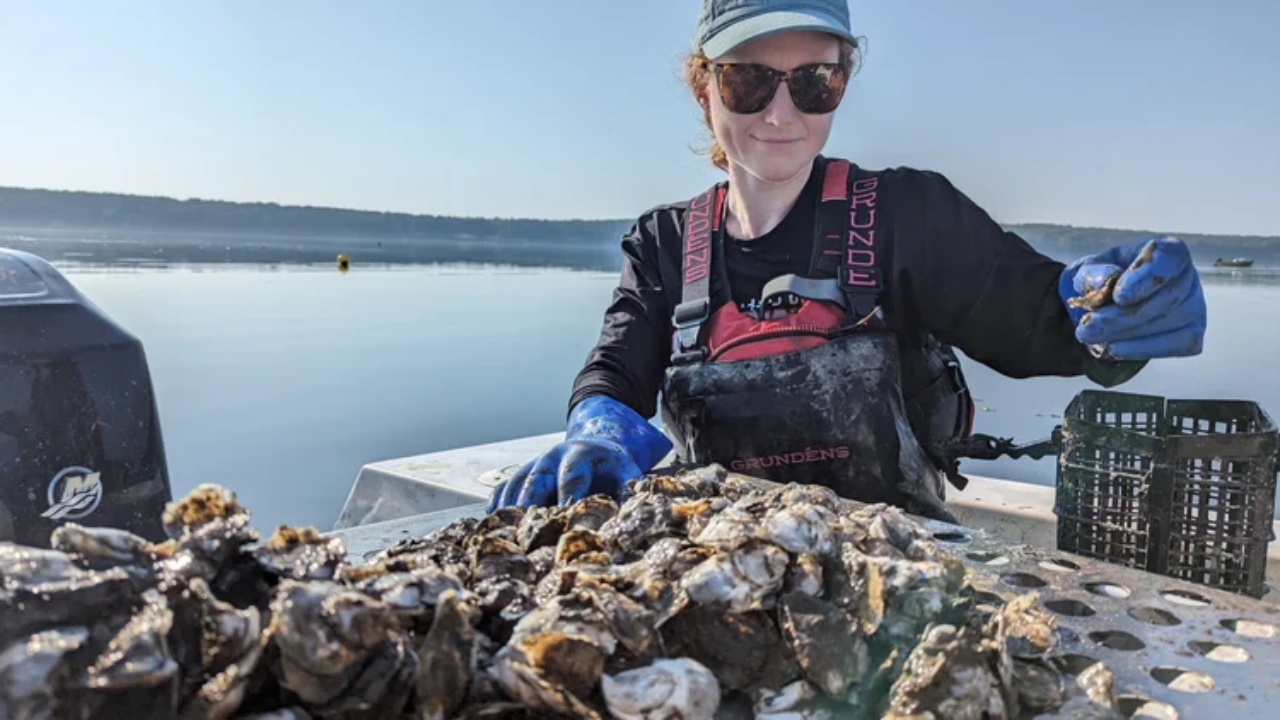
Engineers in Maine are developing a groundbreaking solar-powered floating system for oyster farming. This innovative platform features a vertical conveyor that efficiently transports oyster baskets from underwater to above the water's surface. The primary goal of this system is to enhance oyster production while significantly reducing the labor demands on farmers.
The solar-powered floating conveyor is designed to handle a substantial number of oysters, with a capacity of approximately 125,000 oysters per year. This could greatly benefit oyster farmers in Maine, who often face challenges in terms of labor and production efficiency.
The system not only transports oysters but also aids in shaping them and cleaning their shells from unwanted marine growth. This is achieved through the vertical conveyor's mechanism, which gently lifts the oyster baskets out of the water, allowing for easy inspection and maintenance.
Oyster farming is a significant industry in Maine, with many farmers relying on traditional methods to harvest and maintain their oysters. However, these methods can be labor-intensive and time-consuming, often resulting in lower production yields.
The development of the solar-powered floating conveyor system has the potential to revolutionize the oyster farming industry in Maine. By increasing production efficiency and reducing labor demands, farmers can focus on growing their businesses and expanding their operations.
Maine's coastal waters provide an ideal environment for oyster farming, with a mix of fresh and saltwater that supports the growth of high-quality oysters. The state's oyster farming industry has been growing in recent years, with many farmers investing in new technologies and methods to improve their operations.
The solar-powered floating conveyor system is an example of the innovative approaches being developed to support the growth of the oyster farming industry. As the industry continues to evolve, it is likely that we will see more advancements in technology and sustainability.
In terms of significance, the development of the solar-powered floating conveyor system highlights the importance of innovation and technology in supporting the growth of local industries. By investing in new technologies and methods, farmers and businesses can improve their operations, increase efficiency, and contribute to the local economy.
The success of the solar-powered floating conveyor system could have a positive impact on the oyster farming industry in Maine, leading to increased production, job creation, and economic growth. As the industry continues to grow and develop, it is likely that we will see more innovative solutions and technologies being developed to support its expansion.
Overall, the solar-powered floating conveyor system is an exciting development for the oyster farming industry in Maine. With its potential to increase production efficiency, reduce labor demands, and support the growth of local businesses, it is an innovation that could have a lasting impact on the industry.
The development of this system also underscores the importance of sustainability and environmental stewardship in the oyster farming industry. By using solar power and reducing labor demands, the system helps to minimize the environmental impact of oyster farming, while also promoting more efficient and sustainable practices.
In conclusion, the solar-powered floating conveyor system is a significant innovation for the oyster farming industry in Maine. With its potential to increase production, reduce labor demands, and support the growth of local businesses, it is an exciting development that could have a lasting impact on the industry.
Frequently asked questions
What is the capacity of the solar-powered floating conveyor system?
The system can handle approximately 125,000 oysters per year.
What is the main benefit of the solar-powered floating conveyor system?
The system reduces labor demands on farmers while increasing production efficiency.