Xi Jinping Pitches Greater BRICS
China's Xi rejects 'might makes right', China expands BRICS alliance
'%3E%3Crect%20width%3D'96'%20height%3D'96'%20fill%3D'%234A235A'%2F%3E%3Ccircle%20cx%3D'30'%20cy%3D'24'%20r%3D'44'%20fill%3D'%23fff'%20opacity%3D'.12'%2F%3E%3Ccircle%20cx%3D'60'%20cy%3D'74'%20r%3D'40'%20fill%3D'%23000'%20opacity%3D'.10'%2F%3E%3C%2Fg%3E%3Cg%20fill%3D'none'%20stroke%3D'%23fff'%20stroke-width%3D'3'%3E%3Ccircle%20cx%3D'48'%20cy%3D'48'%20r%3D'16'%2F%3E%3Cellipse%20cx%3D'48'%20cy%3D'48'%20rx%3D'6.5'%20ry%3D'16'%2F%3E%3Cline%20x1%3D'32'%20y1%3D'42'%20x2%3D'64'%20y2%3D'42'%2F%3E%3Cline%20x1%3D'32'%20y1%3D'54'%20x2%3D'64'%20y2%3D'54'%2F%3E%3C%2Fg%3E%3C%2Fsvg%3E)
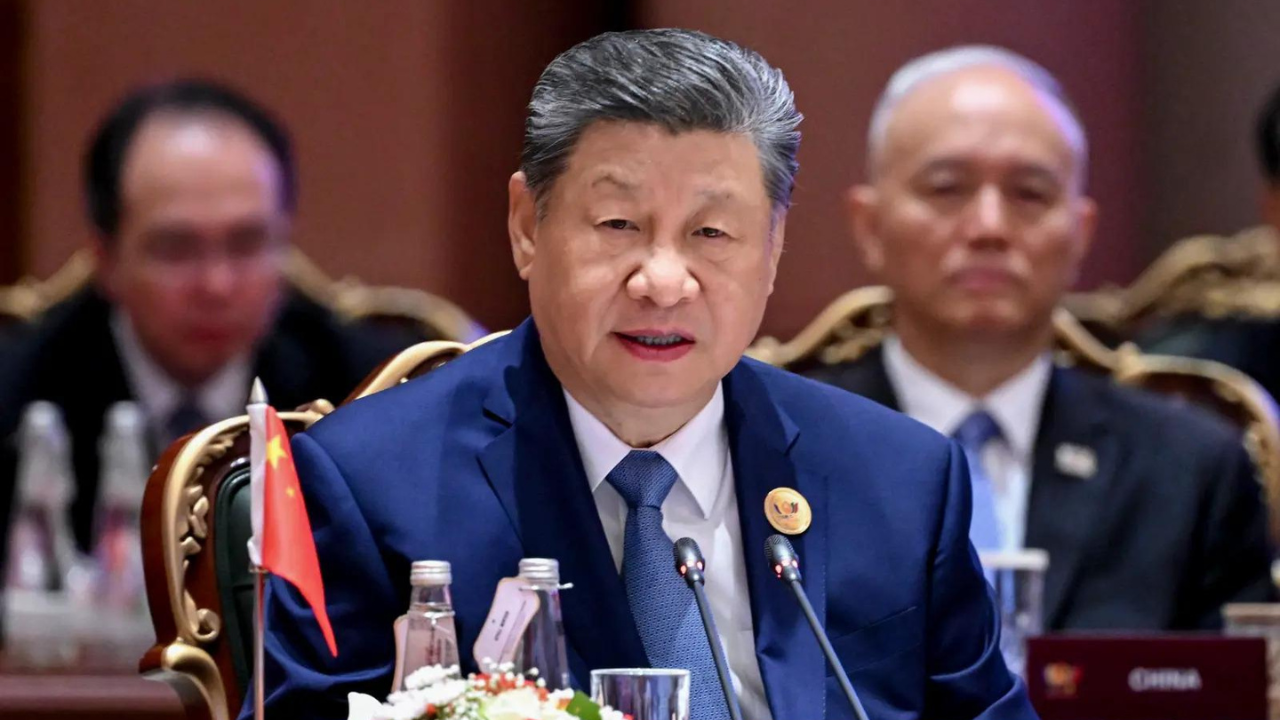
Chinese President Xi Jinping has called for the expansion of the BRICS alliance, a group of five major emerging national economies: Brazil, Russia, India, China, and South Africa. This move is seen as a significant shift in the global economic landscape and a potential challenge to the dominance of Western countries.
Xi's proposal for a 'Greater BRICS' comes at a time when the global economy is facing significant challenges, including rising tensions between major world powers. The Chinese leader's pitch for an expanded BRICS alliance is likely to be seen as a signal to the West, particularly the United States, that China is seeking to build new alliances and challenge the existing global order.
The BRICS alliance was formed in 2006 with the aim of promoting economic cooperation and development among its member countries. Over the years, the alliance has grown in significance, with the five member countries accounting for a significant proportion of global economic output.
Xi's call for an expanded BRICS alliance is likely to be welcomed by other member countries, including India, which has been seeking to strengthen its economic ties with other emerging economies. The proposal is also likely to be seen as a rejection of the 'might makes right' logic, which has dominated international relations for centuries.
The 'might makes right' logic refers to the idea that powerful countries can impose their will on weaker countries through military or economic coercion. Xi's rejection of this logic is likely to be seen as a significant shift in China's approach to international relations, and a signal that the country is seeking to build a more equitable and just global order.
The implications of Xi's proposal for an expanded BRICS alliance are significant, and are likely to be felt across the globe. The proposal is likely to lead to increased economic cooperation and development among the member countries, and could potentially challenge the dominance of Western countries in the global economy.
In recent years, China has been seeking to build new alliances and challenge the existing global order. The country's Belt and Road Initiative, a massive infrastructure development project, is seen as a key part of this strategy. The proposal for an expanded BRICS alliance is likely to be seen as a significant step forward in this strategy, and a signal that China is seeking to build a more multipolar world.
The global community is likely to watch with interest as the proposal for an expanded BRICS alliance unfolds. The implications of the proposal are significant, and are likely to be felt across the globe. As the global economy continues to evolve, it is likely that the BRICS alliance will play an increasingly important role in shaping the global economic landscape.
In conclusion, Xi's proposal for an expanded BRICS alliance is a significant development in the global economic landscape. The proposal is likely to lead to increased economic cooperation and development among the member countries, and could potentially challenge the dominance of Western countries in the global economy. As the global community continues to evolve, it is likely that the BRICS alliance will play an increasingly important role in shaping the global economic landscape.