Rajnath Singh Unveils Reforms for Indian Coast Guard
Defence Minister introduces key policy changes, promotes gender parity and streamlines payments.
'%3E%3Crect%20width%3D'96'%20height%3D'96'%20fill%3D'%231A5276'%2F%3E%3Ccircle%20cx%3D'30'%20cy%3D'24'%20r%3D'44'%20fill%3D'%23fff'%20opacity%3D'.12'%2F%3E%3Ccircle%20cx%3D'60'%20cy%3D'74'%20r%3D'40'%20fill%3D'%23000'%20opacity%3D'.10'%2F%3E%3C%2Fg%3E%3Cg%20fill%3D'%23fff'%3E%3Cpath%20d%3D'M31%2041%20L48%2031%20L65%2041%20Z'%2F%3E%3Crect%20x%3D'33'%20y%3D'43'%20width%3D'4'%20height%3D'17'%2F%3E%3Crect%20x%3D'41'%20y%3D'43'%20width%3D'4'%20height%3D'17'%2F%3E%3Crect%20x%3D'51'%20y%3D'43'%20width%3D'4'%20height%3D'17'%2F%3E%3Crect%20x%3D'59'%20y%3D'43'%20width%3D'4'%20height%3D'17'%2F%3E%3Crect%20x%3D'30'%20y%3D'62'%20width%3D'36'%20height%3D'4'%20rx%3D'1'%2F%3E%3C%2Fg%3E%3C%2Fsvg%3E)
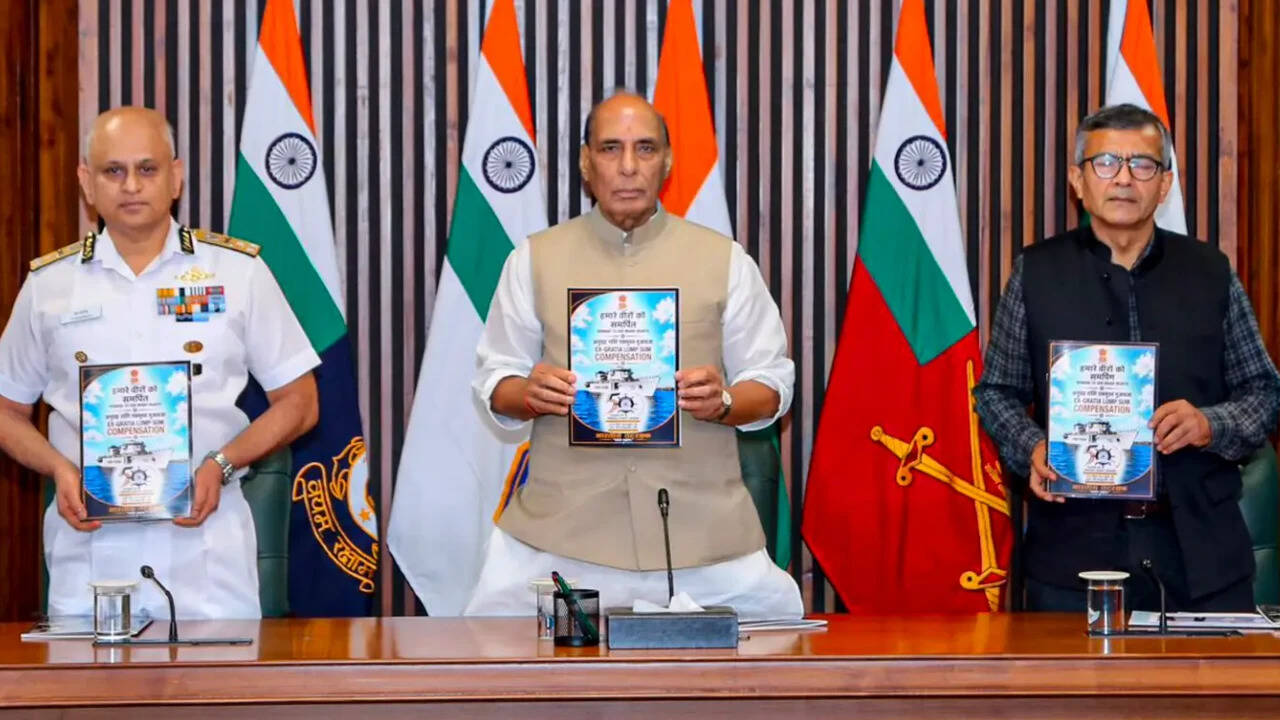
Defence Minister Rajnath Singh has introduced two key policy reforms for the Indian Coast Guard, aiming to strengthen the morale and operational effectiveness of the force.
The reforms focus on promoting gender parity in officer induction, allowing women candidates to join the service on equal footing with their male counterparts. This move is expected to increase diversity and inclusion within the Indian Coast Guard.
The new policies also streamline ex-gratia payments, accelerating compensation for families of missing personnel. This change is intended to provide timely support to the families of those who have made sacrifices while serving in the Indian Coast Guard.
The introduction of these reforms demonstrates the government's commitment to modernizing and enhancing the capabilities of the Indian Coast Guard. By promoting gender parity and streamlining payments, the government aims to boost the morale and effectiveness of the force.
The Indian Coast Guard plays a crucial role in maintaining the country's maritime security and protecting its coastal borders. The force is responsible for a range of tasks, including search and rescue operations, maritime law enforcement, and environmental protection.
The introduction of these reforms is a significant step towards strengthening the Indian Coast Guard and enhancing its ability to perform its duties effectively. The move is also expected to have a positive impact on the morale of the personnel, who will benefit from the increased support and recognition.
The government's decision to promote gender parity in the Indian Coast Guard is also a significant step towards achieving greater diversity and inclusion in the country's armed forces. This move is expected to pave the way for more women to join the service and take on leadership roles.
In recent years, the Indian Coast Guard has undergone significant modernization and expansion, with the introduction of new ships, aircraft, and equipment. The force has also increased its presence in the country's coastal regions, with the establishment of new bases and stations.
The introduction of these reforms is a further step towards enhancing the capabilities and effectiveness of the Indian Coast Guard. The move is expected to have a positive impact on the force's ability to perform its duties and protect the country's maritime interests.
Overall, the introduction of these reforms is a significant development for the Indian Coast Guard and the country's armed forces as a whole. The move is expected to have a positive impact on the morale and effectiveness of the force, and to pave the way for greater diversity and inclusion in the years to come.
The reforms introduced by Defence Minister Rajnath Singh are a testament to the government's commitment to strengthening and modernizing the Indian Coast Guard. The move is expected to have a lasting impact on the force and its ability to protect the country's maritime interests.
In conclusion, the introduction of these reforms is a significant step towards enhancing the capabilities and effectiveness of the Indian Coast Guard. The move is expected to have a positive impact on the morale and effectiveness of the force, and to pave the way for greater diversity and inclusion in the years to come.
Frequently asked questions
What are the key policy reforms introduced by Defence Minister Rajnath Singh?
The reforms promote gender parity in officer induction and streamline ex-gratia payments for families of missing personnel.
What is the expected impact of the reforms on the Indian Coast Guard?
The reforms are expected to strengthen the morale and operational effectiveness of the force, and to pave the way for greater diversity and inclusion.