EU Demands Stricter Border Controls Amid Ceuta Migrant Surge
EU ministers seek tougher measures, stronger return policies and enhanced border security.
'%3E%3Crect%20width%3D'96'%20height%3D'96'%20fill%3D'%234A235A'%2F%3E%3Ccircle%20cx%3D'30'%20cy%3D'24'%20r%3D'44'%20fill%3D'%23fff'%20opacity%3D'.12'%2F%3E%3Ccircle%20cx%3D'60'%20cy%3D'74'%20r%3D'40'%20fill%3D'%23000'%20opacity%3D'.10'%2F%3E%3C%2Fg%3E%3Cg%20fill%3D'none'%20stroke%3D'%23fff'%20stroke-width%3D'3'%3E%3Ccircle%20cx%3D'48'%20cy%3D'48'%20r%3D'16'%2F%3E%3Cellipse%20cx%3D'48'%20cy%3D'48'%20rx%3D'6.5'%20ry%3D'16'%2F%3E%3Cline%20x1%3D'32'%20y1%3D'42'%20x2%3D'64'%20y2%3D'42'%2F%3E%3Cline%20x1%3D'32'%20y1%3D'54'%20x2%3D'64'%20y2%3D'54'%2F%3E%3C%2Fg%3E%3C%2Fsvg%3E)
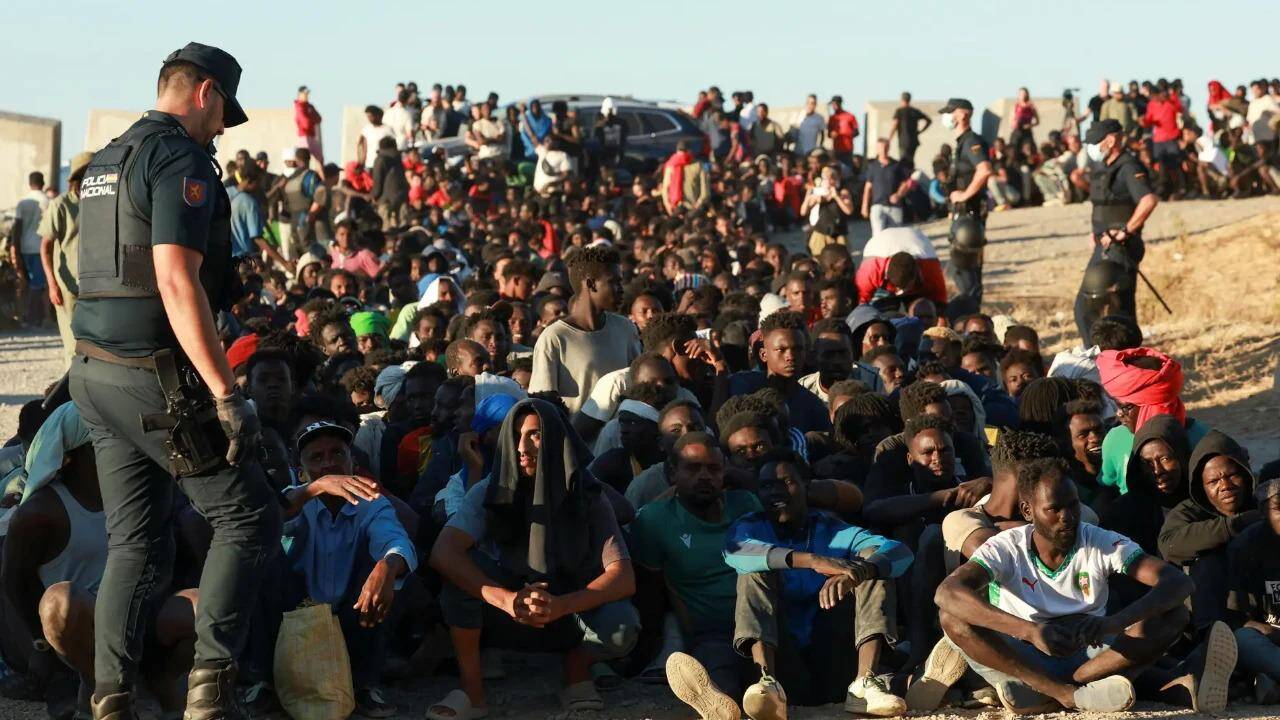
European Union ministers are calling for stricter measures against migrant smuggling networks and stronger return policies following a large influx of migrants into Ceuta, a Spanish enclave in North Africa. The sudden surge in migration has triggered alarm and reignited divisions within the EU over migration management.
The EU is enhancing border security and intelligence sharing with external partners to combat migrant smuggling. Disinformation spread by smugglers has been identified as a key factor in the unprecedented migration surge into Ceuta. This has led to a renewed focus on tackling the root causes of migration and improving cooperation with countries of origin and transit.
The crisis in Ceuta has highlighted the need for a coordinated EU response to migration. EU ministers are seeking to strengthen the bloc's external borders and improve return policies to deter irregular migration. This includes enhancing cooperation with countries such as Morocco, which has been accused of relaxing border controls and allowing migrants to cross into Ceuta.
The EU has been grappling with migration management for several years, with different member states having varying approaches to the issue. The crisis in Ceuta has exposed these divisions, with some member states calling for tougher border controls and others advocating for a more humanitarian approach.
The EU's migration policy has been under scrutiny since the 2015 migrant crisis, which saw a large influx of migrants and refugees arriving in Europe. Since then, the EU has implemented various measures to manage migration, including the establishment of the European Border and Coast Guard Agency and the introduction of stricter asylum rules.
However, the crisis in Ceuta has shown that more needs to be done to address the root causes of migration and to improve cooperation with countries of origin and transit. The EU is working to strengthen its partnerships with these countries and to provide support to help them manage migration and address the underlying causes of displacement.
The situation in Ceuta remains volatile, with thousands of migrants still waiting to be processed. The EU is working to provide humanitarian assistance to those in need and to support the Spanish authorities in managing the crisis.
In conclusion, the EU's response to the migrant surge in Ceuta highlights the need for a coordinated and comprehensive approach to migration management. The bloc must work to strengthen its external borders, improve return policies, and address the root causes of migration. This will require cooperation and coordination among member states, as well as with countries of origin and transit.
The crisis in Ceuta has also underscored the importance of tackling disinformation and misinformation, which can fuel migration and undermine efforts to manage it. The EU must work to counter these narratives and to provide accurate information to potential migrants about the risks and challenges of irregular migration.
Overall, the EU's response to the migrant surge in Ceuta is a complex and challenging issue, requiring a multifaceted approach that addresses the root causes of migration, strengthens border security, and provides humanitarian assistance to those in need.
Frequently asked questions
What triggered the migrant surge in Ceuta?
Disinformation spread by smugglers fueled the unprecedented migration surge into the Spanish enclave.
How is the EU responding to the crisis?
The EU is enhancing border security and intelligence sharing with external partners, and seeking stronger return policies and stricter measures against migrant smuggling networks.