TMC MP Kalyan Banerjee Threatens To Quit Party
TMC MP warns party supremo, says will leave if traitors are taken back. Ultimatum given to Mamata Banerjee.
'%3E%3Crect%20width%3D'96'%20height%3D'96'%20fill%3D'%231A5276'%2F%3E%3Ccircle%20cx%3D'30'%20cy%3D'24'%20r%3D'44'%20fill%3D'%23fff'%20opacity%3D'.12'%2F%3E%3Ccircle%20cx%3D'60'%20cy%3D'74'%20r%3D'40'%20fill%3D'%23000'%20opacity%3D'.10'%2F%3E%3C%2Fg%3E%3Cg%20fill%3D'%23fff'%3E%3Cpath%20d%3D'M31%2041%20L48%2031%20L65%2041%20Z'%2F%3E%3Crect%20x%3D'33'%20y%3D'43'%20width%3D'4'%20height%3D'17'%2F%3E%3Crect%20x%3D'41'%20y%3D'43'%20width%3D'4'%20height%3D'17'%2F%3E%3Crect%20x%3D'51'%20y%3D'43'%20width%3D'4'%20height%3D'17'%2F%3E%3Crect%20x%3D'59'%20y%3D'43'%20width%3D'4'%20height%3D'17'%2F%3E%3Crect%20x%3D'30'%20y%3D'62'%20width%3D'36'%20height%3D'4'%20rx%3D'1'%2F%3E%3C%2Fg%3E%3C%2Fsvg%3E)
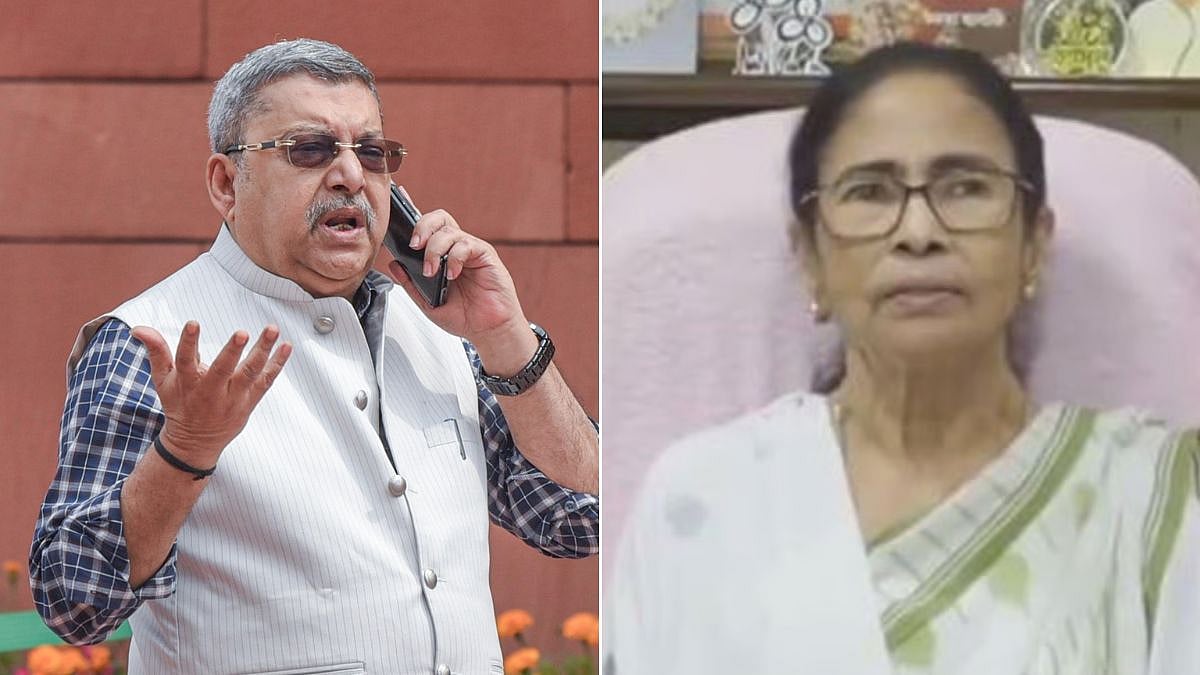
A major development has taken place in West Bengal politics, with Trinamool Congress (TMC) MP Kalyan Banerjee giving an ultimatum to party supremo Mamata Banerjee. On Saturday, Banerjee stated that he would leave the party if those who had left the TMC were taken back.
The TMC MP made it clear that he wants Mamata Banerjee to publicly announce that those who have left the party will not be inducted back. Banerjee warned that if they are taken back, he will have no choice but to leave the party. He also stated that those who have left the party are free to stay wherever they are.
Banerjee also made a startling claim, saying that even if Mamata Banerjee's faction had won an absolute majority in the Assembly elections, the TMC would still have failed to form the government. He alleged that the Bharatiya Janata Party (BJP) would have formed the government by buying TMC MLAs with crores of rupees.
TMC MLA Kunal Ghosh supported Banerjee's comments, saying that the MP had become emotional while making the statement. Ghosh added that those who had left the party should not have gone, and should think about the sentiments of the party workers. He also stated that what Banerjee had said was correct.
The development is a significant one in West Bengal politics, with the TMC facing internal conflicts and challenges from opposition parties. The party has been trying to consolidate its position and address internal issues, but the ultimatum from Banerjee has added a new twist to the situation.
The TMC has been a dominant force in West Bengal politics, with Mamata Banerjee leading the party to multiple election victories. However, the party has faced challenges in recent times, including defections and internal conflicts. The latest development is likely to have significant implications for the party's future and its ability to address internal issues.
In the context of Indian politics, the development is also significant, as it highlights the challenges faced by regional parties in maintaining internal cohesion and addressing opposition from national parties. The TMC's situation is being closely watched by political observers, who are keen to see how the party navigates its internal conflicts and responds to the challenges posed by opposition parties.
The situation in West Bengal is also being closely monitored by the national media, with many analysts seeing it as a significant test of the TMC's ability to maintain its dominance in the state. The party's response to the ultimatum from Banerjee will be closely watched, and is likely to have significant implications for the party's future and its ability to address internal issues.
In conclusion, the ultimatum from TMC MP Kalyan Banerjee has added a new twist to the situation in West Bengal politics, and is likely to have significant implications for the party's future. The development highlights the challenges faced by regional parties in maintaining internal cohesion and addressing opposition from national parties, and is being closely watched by political observers and the national media.
The situation is a reminder that Indian politics is complex and multifaceted, with many different parties and interests at play. The TMC's situation is just one example of the challenges faced by regional parties, and highlights the need for parties to maintain internal cohesion and address opposition from national parties in order to succeed.
Overall, the development is a significant one, and is likely to have significant implications for the TMC and West Bengal politics. It remains to be seen how the party will respond to the ultimatum from Banerjee, and how the situation will unfold in the coming days and weeks.
The TMC's ability to navigate its internal conflicts and respond to the challenges posed by opposition parties will be closely watched by political observers and the national media. The party's future and its ability to maintain its dominance in West Bengal will depend on its ability to address internal issues and respond to the challenges posed by opposition parties.
In the end, the situation in West Bengal is a reminder that Indian politics is complex and multifaceted, and that parties must be able to navigate internal conflicts and respond to opposition from national parties in order to succeed. The TMC's situation is just one example of the challenges faced by regional parties, and highlights the need for parties to maintain internal cohesion and address opposition from national parties in order to succeed.
What it means for the people of West Bengal and India is that the political landscape is constantly evolving, and that parties must be able to adapt and respond to changing circumstances in order to succeed. The TMC's situation is a significant one, and is likely to have significant implications for the party's future and its ability to maintain its dominance in West Bengal.