India's PMI Slips to 52.8, Hits Five-Year Low
India's manufacturing growth slows, production and new orders decline, employment contracts.
'%3E%3Crect%20width%3D'96'%20height%3D'96'%20fill%3D'%230B6E4F'%2F%3E%3Ccircle%20cx%3D'30'%20cy%3D'24'%20r%3D'44'%20fill%3D'%23fff'%20opacity%3D'.12'%2F%3E%3Ccircle%20cx%3D'60'%20cy%3D'74'%20r%3D'40'%20fill%3D'%23000'%20opacity%3D'.10'%2F%3E%3C%2Fg%3E%3Cg%20fill%3D'none'%20stroke%3D'%23fff'%20stroke-width%3D'3.2'%20stroke-linecap%3D'round'%20stroke-linejoin%3D'round'%3E%3Cpolyline%20points%3D'31%2C59%2041%2C49%2049%2C54%2063%2C37'%2F%3E%3Cpolyline%20points%3D'55%2C37%2063%2C37%2063%2C45'%2F%3E%3C%2Fg%3E%3C%2Fsvg%3E)
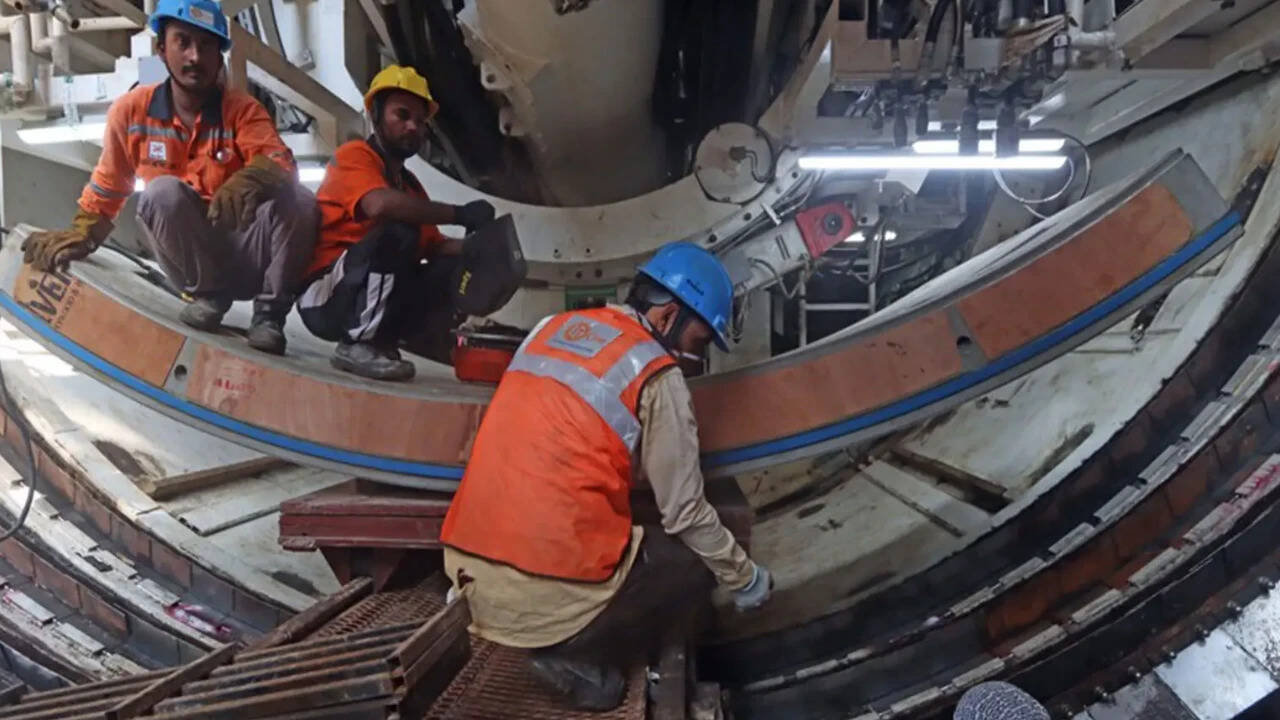
India's manufacturing sector experienced a significant slowdown in August, with its Purchasing Managers' Index (PMI) slipping to 52.8, the lowest level in five years. This downturn was characterized by a decline in production and new orders, resulting in the first contraction in employment in two and a half years. The last time the manufacturing sector witnessed such a low activity level was in August 2021.
The decline in production and new orders was largely driven by weakened overseas demand. Although there was a slight increase in purchasing activity, it was not enough to offset the overall decline in demand. On a positive note, business confidence grew, but it remained below historical averages, indicating that manufacturers are still cautious about the future.
The slowdown in the manufacturing sector is a cause for concern, as it is a key driver of India's economic growth. The sector accounts for a significant portion of the country's GDP and employment. The decline in employment is particularly worrying, as it could have a ripple effect on the broader economy.
The Indian economy has been facing several challenges in recent months, including a slowdown in global demand and rising inflation. The manufacturing sector has been affected by these challenges, leading to a decline in production and new orders. The government has been taking steps to boost the economy, including increasing infrastructure spending and implementing policies to support the manufacturing sector.
Despite the challenges, India's manufacturing sector remains a key driver of economic growth. The sector has been growing rapidly in recent years, driven by government initiatives such as the Make in India program. However, the current slowdown highlights the need for continued support and investment in the sector.
The PMI is a widely watched indicator of the health of the manufacturing sector. A reading above 50 indicates expansion, while a reading below 50 indicates contraction. The fact that India's PMI has slipped to 52.8 indicates that the sector is still growing, but at a slower pace.
The slowdown in the manufacturing sector is likely to have implications for the broader economy. The sector is a key driver of employment and economic growth, and a decline in activity could have a ripple effect on other sectors. The government will need to take steps to support the sector and boost economic growth.
In conclusion, the slowdown in India's manufacturing sector is a cause for concern. The decline in production and new orders, combined with the contraction in employment, highlights the need for continued support and investment in the sector. The government will need to take steps to boost the economy and support the manufacturing sector, in order to ensure that it continues to drive economic growth.
The implications of the slowdown are far-reaching, and it is likely to have an impact on the broader economy. The government and manufacturers will need to work together to address the challenges facing the sector and ensure that it continues to grow and drive economic development.
Overall, the slowdown in India's manufacturing sector is a significant development, and it highlights the need for continued support and investment in the sector. The government and manufacturers will need to work together to address the challenges facing the sector and ensure that it continues to drive economic growth and development.
Frequently asked questions
What is the current state of India's manufacturing sector?
India's manufacturing sector is experiencing a slowdown, with production and new orders declining, and employment contracting for the first time in 2.5 years.
What is the significance of the PMI reading of 52.8?
A PMI reading of 52.8 indicates that the manufacturing sector is still growing, but at a slower pace, and is the lowest level in five years.