India's Hydrogen Train Covers 900km
India's first hydrogen train runs successfully, covering 900km in 5 days.
'%3E%3Crect%20width%3D'96'%20height%3D'96'%20fill%3D'%230B6E4F'%2F%3E%3Ccircle%20cx%3D'30'%20cy%3D'24'%20r%3D'44'%20fill%3D'%23fff'%20opacity%3D'.12'%2F%3E%3Ccircle%20cx%3D'60'%20cy%3D'74'%20r%3D'40'%20fill%3D'%23000'%20opacity%3D'.10'%2F%3E%3C%2Fg%3E%3Cg%20fill%3D'none'%20stroke%3D'%23fff'%20stroke-width%3D'3.2'%20stroke-linecap%3D'round'%20stroke-linejoin%3D'round'%3E%3Cpolyline%20points%3D'31%2C59%2041%2C49%2049%2C54%2063%2C37'%2F%3E%3Cpolyline%20points%3D'55%2C37%2063%2C37%2063%2C45'%2F%3E%3C%2Fg%3E%3C%2Fsvg%3E)
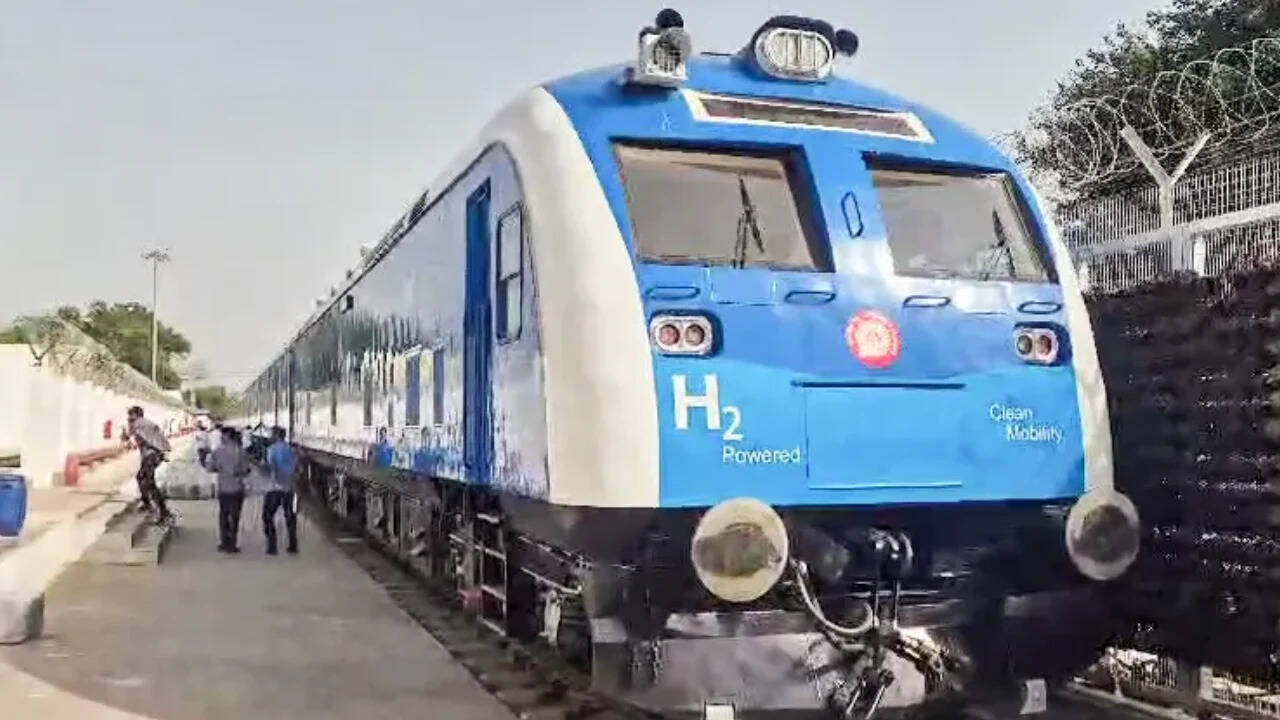
India's first hydrogen fuel cell train has successfully completed its initial operational route, covering approximately 900 kilometers in just five days. The train, which runs on hydrogen fuel cells, produces only water vapor and heat as emissions, making it a significant step towards a more sustainable and environmentally friendly transportation system.
The train operates on the Jind-Sonipat corridor in Haryana, a route that has seen a significant number of passengers. Notably, the passenger fares for this train remain consistent with those of ordinary diesel services, making it an attractive option for commuters. This pilot project aims to test the feasibility and efficiency of hydrogen fuel cell technology in the Indian rail network.
The introduction of this train is a significant milestone for India, as it joins a select group of nations that are testing and implementing this advanced rail technology. Countries like Japan, Germany, and China have already made significant strides in this field, and India's entry into this group marks a major step forward.
The use of hydrogen fuel cells in trains offers several advantages, including reduced greenhouse gas emissions, lower operating costs, and improved energy efficiency. This technology has the potential to revolutionize the rail industry, making it a more sustainable and environmentally friendly mode of transportation.
The Indian government has been actively promoting the use of alternative fuels and technologies in the transportation sector, with a focus on reducing dependence on fossil fuels and mitigating the impact of climate change. The introduction of the hydrogen fuel cell train is a significant step towards achieving this goal.
As India continues to develop and expand its rail network, the use of hydrogen fuel cell technology is likely to play a major role. The success of this pilot project will pave the way for the introduction of more such trains on other routes, reducing the country's carbon footprint and promoting sustainable transportation.
The development of this technology is also expected to have a positive impact on the Indian economy, creating new job opportunities and stimulating growth in the manufacturing sector. As the country continues to invest in this technology, it is likely to emerge as a major player in the global hydrogen fuel cell market.
In conclusion, the successful operation of India's first hydrogen fuel cell train marks a significant milestone in the country's journey towards a more sustainable and environmentally friendly transportation system. With its potential to reduce greenhouse gas emissions, lower operating costs, and improve energy efficiency, this technology is likely to play a major role in shaping the future of the Indian rail network.
Frequently asked questions
What is the route of India's first hydrogen fuel cell train?
The train operates on the Jind-Sonipat corridor in Haryana.
What are the benefits of using hydrogen fuel cell technology in trains?
The benefits include reduced greenhouse gas emissions, lower operating costs, and improved energy efficiency.