JW PEI Changes Saree-Inspired Dress Name After Backlash
US label JW PEI faces criticism, updates product listing to acknowledge Indian roots.
'%3E%3Crect%20width%3D'96'%20height%3D'96'%20fill%3D'%23B3261E'%2F%3E%3Ccircle%20cx%3D'30'%20cy%3D'24'%20r%3D'44'%20fill%3D'%23fff'%20opacity%3D'.12'%2F%3E%3Ccircle%20cx%3D'60'%20cy%3D'74'%20r%3D'40'%20fill%3D'%23000'%20opacity%3D'.10'%2F%3E%3C%2Fg%3E%3Cg%20fill%3D'%23fff'%3E%3Crect%20x%3D'29'%20y%3D'49'%20width%3D'8'%20height%3D'19'%20rx%3D'1'%2F%3E%3Crect%20x%3D'39'%20y%3D'40'%20width%3D'9'%20height%3D'28'%20rx%3D'1'%2F%3E%3Crect%20x%3D'50'%20y%3D'45'%20width%3D'8'%20height%3D'23'%20rx%3D'1'%2F%3E%3Crect%20x%3D'60'%20y%3D'53'%20width%3D'7'%20height%3D'15'%20rx%3D'1'%2F%3E%3Crect%20x%3D'41'%20y%3D'34'%20width%3D'5'%20height%3D'6'%2F%3E%3C%2Fg%3E%3C%2Fsvg%3E)
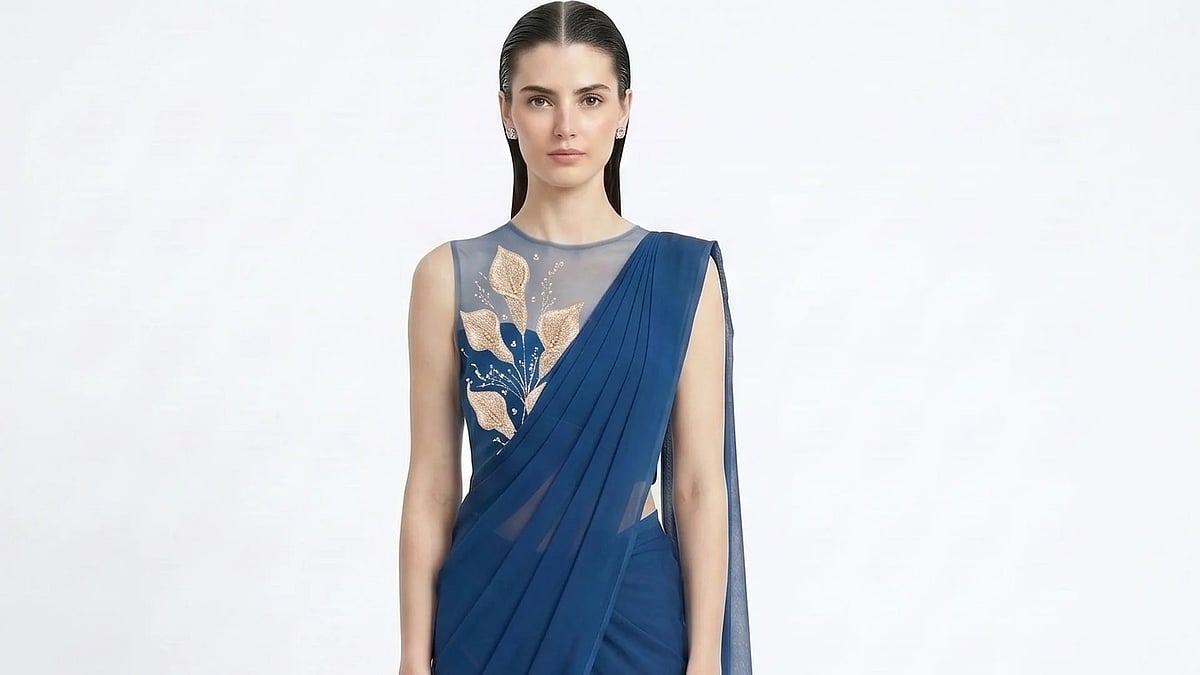
A US-based fashion label, JW PEI, has found itself at the center of a controversy after describing a saree-inspired creation as a 'draped dress'. The ensemble, a navy blue pre-draped saree-style silhouette with a floral embroidered blouse, was originally listed as the 'Botanical Embellished Draped Overlay Maxi Dress' on the brand's website.
The product listing sparked backlash online, with Indian social media users questioning the lack of clear cultural acknowledgement. The brand's interpretation of the saree itself was not the main issue, but rather the debate focused on why a distinctly saree-inspired design was marketed as a 'draped overlay maxi dress' without directly identifying its Indian roots.
The outfit, priced at €198 (approximately ₹22,000), features the familiar elements of a saree, including a draped pallu and pleated construction. However, the product description avoided the word 'saree' altogether, instead categorising it as a dress.
Following the online backlash, the brand updated the product listing. The outfit is now titled 'Botanical Embellished Saree-Inspired Gown - Navy'. The revised description also directly acknowledges the garment's roots, stating that the design is 'Inspired by the traditional South Asian saree'.
This incident is not the first time a Western fashion label has faced criticism for borrowing from Indian culture without clear acknowledgement. Prada was previously called out over its take on Kolhapuri chappals, while Ralph Lauren faced criticism over designs that drew comparisons to Indian jhumkas.
The brand's decision to update the product listing and acknowledge the Indian roots of the design has been seen as a positive step. The revised description explains that the floor-length silhouette reworks the saree's signature draping, including softly gathered pleats at the waist and a sheer pallu falling from the shoulder.
The incident highlights the importance of cultural sensitivity and acknowledgement in the fashion industry. As Western fashion labels continue to draw inspiration from diverse cultures, it is essential that they do so in a respectful and transparent manner.
In recent years, there has been a growing conversation around cultural appropriation in the fashion industry. The incident involving JW PEI serves as a reminder that cultural sensitivity and acknowledgement are essential in avoiding backlash and promoting cross-cultural understanding.
The updated product listing is a step in the right direction, and it remains to be seen how the brand will approach cultural inspiration in its future designs. For now, the incident serves as a reminder of the importance of cultural sensitivity and acknowledgement in the fashion industry.
The controversy surrounding JW PEI's saree-inspired design has sparked a wider conversation about cultural appropriation and sensitivity in the fashion industry. As the industry continues to evolve, it is essential that brands prioritize cultural sensitivity and acknowledgement in their designs and marketing strategies.
In conclusion, the incident involving JW PEI highlights the importance of cultural sensitivity and acknowledgement in the fashion industry. The brand's decision to update the product listing and acknowledge the Indian roots of the design is a positive step, and it remains to be seen how the brand will approach cultural inspiration in its future designs.
Frequently asked questions
What was the original name of the JW PEI saree-inspired dress?
The original name was 'Botanical Embellished Draped Overlay Maxi Dress'.
Why did JW PEI update the product listing?
The brand updated the product listing after facing backlash for not acknowledging the Indian roots of the design.