Delhi Metro Reopens 3 Stations Amid CJP Protest
Delhi Metro reopens entry gates at 3 stations, 15 remain shut due to CJP protest.
'%3E%3Crect%20width%3D'96'%20height%3D'96'%20fill%3D'%23B3261E'%2F%3E%3Ccircle%20cx%3D'30'%20cy%3D'24'%20r%3D'44'%20fill%3D'%23fff'%20opacity%3D'.12'%2F%3E%3Ccircle%20cx%3D'60'%20cy%3D'74'%20r%3D'40'%20fill%3D'%23000'%20opacity%3D'.10'%2F%3E%3C%2Fg%3E%3Cg%20fill%3D'%23fff'%3E%3Crect%20x%3D'29'%20y%3D'49'%20width%3D'8'%20height%3D'19'%20rx%3D'1'%2F%3E%3Crect%20x%3D'39'%20y%3D'40'%20width%3D'9'%20height%3D'28'%20rx%3D'1'%2F%3E%3Crect%20x%3D'50'%20y%3D'45'%20width%3D'8'%20height%3D'23'%20rx%3D'1'%2F%3E%3Crect%20x%3D'60'%20y%3D'53'%20width%3D'7'%20height%3D'15'%20rx%3D'1'%2F%3E%3Crect%20x%3D'41'%20y%3D'34'%20width%3D'5'%20height%3D'6'%2F%3E%3C%2Fg%3E%3C%2Fsvg%3E)
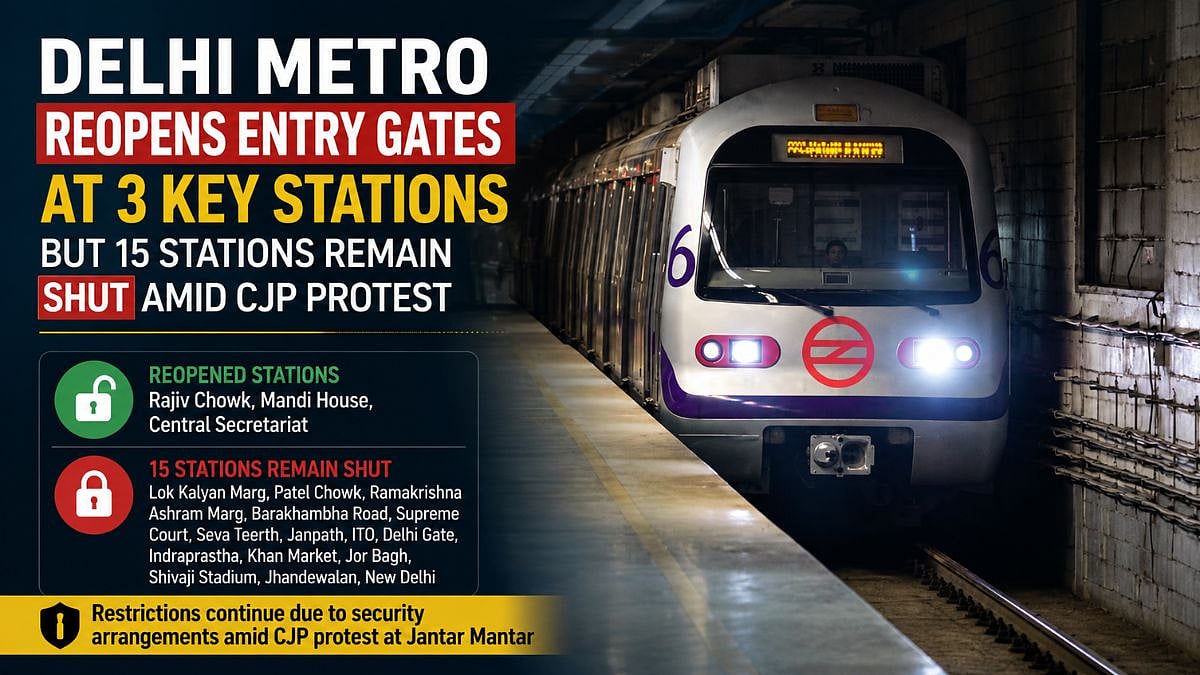
The Delhi Metro Rail Corporation (DMRC) has reopened the entry and exit gates at Rajiv Chowk, Mandi House, and Central Secretariat Metro stations in central Delhi. This move is expected to bring some relief to commuters who have been facing restrictions due to the ongoing Cockroach Janta Party (CJP) protest at Jantar Mantar.
The DMRC had earlier closed several Metro stations for the fourth consecutive day as a precautionary measure to maintain law and order in the area. However, with the reopening of these three stations, passengers can now enter and exit through them, although interchange facilities had remained operational even during the restrictions.
Despite the reopening of these stations, 15 other Metro stations remain closed due to security arrangements. The closed stations include Lok Kalyan Marg, Patel Chowk, Ramakrishna Ashram Marg, Barakhambha Road, Supreme Court, Seva Teerth, Janpath, ITO, Delhi Gate, Indraprastha, Khan Market, Jor Bagh, Shivaji Stadium, Jhandewalan, and New Delhi Metro stations.
The CJP protest at Jantar Mantar has been ongoing for several days, with large crowds gathering in the area. The authorities have not announced when the remaining Metro stations will reopen, and the restrictions are likely to continue until the situation returns to normal.
The DMRC's decision to reopen the three stations is seen as an attempt to minimize inconvenience to daily commuters while maintaining law and order in the area. The prolonged restrictions reflect the administration's focus on ensuring public safety, even as it tries to restore normal Metro operations in parts of the city.
The CJP protest has been a major concern for the authorities, with large gatherings and security arrangements in place. The protest has also affected traffic and public transportation in the area, causing inconvenience to commuters.
In related news, the city has been on high alert due to the protest, with security personnel deployed in large numbers to maintain law and order. The authorities are closely monitoring the situation and are taking all necessary measures to ensure public safety.
The reopening of the three Metro stations is a welcome move for commuters, but the continued closure of 15 other stations is a reminder that the situation is still volatile. The authorities will need to continue to monitor the situation and take necessary measures to ensure public safety and restore normalcy to the area.
The impact of the protest on the city's transportation system has been significant, with many commuters facing difficulties in reaching their destinations. The DMRC's decision to reopen the three stations is a step in the right direction, but more needs to be done to restore normalcy to the city's transportation system.
In conclusion, the Delhi Metro's decision to reopen three stations amid the CJP protest is a welcome move, but the continued closure of 15 other stations is a reminder that the situation is still volatile. The authorities will need to continue to monitor the situation and take necessary measures to ensure public safety and restore normalcy to the area.
Frequently asked questions
Which Delhi Metro stations have been reopened?
Rajiv Chowk, Mandi House, and Central Secretariat Metro stations have been reopened.
How many Delhi Metro stations remain closed?
15 Metro stations remain closed due to security arrangements.