Maruti Chairman: GST 2.0 Boosts Auto Industry
GST 2.0 helps India's auto industry and economy. Maruti Suzuki expects growth.
'%3E%3Crect%20width%3D'96'%20height%3D'96'%20fill%3D'%230B6E4F'%2F%3E%3Ccircle%20cx%3D'30'%20cy%3D'24'%20r%3D'44'%20fill%3D'%23fff'%20opacity%3D'.12'%2F%3E%3Ccircle%20cx%3D'60'%20cy%3D'74'%20r%3D'40'%20fill%3D'%23000'%20opacity%3D'.10'%2F%3E%3C%2Fg%3E%3Cg%20fill%3D'none'%20stroke%3D'%23fff'%20stroke-width%3D'3.2'%20stroke-linecap%3D'round'%20stroke-linejoin%3D'round'%3E%3Cpolyline%20points%3D'31%2C59%2041%2C49%2049%2C54%2063%2C37'%2F%3E%3Cpolyline%20points%3D'55%2C37%2063%2C37%2063%2C45'%2F%3E%3C%2Fg%3E%3C%2Fsvg%3E)
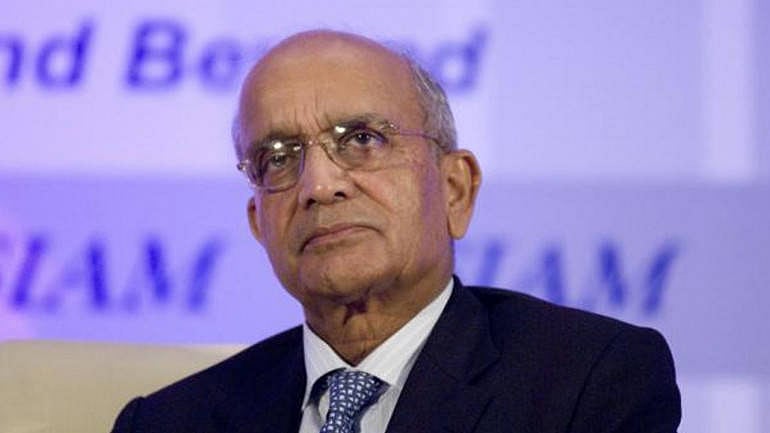
Maruti Suzuki India Chairman RC Bhargava stated that GST 2.0 has significantly boosted India's automobile industry and the broader economy. This boost has helped the country navigate economic uncertainty caused by the West Asia conflict.
Bhargava made these remarks at the company's annual general meeting, where he noted that India's economic performance has remained resilient despite geopolitical challenges. He credited GST collections for remaining strong and providing a buffer during a difficult period.
The chairman expressed optimism about the Indian passenger car market, expecting it to reach 6.1-6.3 million units by 2031. He also anticipated small cars to record faster growth, partly driven by the GST rate reductions announced last September.
Bhargava described the GST changes as a major reform that has created fresh momentum for automobiles and other sectors. He urged the Centre and state governments to accelerate reforms, simplify business processes, and increase technology adoption to reduce delays and corruption.
To prepare for stronger demand, Maruti Suzuki is expanding its manufacturing footprint. The company expects its installed production capacity to rise to 2.9 million vehicles by the end of FY27 and 3.65 million units by FY31.
Maruti Suzuki has commissioned two production lines at its Kharkhoda facility in Haryana and a fourth production line at Hansalpur in Gujarat, taking the plant's annual capacity to 1 million vehicles. The company has also begun work at a new site in Sanand, Gujarat, where it plans to establish another 1-million-unit annual capacity with an investment of around ₹35,000 crore.
Bhargava said the expansion reflects the company's confidence in India's long-term economic growth potential. He also called for greater trust in private businesses and competition, arguing that faster wealth creation would support higher government revenues and more inclusive economic growth.
The company has raised its five-year capex to ₹77,500 crore, stepping up investment plans through FY31. Bhargava's comments suggest that the Indian economy has withstood the challenges posed by the West Asia conflict, thanks in part to the GST reforms.
In conclusion, Maruti Suzuki's expectations for growth and expansion reflect the company's confidence in India's economic potential. The GST reforms have provided a significant boost to the automobile industry, and the company is well-positioned to capitalize on this growth.
The Indian economy's resilience in the face of geopolitical challenges is a testament to the effectiveness of the GST reforms. As the country continues to navigate economic uncertainty, the automobile industry is likely to play a key role in driving growth and development.
Maruti Suzuki's investment plans and expansion of its manufacturing footprint demonstrate the company's commitment to India's economic growth. The company's confidence in the country's long-term economic potential is a positive sign for the industry and the economy as a whole.
Overall, the GST reforms have had a positive impact on the Indian economy, and the automobile industry is likely to continue to drive growth and development in the coming years.
Frequently asked questions
What is GST 2.0 and its impact on the auto industry?
GST 2.0 is a tax reform that has provided a significant boost to India's automobile industry, helping the country navigate economic uncertainty.
What are Maruti Suzuki's expectations for the Indian passenger car market?
Maruti Suzuki expects the Indian passenger car market to reach 6.1-6.3 million units by 2031, with small cars recording faster growth.