India Rejects Hague Court's Indus Waters Treaty Award
India opposes Hague court ruling, cites lack of jurisdiction.
'%3E%3Crect%20width%3D'96'%20height%3D'96'%20fill%3D'%234A235A'%2F%3E%3Ccircle%20cx%3D'30'%20cy%3D'24'%20r%3D'44'%20fill%3D'%23fff'%20opacity%3D'.12'%2F%3E%3Ccircle%20cx%3D'60'%20cy%3D'74'%20r%3D'40'%20fill%3D'%23000'%20opacity%3D'.10'%2F%3E%3C%2Fg%3E%3Cg%20fill%3D'none'%20stroke%3D'%23fff'%20stroke-width%3D'3'%3E%3Ccircle%20cx%3D'48'%20cy%3D'48'%20r%3D'16'%2F%3E%3Cellipse%20cx%3D'48'%20cy%3D'48'%20rx%3D'6.5'%20ry%3D'16'%2F%3E%3Cline%20x1%3D'32'%20y1%3D'42'%20x2%3D'64'%20y2%3D'42'%2F%3E%3Cline%20x1%3D'32'%20y1%3D'54'%20x2%3D'64'%20y2%3D'54'%2F%3E%3C%2Fg%3E%3C%2Fsvg%3E)
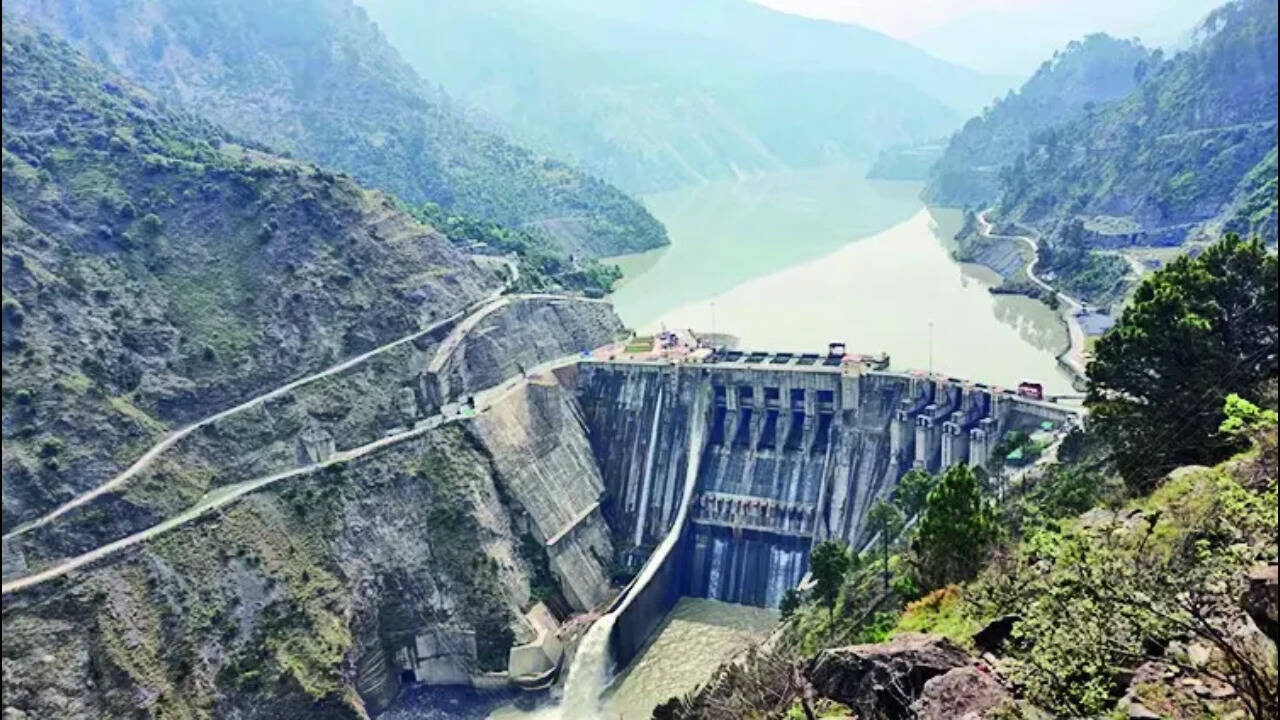
India has strongly opposed the Hague court's ruling on the Indus Waters Treaty, stating that the court has no jurisdiction over the matter. The treaty, signed in 1960, is a water-sharing agreement between India and Pakistan.
The Indian government has termed the Hague court's award as 'illegal' and has expressed its disagreement with the ruling. The court's decision has been met with criticism from India, which claims that the tribunal exceeded its mandate.
The Indus Waters Treaty is a vital agreement that governs the sharing of water resources between India and Pakistan. The treaty has been a subject of dispute between the two countries, with Pakistan accusing India of violating the agreement.
India's opposition to the Hague court's ruling is based on the grounds that the court has no jurisdiction over the matter. The Indian government has argued that the treaty is a bilateral agreement between India and Pakistan and that any disputes arising from it should be resolved through bilateral negotiations.
The Hague court's ruling has significant implications for the Indus Waters Treaty and the relationship between India and Pakistan. The treaty is crucial for the irrigation and drinking water needs of millions of people in both countries.
The Indus Waters Treaty has been a subject of controversy in recent years, with both countries accusing each other of violating the agreement. The treaty was signed in 1960 and has been in force since then.
India's rejection of the Hague court's ruling is likely to escalate tensions between India and Pakistan. The two countries have a long history of disputes over water resources, and the Indus Waters Treaty has been a major point of contention.
The Indian government has stated that it will continue to negotiate with Pakistan to resolve any disputes arising from the treaty. However, the rejection of the Hague court's ruling is likely to make it more challenging to find a mutually acceptable solution.
In conclusion, India's opposition to the Hague court's ruling on the Indus Waters Treaty is a significant development in the dispute between India and Pakistan over water resources. The treaty is crucial for the livelihoods of millions of people in both countries, and any disputes arising from it need to be resolved through bilateral negotiations.
Frequently asked questions
What is the Indus Waters Treaty?
The Indus Waters Treaty is a water-sharing agreement between India and Pakistan, signed in 1960.
Why has India rejected the Hague court's ruling?
India has rejected the Hague court's ruling, citing lack of jurisdiction and terming the award as 'illegal'.