US Builds 2,000 km of Mississippi Levees, Louisiana Loses Land
Mississippi levees cause land erosion, new initiative to restore coastline
'%3E%3Crect%20width%3D'96'%20height%3D'96'%20fill%3D'%23B3261E'%2F%3E%3Ccircle%20cx%3D'30'%20cy%3D'24'%20r%3D'44'%20fill%3D'%23fff'%20opacity%3D'.12'%2F%3E%3Ccircle%20cx%3D'60'%20cy%3D'74'%20r%3D'40'%20fill%3D'%23000'%20opacity%3D'.10'%2F%3E%3C%2Fg%3E%3Cg%20fill%3D'%23fff'%3E%3Crect%20x%3D'29'%20y%3D'49'%20width%3D'8'%20height%3D'19'%20rx%3D'1'%2F%3E%3Crect%20x%3D'39'%20y%3D'40'%20width%3D'9'%20height%3D'28'%20rx%3D'1'%2F%3E%3Crect%20x%3D'50'%20y%3D'45'%20width%3D'8'%20height%3D'23'%20rx%3D'1'%2F%3E%3Crect%20x%3D'60'%20y%3D'53'%20width%3D'7'%20height%3D'15'%20rx%3D'1'%2F%3E%3Crect%20x%3D'41'%20y%3D'34'%20width%3D'5'%20height%3D'6'%2F%3E%3C%2Fg%3E%3C%2Fsvg%3E)
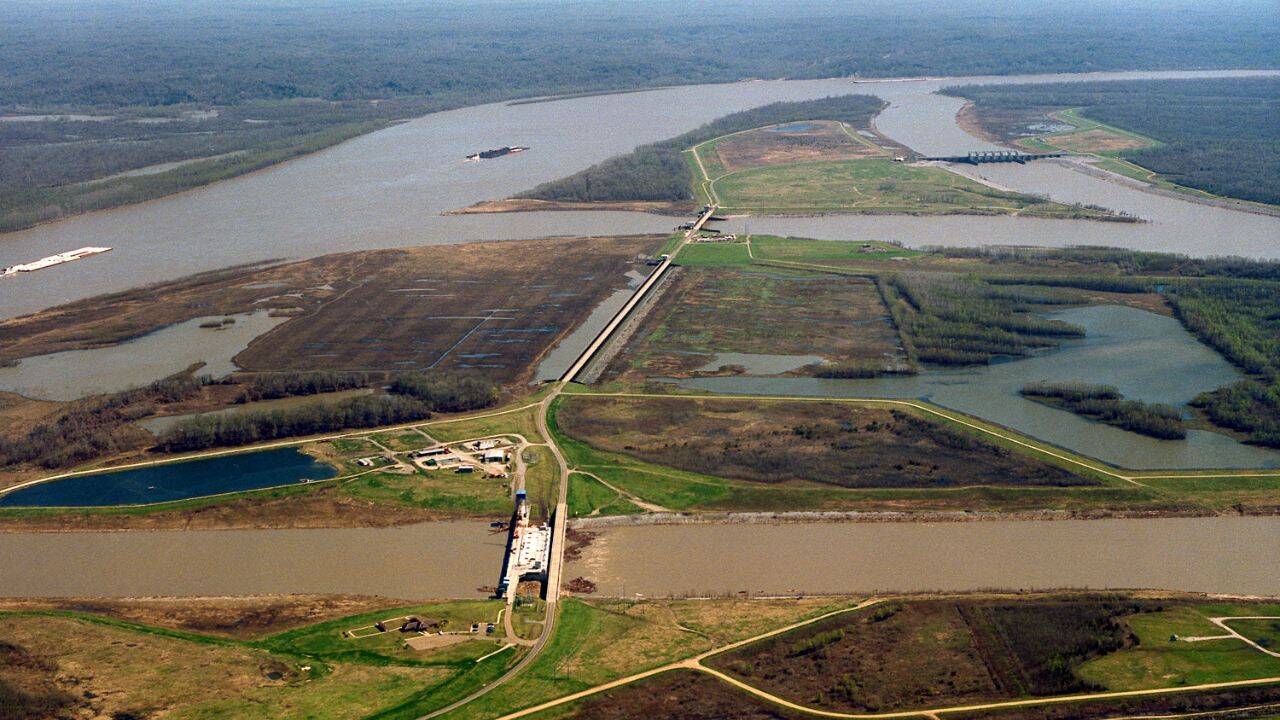
The construction of over 2,000 kilometers of levees along the Mississippi River in the US has had a devastating impact on the coastal region of Louisiana. The levees, built to prevent flooding, have obstructed the flow of critical river sediment to coastal estuaries, resulting in significant land erosion.
As a consequence, Louisiana has lost approximately 4,900 square kilometers of land over time. This loss of land has not only affected the state's geography but also had a profound impact on the local ecosystem. The disappearance of coastal land has led to the degradation of marshland ecosystems, which are essential for the region's biodiversity.
Environmental agencies have now taken steps to address this issue. A new initiative has been launched to reintroduce river mud into the affected bayous. This effort aims to rejuvenate the coastline and restore the damaged marshland ecosystems. By reintroducing river sediment, the agencies hope to revitalize the natural processes that once sustained the coastline.
The initiative is focused on restoring the natural balance of the ecosystem. By allowing river sediment to flow into the coastal estuaries, the agencies aim to rebuild the lost land and restore the health of the marshlands. This approach is considered a potential blueprint for delta restoration throughout southern Louisiana.
The construction of levees along the Mississippi River was initially intended to protect the region from flooding. However, it has had unintended consequences, including the loss of critical land and the degradation of ecosystems. The new initiative to reintroduce river mud into the affected bayous is a step towards mitigating the damage caused by the levees.
The restoration of the coastline and marshland ecosystems is crucial for the region's biodiversity. The marshlands provide a habitat for numerous species of plants and animals, and their degradation has had a ripple effect on the entire ecosystem. By restoring the natural balance of the ecosystem, the agencies hope to preserve the region's biodiversity and protect it from further damage.
The initiative to restore the coastline and marshland ecosystems in Louisiana serves as a model for delta restoration throughout the region. The approach of reintroducing river sediment into the affected areas can be replicated in other regions facing similar challenges. By learning from the experiences of Louisiana, other regions can take steps to prevent land erosion and restore damaged ecosystems.
In conclusion, the construction of levees along the Mississippi River has had a profound impact on the coastal region of Louisiana, resulting in significant land erosion and ecosystem degradation. However, the new initiative to reintroduce river mud into the affected bayous offers a glimmer of hope for the region's restoration. By restoring the natural balance of the ecosystem, the agencies aim to preserve the region's biodiversity and protect it from further damage.
The significance of this initiative extends beyond Louisiana, as it serves as a model for delta restoration throughout southern Louisiana. The approach of reintroducing river sediment into the affected areas can be replicated in other regions facing similar challenges, providing a potential solution to the global problem of land erosion and ecosystem degradation.
Frequently asked questions
What is the main cause of land erosion in Louisiana?
The main cause of land erosion in Louisiana is the construction of levees along the Mississippi River, which has obstructed the flow of critical river sediment to coastal estuaries.
What is the new initiative to restore the coastline in Louisiana?
The new initiative involves reintroducing river mud into the affected bayous to rejuvenate the coastline and restore the damaged marshland ecosystems.