Amateur Astronomer Discovers 390-Million-Year-Old Meteorite Crater
Ancient crater found in Canada, confirmed by scientists, adds to country's impact structures list.
'%3E%3Crect%20width%3D'96'%20height%3D'96'%20fill%3D'%23B3261E'%2F%3E%3Ccircle%20cx%3D'30'%20cy%3D'24'%20r%3D'44'%20fill%3D'%23fff'%20opacity%3D'.12'%2F%3E%3Ccircle%20cx%3D'60'%20cy%3D'74'%20r%3D'40'%20fill%3D'%23000'%20opacity%3D'.10'%2F%3E%3C%2Fg%3E%3Cg%20fill%3D'%23fff'%3E%3Crect%20x%3D'29'%20y%3D'49'%20width%3D'8'%20height%3D'19'%20rx%3D'1'%2F%3E%3Crect%20x%3D'39'%20y%3D'40'%20width%3D'9'%20height%3D'28'%20rx%3D'1'%2F%3E%3Crect%20x%3D'50'%20y%3D'45'%20width%3D'8'%20height%3D'23'%20rx%3D'1'%2F%3E%3Crect%20x%3D'60'%20y%3D'53'%20width%3D'7'%20height%3D'15'%20rx%3D'1'%2F%3E%3Crect%20x%3D'41'%20y%3D'34'%20width%3D'5'%20height%3D'6'%2F%3E%3C%2Fg%3E%3C%2Fsvg%3E)
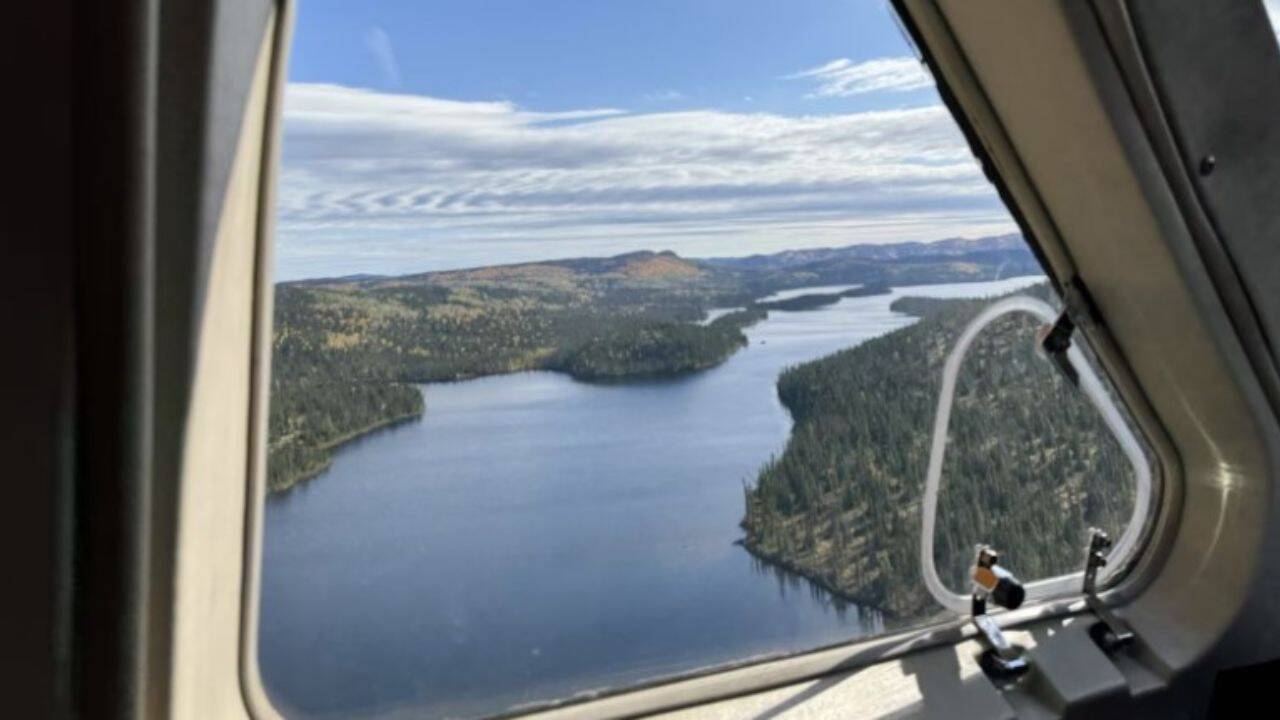
An amateur astronomer recently made a groundbreaking discovery using Google Maps, identifying a circular depression that was later confirmed by scientists to be a 390-million-year-old meteorite impact crater. The crater, located in Canada, is a significant find, adding to the country's list of impact structures.
The discovery was made possible by the astronomer's keen eye and the use of modern tools, highlighting the importance of technology in advancing scientific understanding. The crater, named Uhackatik, is approximately 390 million years old, dating back to a time when the Earth's surface was vastly different from what it is today.
Scientists investigated the site and confirmed the crater's origin as a meteorite impact, providing valuable insights into the Earth's history. The discovery of Uhackatik is a testament to the power of collaboration between amateur enthusiasts and professional scientists.
The use of Google Maps and other digital tools has democratized access to scientific discovery, enabling everyday people to contribute to our understanding of the world. This trend is expected to continue, with more discoveries being made by amateur astronomers and scientists alike.
The discovery of the Uhackatik crater also highlights the importance of preserving and protecting these natural wonders for future generations. As scientists continue to study the crater, they hope to gain a deeper understanding of the Earth's history and the impact of meteorites on the planet's surface.
The Uhackatik crater is a significant addition to Canada's list of impact structures, providing a unique window into the country's geological past. The discovery is also a reminder of the importance of continued exploration and research into the Earth's history.
In recent years, there has been an increase in the number of amateur astronomers making significant discoveries, highlighting the importance of citizen science. The discovery of the Uhackatik crater is a prime example of how modern tools and technology can enable everyday people to make a meaningful contribution to scientific understanding.
As scientists continue to study the Uhackatik crater, they hope to uncover more secrets about the Earth's history and the impact of meteorites on the planet's surface. The discovery is a significant one, and it is expected to have a lasting impact on our understanding of the Earth's geological past.
The collaboration between amateur astronomers and professional scientists is a key factor in the discovery of the Uhackatik crater. The use of modern tools and technology has enabled everyday people to contribute to scientific understanding, and it is expected that this trend will continue in the future.
In conclusion, the discovery of the 390-million-year-old Uhackatik meteorite crater is a significant one, highlighting the importance of collaboration between amateur enthusiasts and professional scientists. The use of modern tools and technology has democratized access to scientific discovery, enabling everyday people to contribute to our understanding of the world.
The discovery of the Uhackatik crater is also a reminder of the importance of preserving and protecting these natural wonders for future generations. As scientists continue to study the crater, they hope to gain a deeper understanding of the Earth's history and the impact of meteorites on the planet's surface.
The significance of the discovery of the Uhackatik crater cannot be overstated. It is a testament to the power of collaboration between amateur enthusiasts and professional scientists, and it highlights the importance of continued exploration and research into the Earth's history. The discovery is expected to have a lasting impact on our understanding of the Earth's geological past, and it is a reminder of the importance of preserving and protecting these natural wonders for future generations.