Fideuà: Valencia's Noodle-Based Paella Alternative
Discover the origins of fideuà, a seafood dish from Valencia. Learn about its creation and unique cooking method.
'%3E%3Crect%20width%3D'96'%20height%3D'96'%20fill%3D'%23B3261E'%2F%3E%3Ccircle%20cx%3D'30'%20cy%3D'24'%20r%3D'44'%20fill%3D'%23fff'%20opacity%3D'.12'%2F%3E%3Ccircle%20cx%3D'60'%20cy%3D'74'%20r%3D'40'%20fill%3D'%23000'%20opacity%3D'.10'%2F%3E%3C%2Fg%3E%3Cg%20fill%3D'%23fff'%3E%3Crect%20x%3D'29'%20y%3D'49'%20width%3D'8'%20height%3D'19'%20rx%3D'1'%2F%3E%3Crect%20x%3D'39'%20y%3D'40'%20width%3D'9'%20height%3D'28'%20rx%3D'1'%2F%3E%3Crect%20x%3D'50'%20y%3D'45'%20width%3D'8'%20height%3D'23'%20rx%3D'1'%2F%3E%3Crect%20x%3D'60'%20y%3D'53'%20width%3D'7'%20height%3D'15'%20rx%3D'1'%2F%3E%3Crect%20x%3D'41'%20y%3D'34'%20width%3D'5'%20height%3D'6'%2F%3E%3C%2Fg%3E%3C%2Fsvg%3E)
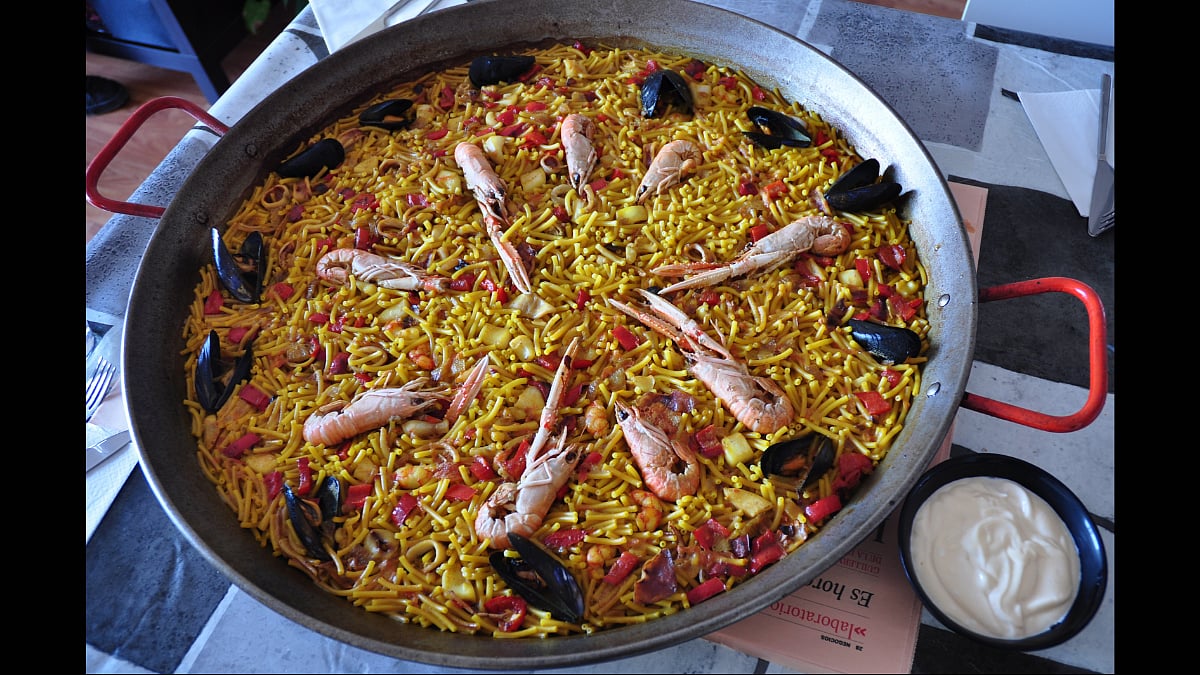
Fideuà, a traditional Valencian dish, was born out of necessity in the early 20th century. Its creation is often attributed to a cook on a fishing boat, the Santa Isabel, who replaced rice with noodles in a seafood paella. This improvised dish eventually became a signature specialty of Gandia, a port district in the province of Valencia.
The story of fideuà's origins is charming, with the cook using compact pasta, similar to spaghetti, to create a meal for the crew. The dish was a success, and its popularity spread beyond the boat. However, the exact chronology of its invention is unclear, with some accounts dating it back to 1930.
Emilio López Bonías, a chef at the Hotel Europa in Gandia, played a significant role in developing fideuà into a recognizable restaurant dish. He used thicker noodles and a specific seafood arrangement, similar to paella, to create a codified regional specialty.
At first glance, fideuà appears to be a variation of paella, cooked in a broad, shallow pan. However, the substitution of pasta for rice changes the dish entirely. The official Gandia version of fideuà is remarkably specific, requiring number 4 noodles, monkfish, prawns, and langoustines, along with garlic, tomato, sweet paprika, and saffron.
The cooking technique is also crucial, with seafood being seared in olive oil and removed before the noodles are briefly fried. The stock, made from rock fish and crustaceans, provides a brine-y, marine depth that the noodles absorb during cooking. The aim is to create noodles that are loose and succulent, rather than wet, with enough surface exposure for the heat to do its work.
Fideuà's journey from an improvised boat food to a regional specialty involved the culinary culture of Gandia, with cooks, restaurants, and the community playing a significant role in its development. Today, fideuà is a beloved dish in Valencia, offering a unique alternative to traditional paella.
The significance of fideuà lies in its ability to showcase the creativity and resourcefulness of Valencian cuisine. The dish has become an integral part of the region's gastronomic identity, with its rich flavors and unique cooking method making it a must-try for food enthusiasts.
In conclusion, fideuà is a fascinating dish with a rich history and cultural significance. Its creation, development, and popularity are a testament to the power of food to bring people together and create a sense of community. Whether you're a foodie or just looking to try something new, fideuà is definitely worth exploring.
The story of fideuà serves as a reminder of the importance of preserving traditional cuisine and supporting local communities. By promoting and celebrating regional specialties like fideuà, we can help to preserve the cultural heritage of Valencia and promote a deeper understanding of the region's unique culinary identity.
As a dish, fideuà has a lot to offer, from its flavorful seafood combination to its unique cooking method. Whether you're looking to try something new or simply want to experience the authentic taste of Valencia, fideuà is a great choice. With its rich history, cultural significance, and delicious flavors, fideuà is a dish that is sure to leave a lasting impression on anyone who tries it.
In the end, fideuà is more than just a dish - it's a symbol of the region's culinary creativity and a testament to the power of food to bring people together. Its unique flavors, rich history, and cultural significance make it a must-try for anyone looking to experience the authentic taste of Valencia.
Frequently asked questions
What is fideuà and where does it come from
Fideuà is a traditional Valencian dish made with noodles instead of rice, originating from the port district of Gandia in Valencia.
How is fideuà cooked
Fideuà is cooked in a broad, shallow pan with seafood, stock, and noodles, using a specific technique that involves searing the seafood, frying the noodles, and then adding the stock.