UP Achieves UN Water Goal, Reduces Groundwater Extraction
Uttar Pradesh reduces groundwater extraction, meets UN goal. Water conservation efforts pay off.
'%3E%3Crect%20width%3D'96'%20height%3D'96'%20fill%3D'%231A5276'%2F%3E%3Ccircle%20cx%3D'30'%20cy%3D'24'%20r%3D'44'%20fill%3D'%23fff'%20opacity%3D'.12'%2F%3E%3Ccircle%20cx%3D'60'%20cy%3D'74'%20r%3D'40'%20fill%3D'%23000'%20opacity%3D'.10'%2F%3E%3C%2Fg%3E%3Cg%20fill%3D'%23fff'%3E%3Cpath%20d%3D'M31%2041%20L48%2031%20L65%2041%20Z'%2F%3E%3Crect%20x%3D'33'%20y%3D'43'%20width%3D'4'%20height%3D'17'%2F%3E%3Crect%20x%3D'41'%20y%3D'43'%20width%3D'4'%20height%3D'17'%2F%3E%3Crect%20x%3D'51'%20y%3D'43'%20width%3D'4'%20height%3D'17'%2F%3E%3Crect%20x%3D'59'%20y%3D'43'%20width%3D'4'%20height%3D'17'%2F%3E%3Crect%20x%3D'30'%20y%3D'62'%20width%3D'36'%20height%3D'4'%20rx%3D'1'%2F%3E%3C%2Fg%3E%3C%2Fsvg%3E)
Uttar Pradesh has achieved the United Nations' Sixth Sustainable Development Goal (SDG-6) by reducing its groundwater extraction rate.
The state's groundwater extraction rate has declined from 71.26 percent in 2017 to 70 percent, which is the benchmark set under the United Nations Sustainable Development Goal.
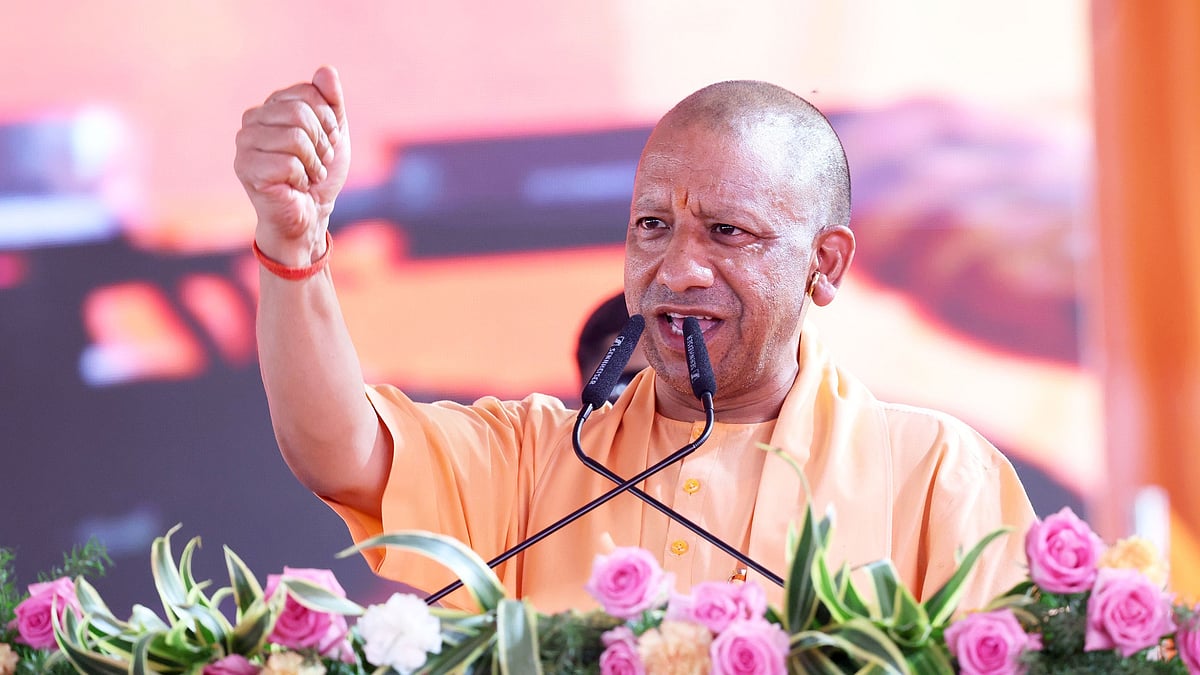
This achievement has been made possible through collective efforts towards water conservation, led by Chief Minister Yogi Adityanath. The state's Groundwater Department Director, Dr Rajesh Kumar Prajapati, stated that combined efforts in groundwater conservation, rainwater harvesting, revival of traditional water sources, and modern technology have enabled the state to achieve significant success in water conservation.
The biggest outcome of the efforts made by the state government and the department has been an increase in groundwater recharge. The state's annual groundwater recharge stood at 69.91 billion cubic metres (BCM) in 2017, which increased to 73.39 BCM by 2025.
Meanwhile, the groundwater extraction rate declined from 71.26 percent to 70 percent, enabling Uttar Pradesh to achieve the United Nations Sustainable Development Goal (SDG-6). Dr Prajapati noted that the impact of water conservation campaigns has also been visible in over-exploited areas.
In 2017, Uttar Pradesh had 82 over-exploited development blocks, and that number has now come down to 44. At the same time, the number of development blocks in the safe category has increased from 540 to 563.
This transformation has been made possible through scientific groundwater management and planned implementation. The state government's Catch the Rain campaign, which was launched between 2021 and 2025, has also played a significant role in promoting water conservation.
Under this campaign, 3.39 lakh rainwater harvesting and water conservation structures were created, 1.34 lakh traditional water bodies were revived, and 14.38 lakh watershed development works were carried out.
In addition, 1.33 lakh structures related to groundwater recharge and reuse were developed. These efforts have given fresh momentum to rainwater harvesting and groundwater recharge.
The Atal Bhujal Yojana has also played a significant role in bringing positive change in rural areas. Gram Panchayat-based Water Security Plans were implemented in 26 development blocks, resulting in several areas moving from the over-exploited or semi-critical category towards the safe category.
An independent study found that out of 550 Gram Panchayats, 303 recorded an improvement in groundwater levels ranging from 0.5 to 2 metres. The Yogi government has extensively promoted rooftop rainwater harvesting in government and semi-government buildings as well.
Across the state, 1,05,593 suitable buildings were identified, of which 35,206 have already been equipped with rooftop rainwater harvesting systems.
The achievement of the UN's Sixth Sustainable Development Goal is a significant milestone for Uttar Pradesh, and it demonstrates the state's commitment to water conservation and sustainable development.
This achievement will have a positive impact on the state's environment, economy, and society, and it will also contribute to the country's overall progress towards achieving the Sustainable Development Goals.
Frequently asked questions
What is the United Nations' Sixth Sustainable Development Goal?
The United Nations' Sixth Sustainable Development Goal (SDG-6) is to ensure availability and sustainable management of water and sanitation for all.
How has Uttar Pradesh achieved the UN water goal?
Uttar Pradesh has achieved the UN water goal through collective efforts towards water conservation, including groundwater conservation, rainwater harvesting, revival of traditional water sources, and modern technology.